IBM, IonQ, Diraq, and Atom Computing advance to DARPA’s quantum hardware testing stage
Network World ·
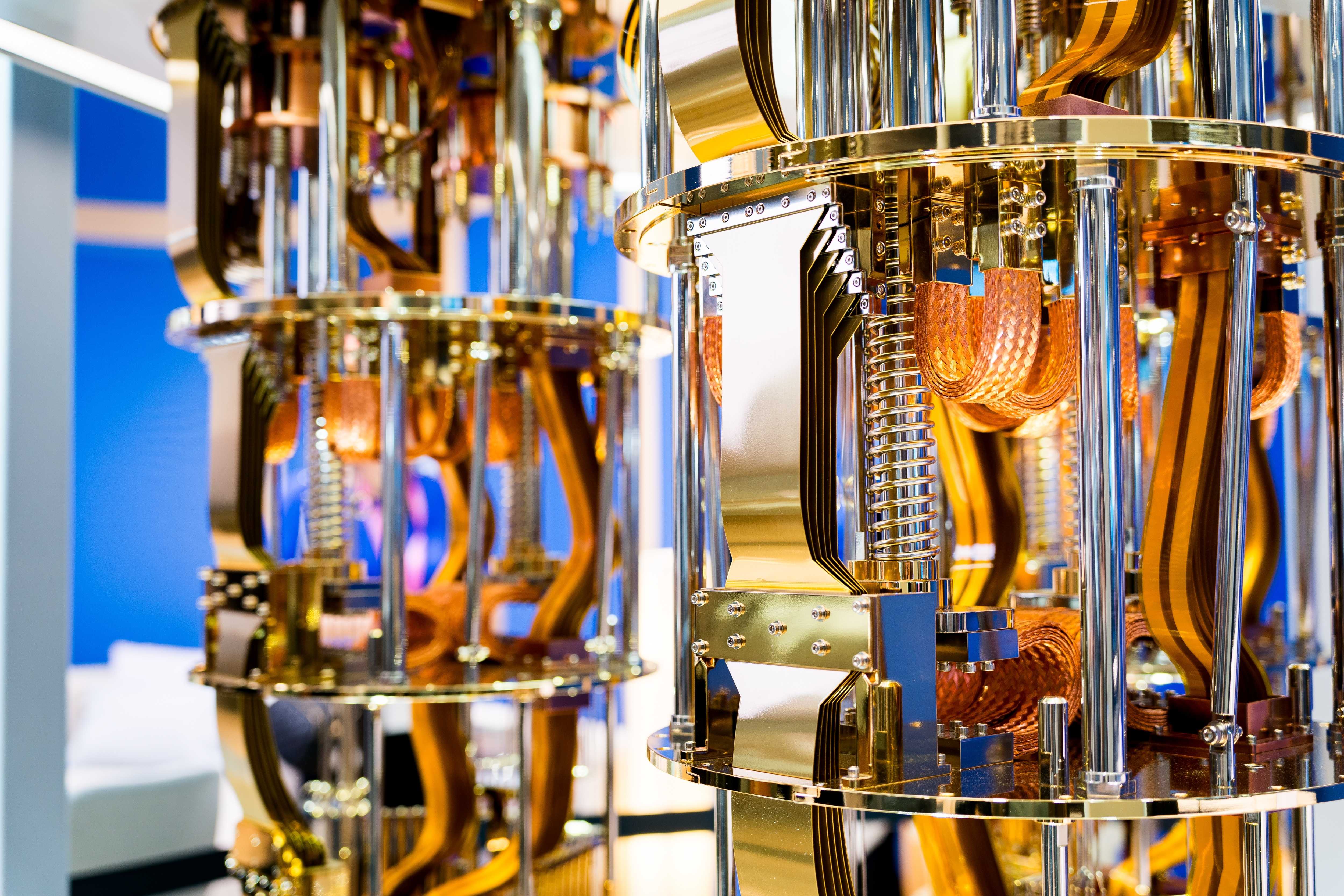
The U.S. government’s Defense Advanced Research Projects Agency, or DARPA, is awarding up to $300 million each to four companies to help them get their quantum computing hardware ready for independent testing. These four companies—IBM, IonQ, Diraq, and Atom Computing—have officially entered “Stage C” of DARPA’s Quantum Benchmarking Initiative, joining Microsoft and PsiQuantum, which were already in Stage C because they were part of a precursor program. Each of the four new companies takes a different approach. Atom uses scalable arrays of neutral atoms, Diraq has silicon spin qubits, IBM has superconducting circuits, and IonQ uses trapped ions. “The DARPA QBI determines whether vendors have a credible strategy and execution plan to build a sufficiently powerful quantum computer by 2033,” says Bob Sutor, founder and CEO at Sutor Group Intelligence and Advisory . This selection of companies shows that they are “on track, and, in some sense, are in the lead,” he says, though some companies, like Google, have chosen not to participate. “I like this program because it is a true technical competition,” Sutor says. The four companies chosen are expected to use the award money to get their quantum computers closer to the finish line, though not all of them need the money to the same degree. “Arvind has already announced that he’s going to invest over $10 billion in quantum computing over the next five years,” says Oliver Dial , IBM Fellow and VP of quantum systems at the company, referring to IBM CEO Arvind Krishna. “So, the money is not really the issue. We’re going to invest in it, whatever it takes.” Large-scale quantum computers are just around the corner, Dial says. “Imagine that someone could tell you a couple of years in advance that a new System 360 is coming out and it’s going to change your business. You can get ready, get a team that knows how to use it—we’re giving you that warning,” he says. Quantum computers won’t solve every problem, he adds, but will be very useful for particular types of algorithms, and this is a good time for businesses to start thinking about whether they’ll be able to act as an accelerator for the kinds of problems that they’re facing. And organizations can already start experimenting, Dial adds. “We have quantum computers in the cloud and installed at client sites,” he says. “They’re already capable of doing computations that are challenging or impossible to do classically, and you can kick the tires and prove it for yourself.” IonQ will use the money to continue building and delivering its Superion quantum computers, says Rick Muller , SVP and chief scientist at IonQ Federal. (Related: IonQ on Sunday announced a $1.2 billion deal to take over cybersecurity vendor Elisity ) “For us, the value is that outside experts will check our claims rigorously, on real machines,” Muller says. “QBI is one of the most demanding technology evaluations the government runs, and we’d much rather be measured that way than ask people to take our word for it.” This gives enterprises something concrete to plan against, he says, not just vendor promises. Muller also adds that IonQ’s ion-trap architecture is designed to run in standard data centers and rack footprints, without the added expense of the ultra-cold refrigeration systems that superconducting quantum computers require. “That makes the cost-per-unit of our Superions much more competitive than other options,” he says. Amy Leong , head of commercialization and partnerships at Diraq , says that the award underscores the promise of silicon spin qubits. And it “reinforces our path to delivering a utility-scale quantum computer that creates more value than it costs to build and operate,” she says. Silicon spin qubits can leverage the global semiconductor manufacturing ecosystem, Leong says, making it a commercially viable approach to quantum computing. Ben Bloom , founder and CEO at Atom Computing , says that the DARPA announcement is an indication that useful quantum computing is coming sooner than many people expect. Atom in particular has a “near-term” path to quantum computers that can solve real problems in energy, materials science, manufacturing, and finance, he says. “We’re scaling qubit count, increasing speed, and improving performance all at the same time,” he says. Still, DARPA’s selection is not necessarily a promise of success. “This doesn’t guarantee companies will meet their roadmaps or avoid or overcome unforeseen technical roadblocks,” says Sutor. Gartner predicts that 50% of quantum computing startups will be out of business by 2030.
The U.S. government’s Defense Advanced Research Projects Agency, or DARPA, is awarding up to $300 million each to four companies to help them get their quantum computing hardware ready for independent testing. These four companies—IBM, IonQ, Diraq, and Atom Computing—have officially entered “Stage C” of DARPA’s Quantum Benchmarking Initiative, joining Microsoft and PsiQuantum, which were already in Stage C because they were part of a precursor program. Each of the four new companies takes a different approach. Atom uses scalable arrays of neutral atoms, Diraq has silicon spin qubits, IBM has superconducting circuits, and IonQ uses trapped ions. “The DARPA QBI determines whether vendors have a credible strategy and execution plan to build a sufficiently powerful quantum computer by 2033,” says Bob Sutor, founder and CEO at Sutor Group Intelligence and Advisory . This selection of companies shows that they are “on track, and, in some sense, are in the lead,” he says, though some companies, like Google, have chosen not to participate. “I like this program because it is a true technical competition,” Sutor says. The four companies chosen are expected to use the award money to get their quantum computers closer to the finish line, though not all of them need the money to the same degree. “Arvind has already announced that he’s going to invest over $10 billion in quantum computing over the next five years,” says Oliver Dial , IBM Fellow and VP of quantum systems at the company, referring to IBM CEO Arvind Krishna. “So, the money is not really the issue. We’re going to invest in it, whatever it takes.” Large-scale quantum computers are just around the corner, Dial says. “Imagine that someone could tell you a couple of years in advance that a new System 360 is coming out and it’s going to change your business. You can get ready, get a team that knows how to use it—we’re giving you that warning,” he says. Quantum computers won’t solve every problem, he adds, but will be very useful for particular types of algorithms, and this is a good time for businesses to start thinking about whether they’ll be able to act as an accelerator for the kinds of problems that they’re facing. And organizations can already start experimenting, Dial adds. “We have quantum computers in the cloud and installed at client sites,” he says. “They’re already capable of doing computations that are challenging or impossible to do classically, and you can kick the tires and prove it for yourself.” IonQ will use the money to continue building and delivering its Superion quantum computers, says Rick Muller , SVP and chief scientist at IonQ Federal. (Related: IonQ on Sunday announced a $1.2 billion deal to take over cybersecurity vendor Elisity ) “For us, the value is that outside experts will check our claims rigorously, on real machines,” Muller says. “QBI is one of the most demanding technology evaluations the government runs, and we’d much rather be measured that way than ask people to take our word for it.” This gives enterprises something concrete to plan against, he says, not just vendor promises. Muller also adds that IonQ’s ion-trap architecture is designed to run in standard data centers and rack footprints, without the added expense of the ultra-cold refrigeration systems that superconducting quantum computers require. “That makes the cost-per-unit of our Superions much more competitive than other options,” he says. Amy Leong , head of commercialization and partnerships at Diraq , says that the award underscores the promise of silicon spin qubits. And it “reinforces our path to delivering a utility-scale quantum computer that creates more value than it costs to build and operate,” she says. Silicon spin qubits can leverage the global semiconductor manufacturing ecosystem, Leong says, making it a commercially viable approach to quantum computing. Ben Bloom , founder and CEO at Atom Computing , says that the DARPA announcement is an indication that useful quantum computing is coming sooner than many people expect. Atom in particular has a “near-term” path to quantum computers that can solve real problems in energy, materials science, manufacturing, and finance, he says. “We’re scaling qubit count, increasing speed, and improving performance all at the same time,” he says. Still, DARPA’s selection is not necessarily a promise of success. “This doesn’t guarantee companies will meet their roadmaps or avoid or overcome unforeseen technical roadblocks,” says Sutor. Gartner predicts that 50% of quantum computing startups will be out of business by 2030.