Episode 185: NASA’s Flight Dynamics Facility
NASA Science ·
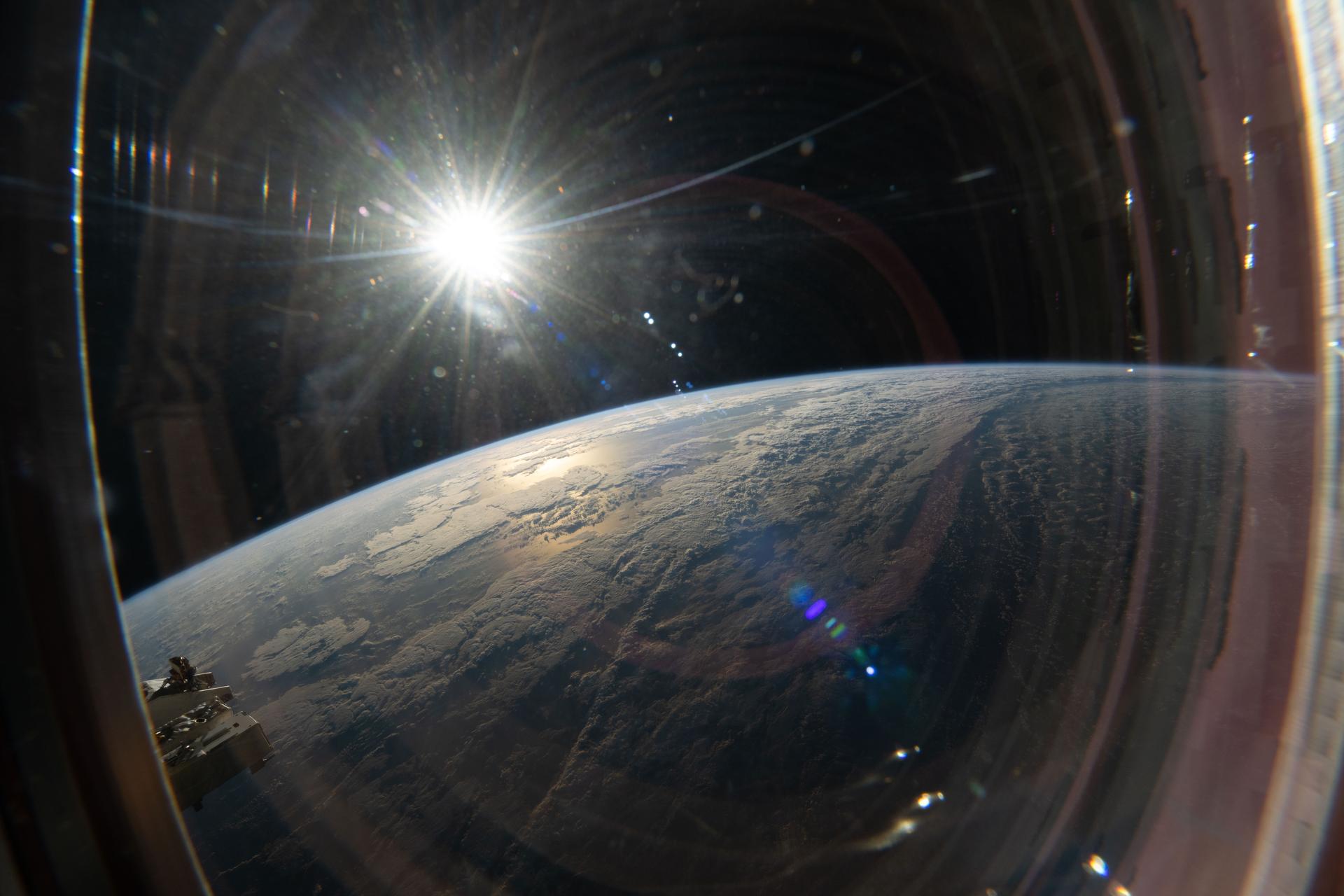
The Flight Dynamics Facility provides tracking data on spacecraft including the Orion crew capsule and the Roman Space Telescope. The facility’s history stretches back to the earliest days of Mercury, Gemini and Apollo. The post Episode 185: NASA’s Flight Dynamics Facility appeared first on NASA Science .
Host Andres Almeida: Every NASA mission depends on knowing where a spacecraft is at all times.
At Goddard Space Flight Center in Maryland, the Flight Dynamics Facility provides that expertise, tracking everything from robotic science missions to crew capsules carrying astronauts. The facility’s history stretches back to the earliest days of Mercury, Gemini and Apollo.
Today, its teams support missions including Artemis, the James Webb Space Telescope and now the Roman Space Telescope.
In this episode of Small Steps, Giant Leaps , we talk with Sam Schreiber, former operations director for the Flight Dynamics Facility at Goddard. He takes us inside the work of tracking spacecraft, preparing for the unexpected, and applying lessons learned from one mission to the next.
This is Small Steps, Giant Leaps .
[Intro music]
Welcome to Small Steps, Giant Leaps , the podcast from NASA’s Academy of Program/Project & Engineering Leadership, or APPEL. I’m your host Andres Almeida.
Sam Schreiber is with us today. Hi Sam, thanks for making time today.
Sam Schreiber: My pleasure.
Host: Talk to me a bit more about the Flight Dynamics Facility.
Schreiber: So, my formal title is the Flight Dynamics Facility Operations Director. So, I am one of two civil servants, a director and a deputy, that oversee the work that is done in the Flight Dynamics Facility.
Host: Has the facility always been at Goddard?
Yes, it is a Goddard resource. It has essentially existed in one form or another since the beginning of the space program. So, early days. We’re talking Mercury, Gemini, Apollo.
There were two groups at Goddard. One group focused on flight dynamics and navigation of early science missions. The other group focused on early human spaceflight and making sure that all the antennas on the ground around the world were pointing at and able to acquire the Mercury, Gemini, and Apollo spacecraft as it flew around the Moon.
Those two groups were combined in the early 1980s to form what is now known as the Flight Dynamics Facility.
Host: That’s a long legacy, and now you have Artemis…
Schreiber : That’s correct, yes. So, we have supported human spaceflight for years. Obviously, space shuttle, International Space Station, Commercial Crew, the cargo vehicles. As we’ve gotten into Artemis, it’s been a large effort for any tracking assets that the Near Space Network uses. So, this could be the TDRS satellites that are in geosynchronous orbit, looking down at the Earth. It could be antennas on the ground all around the world.
Those antennas need a single source of trajectory truth to know where to point, when to point, in order to essentially talk to the astronauts, get their health and safety of the spacecraft for mission control in Houston to send commands to the spacecraft. So that’s, that’s our primary job.
So, when the SLS lifts off the launch pad, any antennas that are pointing at the rocket ascending into space are doing so because we’re telling it where it’s going, and most importantly, not just where it’s going, where it might go in case there’s an abort, where it might go in case there’s some kind of off-nominal trajectory, and we can still talk to the astronauts if they end up landing in the North Atlantic or, or doing an abort once around the Earth.
Host: How soon in the life of a mission does the FDF get involved with trajectory design and analysis?
Schreiber: It d epends on the mission. So, we support a wide range of missions. We support science missions. So, we’re about to launch the Roman Space Telescope, what, in two weeks? I know this is being recorded in August. And so, our teams are the flight dynamics experts that’ll get Roman Space Telescope off the ground and on its way to its Lagrange point orbit, and then we’ll fly for the rest of the missions.
Science missions, it can depend. It can be as late as a year or two prior to launch. For something like the James Webb Space Telescope, which we also fly, it could be years beforehand because we had to get involved in the trajectory design of the mission, where and how it’s going to get out to its orbit.
For human spaceflight, it’s very rapidly changing. You know, the Artemis III mission changed just a few months prior. It was going to launch a few years from now, now it’s launching next year. So, we’re involved immediately, and we are responding to all the changes that are happening right now.
Host: With all these assets that require tracking, is there such thing as a typical day for you?
Schreiber : Yeah, I describe my role as closest to that of a CEO of a company, I’m involved in the day-to-day operations and making sure that the facility is up and running. You know, we had some actual power hits today. We hear, you know, alarms going off and batteries in the basement are kicking on. So just making sure that the facility is ready to support NASA, no matter what.
Part of it’s staffing and making sure we have the right staff and right staffing combination in the right skillsets. We need flight dynamics engineers to obviously do the flight dynamics, astrodynamics, orbital mechanics. We need software engineers and developers, software testers, IT people, IT security. So, it is, systems engineering, right?
We need all these different skill sets all in one to run this ship, and on top of all of that, I have to make sure there’s the right amount of funding to do all that work, based upon all the different requirements from all the missions that come to us.
So, my job is a mixed bag of drumming up business, you know, going to mission A, B, or C, saying, “You should use our facilities and our, and our expertise.” Or going to Headquarters and drumming up funding. It can also be managing the contract of the great people that do the work within the FDF, and changing some contract bits here or there to make sure the work is appropriately allocated.
It can vary based, day to day, based upon what’s the emergency of the day, who’s reaching out for support. We need some analysis done for an orbital reentry that might happen. We need some analysis done of tracking data that might that might be needed for Artemis III, IV, or V. It really does vary, so kind of act as that interface for the technical teams.
Host: Your job is many jobs.
Schreiber: We all have many hats, don’t we?
Host: Can you recall any moments when something didn’t go the way you expected but you learned from it?
Schreiber: In, I think it was 2015. So, I’ve been in the FDF for 13 years, seven years as a civil servant. So, prior to my time as deputy director, now director, I was in the contractor pool and doing the work in the FDF, and one of the missions I supported was DSCOVR [Deep Space Climate Observatory]. D SCOVR launched in, I think it was 2015, if I remember correctly.
The plan for D SCOVR was to launch on a Falcon 9 out to a Lagrange Point, and the expectation from the flight project was that we would be able to acquire DSCOVR while still on the launch vehicle, while still thrusting up into space.
So, what happens is the launch vehicle launches, the fairing deploys, so you have less mass. You’re out of the atmosphere, so you deploy the fairing, and then the spacecraft is exposed to space, so you can technically communicate with it.
So, on one side of the coin, there’s an expectation that you’d be able to communicate with DSCOVR from the mission operations center as soon as the fairing came off. On the other side of the coin, there was no requirement for that, and there was an expectation that you would acquire the spacecraft after separation from the launch vehicle.
So, if you imagine the vehicle is launching into space, it’s thrusting out toward [a] Lagrange point, and then eventually it stops thrusting and it kicks off, and the launch vehicle separates from DSCOVR.
So, acquisition didn’t actually happen as early as the mission operations center expected. We really needed to make sure we’re reviewing all requirements, that no requirements are mismatching or in conflict. If they are, we bring them up to the flight project or whoever the project is that we’re supporting. So that was a lesson learned that is now being folded in, by the way, to Roman, because there is an expectation that they will acquire the Roman Space Telescope while still on the launch vehicle, and we make sure that’s going to be, it’s going to happen.
Host: What’s keeping the team busy right now?
Schreiber : There’s a lot of work related to ensuring there’s the right-size budget for the next coming fiscal year, right? NASA’s budget is set by Congress, and we have to make sure we have the right budgets for the right work.
And so, there’s a lot of negotiations in looking at each of our roughly 30 to 40 missions that we fly. I have this whole portfolio. Are the missions paying the right amount of money for their support? Are there changes in requirements that might drive some ups and downs? If there’s late-breaking requirements, that might be at risk because even if they throw us some money halfway through the year, I can’t go and hire, you know, two or three staff members to support that immediately.
So, a lot of the work that happens on a day-to-day basis is negotiation and making sure we are right-sized for the work required of us.
Host: How did you end up in this role?
Schreiber: My first job out of grad school was at Johnson Space Center, working for a company called United Space Alliance. They no longer exist, but my job was guidance, control, and propulsion flight instructor for the space shuttle to NASA astronauts and flight controllers.
I finish grad school, I do an internship out at Johnson, and then I end up working there for a number of years. You get trained how to train the astronauts, right? There’s a whole training program. There’s a specific division called the spaceflight training division, and that’s what I was a part of.
So, I trained a number of astronaut crews on the space shuttle operations. It was a really, really neat job to show up every day, especially in your early-to-mid-twenties. Met a lot of interesting people. I trained some flight controllers in their, in their simulations as well. But the shuttle program came to an end, and in 2011 I found myself unemployed.
So, at the time I was recently married, and my wife finished medical school, so she was looking for a residency, and she matched at Georgetown University Hospital.
So, I moved to DC, and I was unemployed. I ended up being unemployed for a number of months, but finding my way to working for a private company called GMV. And GMV stands for Grupo Mecanico De Vuelos.
It is a Spanish-based company out of Madrid, and they do flight dynamics, amongst other things. They do flight dynamics for the European Space Agency, and they had started a new arm of the company in the USA in Rockville [Maryland], near where I lived. So, I ended up randomly finding a job with them and learning flight dynamics, ground systems, and flight dynamics and navigation from them.
Now, I knew nothing about this really about this stuff beforehand. My master’s degree is essentially a propulsion degree, so I learned Fortran and I learned Perl and I learned C++ (again), and what it means to navigate a spacecraft and to figure out where a spacecraft is and where it’s going. It was really interesting. [I] traveled around the world.
Their customers were commercial, as well as some government. So I worked on the GOES-R series spacecraft for NOAA. We were validating our ground systems with the specialists who know how to do the stuff from the FDF. That’s how I learned what the FDF even existed.
And after a few years at the company, I applied for a job.
Host: And did you take the Spanish language with you?
Schreiber: No, no, no, not at all.
[Laughter]
It was really hard. So, it was really hard. I I learned Spanish in high school, right? And it would be really hard to call my colleagues in Madrid, which, of course, there’s a six-hour time difference, and trying to do technical Spanish. And I just, and my, my office mate was from Barcelona, so he has that accent on his Spanish, right? And I definitely, I got better. Like, I definitely got better, but then I didn’t really use it for years.
Host: You have a lot on your plate already. So, Sam, what was your giant leap?
Schreiber: What was my giant leap? One of the cool things that happened toward the end of the space shuttle program for me was, unfortunately, a bunch of the pilot-type astronauts were leaving. They saw that there was no more shuttle flights for them. The Constellation Program had been canceled, and Artemis was way in the future, and they were just leaving.
But they needed to do what they called integrated simulations with mission control. This is where astronauts come, just kind of random astronauts picked from the astronaut office, come to the simulator, get in the shuttle simulator, and fly it. And instructors like myself would break things: kill an engine, cause a leak, whatever, during launch, during re-entry, during orbit, mostly launch and re-entry. And they still needed to do simulation runs. So, it all connected to mission control as if it was real.
So, mission control would sit there in the flight control room as if it’s real data coming through, and we would do maybe 2,3,4,5 different simulation runs.
And anyway, astronauts were leaving, and they there weren’t enough people in the pool to do those generic simulations. So, someone came up with the idea of what if we get a bunch of instructors, quote unquote, astronaut-certified for these simulations, so at least we can keep pushing forward?
So, a number of us, I think it was eight or 10 of us, went through a series of training events with flight directors involved to make sure that we were kind of up to snuff to act as astronauts instead, and I was one of those people. I was trained in the pilot position, which is the righthand seat next to the commander.
And so, there were a number of generic simulations where there’s an astronaut commander in my left, a mission specialist flight engineer behind me, and I’m in the pilot seat, and I’m sitting on my back in the space shuttle simulator, you know, throwing switches as if engines are failing and APUs are blowing up. That was really, really fun.
And I have applied to be an astronaut several times. I thought I can really do this job. I have obviously not been selected, but that felt like between that and sitting inside space shuttle Discovery before it launched for one of its missions, that was also, like, a peak moment.
So, I felt like I kind of hit a peak, a giant leap peak, early, 20 years ago. But it was really, really neat, and it’s, it’s sustained me for many, many years.
Host: And did the teams make you feel like a crewmember?
Schreiber: T hey were exceedingly, exceedingly kind and graceful, and you know I even screwed up a little bit here or there, but did not make me feel bad whatsoever, and I, it was a dream come true at that point.
Host: That’s an ideal team dynamic, where you make mistakes and still, they lift you up.
Schreiber: Of course!
Host: With so many teams and projects, how do you ensure lessons learned are lessons learned?
Schreiber: Yeah , so , within the FDF itself, we do have a specific task order, a group of people that do operations planning and systems engineering, right? And the job is to be that connective tissue. We have requirements coming in, requirements going out. We have lessons learned. We have a lessons learned database.
So, every time we do a mission, let’s say we’re about to launch Roman, and we get it out to its orbit and it gets into what’s called the Phase E, right? Just kind of keep, keep going on with your mission for the next several years. We’ll do a post-mission report and capture any lessons learned to the entire lifecycle of the mission up till now, and those go into a database. And so, that when we do the next thing, we are required to review that database as an entrance criteria for the next review.
That’s part of the process, right, is to review whether it’s a root cause analysis or a lessons, just a lessons learned. You’re required to review those things as an entrance to the next operations readiness review that you might have for the next mission.
Those also get fed up to the projects that we support. So, one of the big projects we support is the Near Space Network, and they provide services. Not only do they fly TDRS and make sure that there’s ground tracking, they also provide a lot of services to human spaceflight and launch vehicles.
So, every time there’s a new launch vehicle or a new human spaceflight mission, you review lessons learned going into the network operations readiness review as part of the process.
So, part of the, the lifecycle process is ensure you’re capturing lessons learned, putting them somewhere where you can and will review them as part of the next mission that will come up.
Host: That’s great. Sam, that’s our time. Thanks for coming onto the podcast and talking with us.
Schreiber: I appreciate the opportunity to talk with you here today, share a little bit about what the Flight Dynamics Facility does and how we support the entire agency, whether it’s a science mission, a human spaceflight mission, a launch vehicle. We do a lot of various and different things.
Host: That’s it for this episode of Small Steps, Giant Leaps . For a transcript and for all other episodes, visit nasa.gov/podcasts. While you’re there, check out our other podcasts like Houston, We Have a Podcast , Curious Universe , and Universo curioso de la NASA. As always, thanks for listening.
Outro: This is an official NASA podcast.
The post Episode 185: NASA’s Flight Dynamics Facility appeared first on NASA Science .