Two NASA Commercial Satellite Communication Demonstrations Launch
NASA Science ·
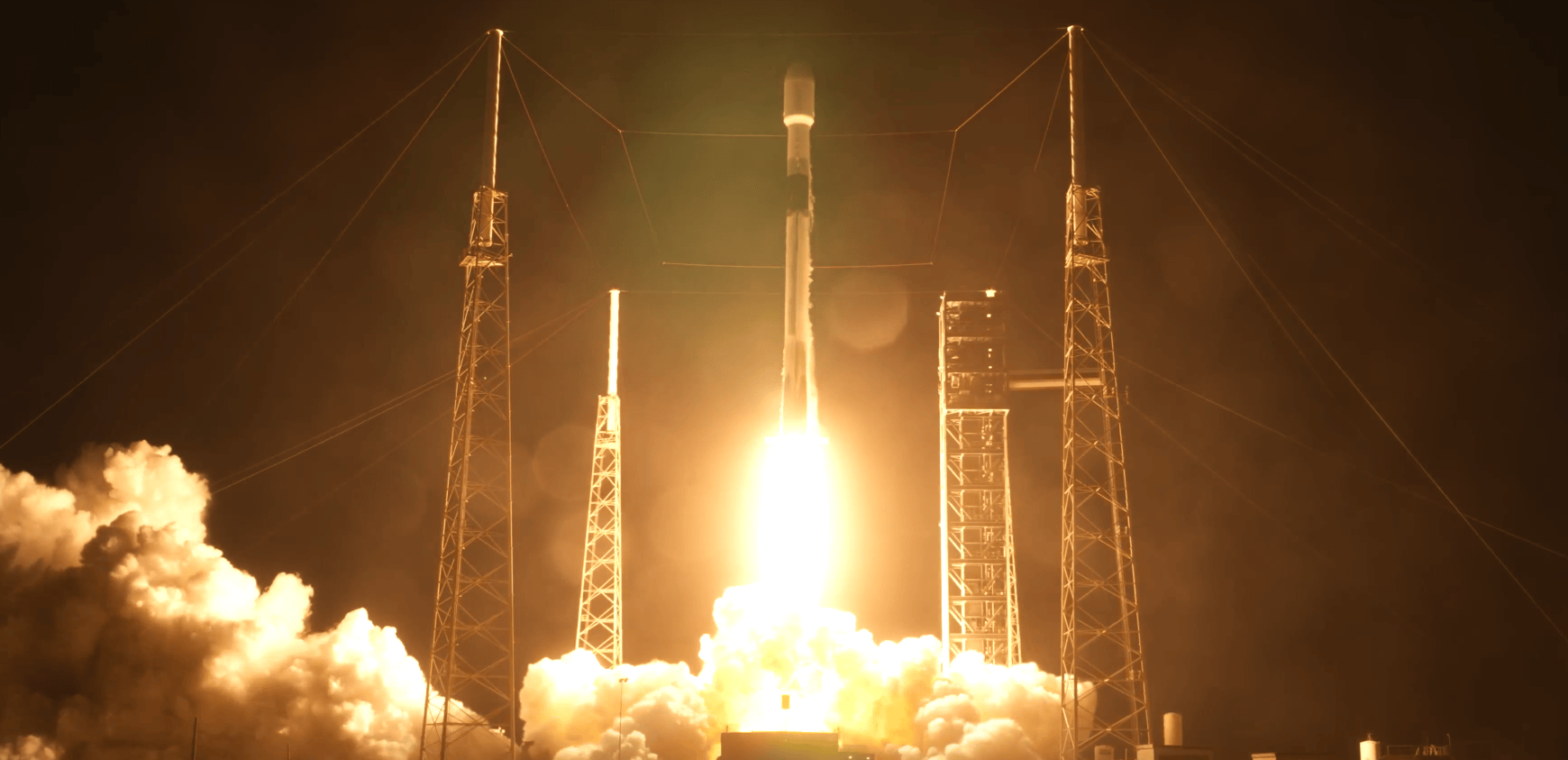
Two NASA-funded demonstrations have successfully launched into low Earth orbit aboard the SpaceX Bandwagon-5 rideshare. Over the coming weeks, both spacecraft will showcase advanced satellite communications capabilities designed to support the agency’s science missions. After Tuesday’s launch, two of NASA’s partners, Viasat and SES Space and Defense, will prepare to test high- and low-rate communications […] The post Two NASA Commercial Satellite Communication Demonstrations Launch appeared first on NASA Science .
Two NASA-funded demonstrations have successfully launched into low Earth orbit aboard the SpaceX Bandwagon-5 rideshare. Over the coming weeks, both spacecraft will showcase advanced satellite communications capabilities designed to support the agency’s science missions.
After Tuesday’s launch, two of NASA’s partners, Viasat and SES Space and Defense, will prepare to test high- and low-rate communications capabilities for the agency.
Spacecraft often need to send and receive different kinds of information as they travel through space for missions. NASA uses high-rate data links to transmit large amounts of information, like scientific discoveries and 4K imagery, along with low-rate signals to track spacecraft and send basic commands. Both are essential to maintaining reliable connections across the solar system.
Viasat will test high- and low-rate relay services designed to keep spacecraft connected and data flowing at any point in flight using Maxwell, a demonstration spacecraft built by Rocket Lab. Throughout the demonstration, Viasat will use intelligent autonomous technology to route data among the Maxwell spacecraft, their satellites in geosynchronous orbit, and their global network of ground stations.
SES Space and Defense will test high- and low-rate relay services designed to enable seamless, uninterrupted connectivity for spacecraft. Throughout the demonstration, SES will leverage their O3b mPOWER fleet in medium Earth orbit to transmit high-rate data, and their satellites in geosynchronous orbit to transmit low-rate data, between the demonstration spacecraft and their ground stations on Earth.
In 2022, NASA’s Space Communications and Navigation (SCaN) division awarded $278.5 million to industry through the Communications Services Project to develop satellite services for space missions. This work supports the agency’s decision to gradually retire its Tracking and Data Relay Satellite fleet and transition future low Earth orbit missions to commercial alternatives.
These efforts, along with the work previously completed by NASA’s commercial partners, will help the agency evaluate new ways to deliver critical information through space in real time. The Communications Services Project, managed by NASA’s Glenn Research Center in Cleveland, will continue working with industry to test state-of-the-art relay capabilities through 2027.
The post Two NASA Commercial Satellite Communication Demonstrations Launch appeared first on NASA Science .