Are people relying too heavily on AI to evaluate their fitness, and could wearables be promoting unhealthy eating habits? I spoke to a leading sports dietitian to find out
Latest from Tom's Guide · · g2653822
Ashley Thieme is a staff writer on the Reviews team at Tom’s Guide where she tests out the latest tech so you can know what’s going to be worth your time and money. She has a master’s degree in Magazine Journalism and a bachelor’s degree in Journalism, Media and Sociology from Cardiff University. She has bylines in titles including Women’s Health UK, sharing the latest health and wellness news stories, and Virgin Radio UK, providing the latest entertainment news and working on celebrity interviews. She has experience reporting on a variety of topics including music, literature, motorsport, entertainment and health. In previously published work, she has reviewed live music events, books, and wellness products. She values the importance of tech enhancing your life rather than taking over, and as a music fanatic, she is always looking for the best way to listen to new music releases. Discovering the top audio equipment that enhances sound quality and provides optimum comfort is what Ashley does best. In her spare time, Ashley enjoys hitting her reading goals on Goodreads by getting into the latest novels with a cup of tea as well as getting out in the Welsh mountains for a good hike on the weekend.
A glance at the people around you on the train, walking down a busy street, or in the grocery store will tell you that the gym isn’t the only place people are wearing fitness trackers these days.
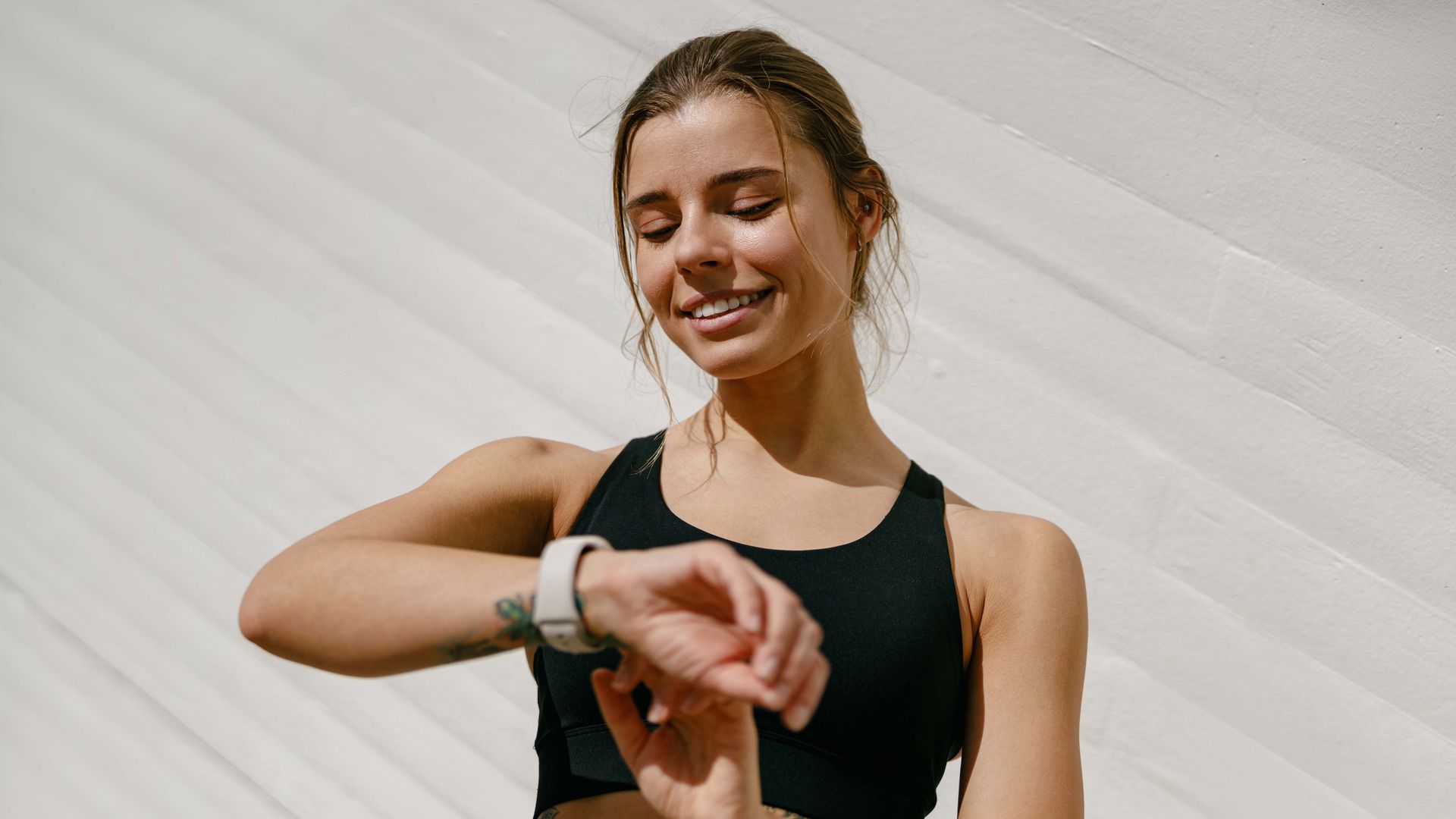
Devices like the Apple Watch Series 12 , Oura Ring 4 , or Whoop 5.0 have become more of a fashion accessory than strictly for tracking workouts. They’re a great way of tracking your training and seeing tangible evidence of your progress, but does everyone need one? I’m not so sure.
There’s a dark side to the tracking. Viewing burned calories so easily in an app can be an extremely triggering experience for some users, and it may even begin unhealthy habits like calorie counting and overexercising. So, let's go over the perks of these devices and discuss the science behind why they can also become harmful.
The majority of these smartwatches and smart rings track your health using metrics including sleep and activity. I’ve used these devices myself, and having a consistent way to make sure I’m getting enough rest as well as hitting my activity goals has been very helpful in my own fitness journey.
Recently, while testing these devices, I’ve noticed the introduction of calorie counting and ways to monitor food intake. This raises alarm bells for me, as while it’s important to track protein and nutrient intake for intense training, it’s not a feature every individual will need.
So now, with more people focusing on their food consumption alongside their training, could this lead to unhealthy eating habits taking hold? I spoke to leading sports dietician Renee McGregor to find out about the effect it may have.
She said, “A lot of these apps are built on the archaic equation and reduce a human to calories in versus calories out. Humans are much more complex than this, and so this setup often leads to underfuelling, especially in those individuals who are highly active.”
Although there’s some inaccuracy, these activity and food tracking features are excellent if you want to track your weight loss. Having a visual measure of calories burned and/or the number of steps you’ve completed can be a good indicator to inform a calorie deficit.
But what about people who are struggling with eating disorders? Is this just another way to reinforce the resurgence of diet culture we’re seeing in the wider media?
For some people, seeing calories burned rise and calories consumed fall can become intoxicating. It won’t come as a surprise to you that right now we’re entering into a “skinny epidemic.”
This cultural term was popularized in the 2010s, marking a resurgence of the ‘90s diet culture that was coined as “heroin chic”. It’s a pendulum we see swing from celebrating larger bodies and then smaller bodies over time. It’s all directly impacted by the media we consume.
Wearables now come with software that can evaluate meals. Oura has Meals, and Garmin has its own nutrition tracking in the app. I asked Renee about how wearables could contribute to this, especially for people who have previously lived with eating disorders. She told me, “The main concern is that it keeps people ‘contained,’ and they don't rebuild the relationship with their bodies. Instead of listening and responding to their bodies, they follow an external cue which keeps them stuck. While they may believe it helps them to be ‘in control’ in reality, they are being controlled.”
The Alliance For Eating Disorders advises, “For individuals struggling with eating disorders, fitness trackers can act as a form of control, feeding into the disordered mindset that one’s worth is tied to their physical appearance, weight, and level of activity. The numbers on the screen can become a constant source of validation or anxiety. These numbers may be used to justify extreme exercise regimens or changes in eating behaviors.”
It’s not just companion apps for fitness trackers that are enabling these behaviours. People are taking pictures of their food and uploading them to AI chatbots, like ChatGPT, and asking how many calories are in their food. This can be damaging and lead to fueling the body improperly, meaning cutting down on more calories than you need.
Renee says using AI this way is highly inaccurate. “It’s only as good as the information that has actually been put into these AI apps. The other key problem is that not all calories are equal… a calorie is an arbitrary unit of energy.
“It’s based on the energy yielded when you burn a food in a calorimeter. Humans are not calorimeters. So while a calorimeter may say a carrot provides 10 calories, a human cannot absorb all of those calories because most of it is indigestible due to the high fibre content.”
This means that when we’re told something is X calories, we’re not actually taking all of that in. So if we burn more to remain in a deficit for weight loss, it could be more dramatic than intended.
With all of this said, wearable technology can also aid in food and exercise tracking when done properly. Renee says, “In the same way that tracking food and exercise can be problematic, if done in the right way — maybe by ensuring an appropriate app or working alongside a coach — the data being collected can provide key information to demonstrate that you may be lacking sufficient recovery or not fuelling appropriately, particularly carbohydrates, which are the most important macros required for optimal health and performance.”
So, how did we get to a point where we need a wearable to tell us what to eat? The only way to get reliable nutritional information tailored to you is by talking to a nutritionist or reaching out to a medical professional.