‘What If I Taught It?’ The Kellogg MBA Who Went From Student To Professor In One Leap
Poets&Quants ·
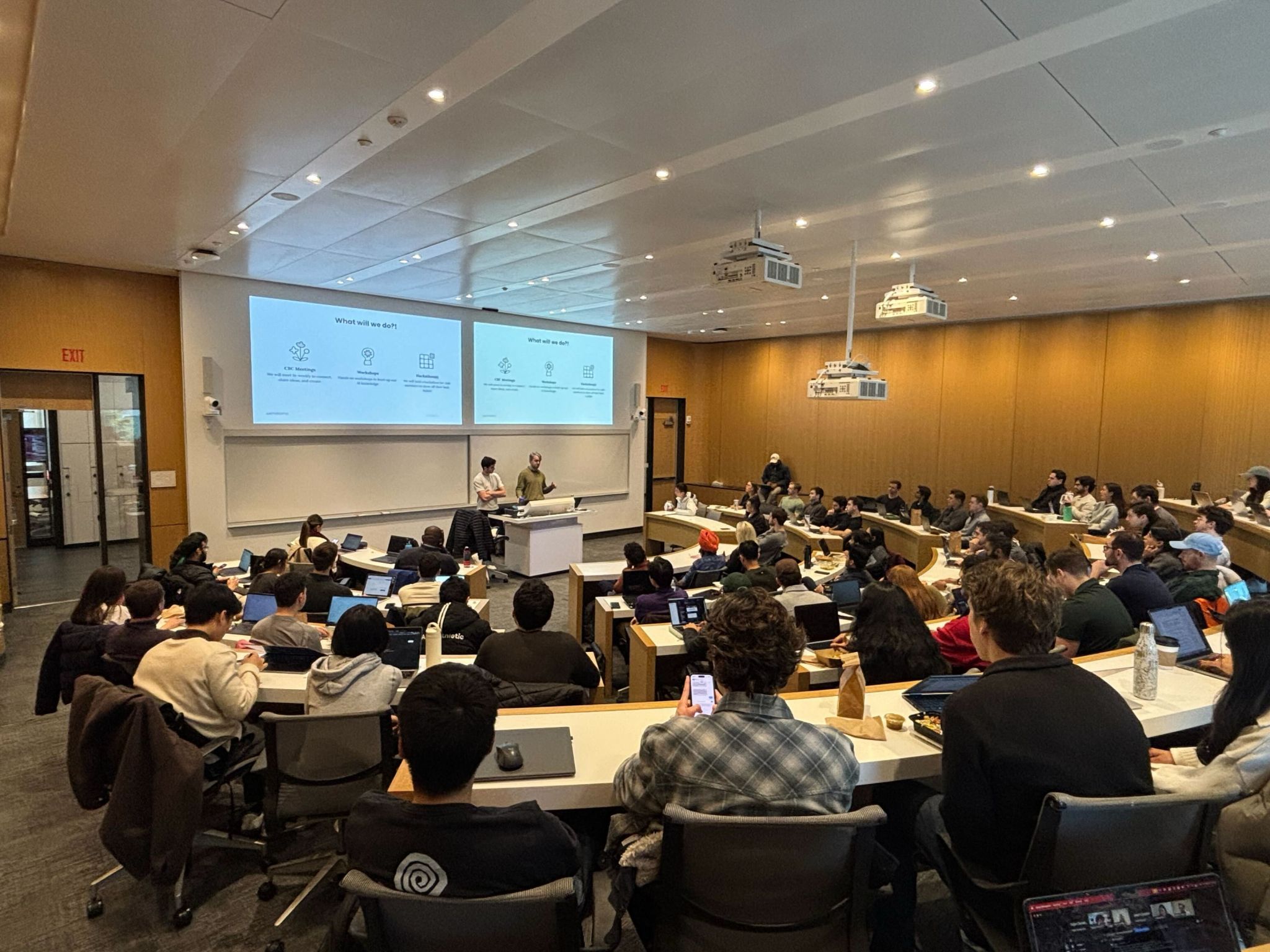
Pablo Landa teaches a session at Northwestern Kellogg School of Management on Claude Code and AI agent skills. Landa, a Class of 2026 MBA, now co-teaches Kellogg’s Applied AI Lab, the course he ... The post ‘What If I Taught It?’ The Kellogg MBA Who Went From Student To Professor In One Leap appeared first on Poets&Quants .
Pablo Landa teaches a session at Northwestern Kellogg School of Management on Claude Code and AI agent skills. Landa, a Class of 2026 MBA, now co-teaches Kellogg’s Applied AI Lab, the course he helped grow out of a student-run project and volunteered to teach himself. Courtesy photos
Last spring, Pablo Landa sat across from Kellogg School of Management leadership with a proposal and a problem.
The proposal was to turn a scrappy, student-run AI project into a formal course. The problem was that no one on the faculty could teach it. No professor had been there for every quarter of the experiment. No one else knew the companies, the projects or the syllabus that had been rewritten every 10 weeks.
So Landa, a few weeks from graduating, floated what he calls a crazy suggestion.
“I was like, look, don’t give me any blockers,” he recalls. “What if I taught it?”
Kellogg said yes.
Today Landa, a 2026 Kellogg MBA, is a faculty associate in operations and co-teaches the Applied AI Lab with Benjamin Grant, a clinical associate professor of operations. In the 10-week course, small teams of MBA students go inside companies to scope, build and ship working AI products. The lab has 11 teams deployed this quarter. To date, it has built 28 AI products for partner organizations, and more than 130 students have taken it.
“Never in a million years did I think I would first do an MBA, let alone teach MBAs,” Landa tells Poets&Quants .
Pablo Landa: “Learn AI, but learn change management and learn how to help others solve problems with technology. It doesn’t matter what field you go into. You’re going to do fine”
Landa came to Kellogg from tech. At Klue, a competitive-intelligence software company, he founded and ran the firm’s AI operations function. When he arrived in Evanston, he found plenty of students talking about AI – and no AI club.
So he helped start one. The first event was a hackathon sponsored by Replit. That success helped the group secure a budget from the Kellogg Student Association the following year, when Landa became co-president of the Kellogg AI Club. The club grew to more than 750 members.
Along the way, Landa noticed something. Classmates were experimenting with Claude Code and Codex, building automations for themselves. That was useful, but it wasn’t the job.
“Building for another user, let alone a totally different company or organization, is a widely different game,” he says.
The gap showed up in job interviews. Students chasing roles at companies like Anthropic, OpenAI, Sierra and Decagon would get the same opening question: What have you built with AI? Most had personal projects to talk about. Then came the follow-up.
“Tell us about a time that you have had to convince an IT manager to let you implement a product at a company,” Landa says. “And very few had that experience.”
The fix started small. The club found a company that needed help with AI, scoped a project with it, recruited a student team and found a professor willing to sponsor the work as an independent study.
It went well. The next quarter, the company came back asking for more. One project became several, then several companies with several projects each. Every quarter, Landa and his co-president, Stephanie Lou, reworked the syllabus and the deliverables.
By April, word had spread, and the two went to the dean.
“We said, look, there’s clearly demand from students,” Landa says. “This is a skill set that every employer out there is going to want. What do we need to do to make it happen?”
The answer was a formal course proposal. Since no faculty member had the full history, Landa wrote and submitted it himself. That left the question of who would teach it – and his answer.
Demand has not cooled. The lab is capped at 40 students. Last quarter it drew 67 applications, and Landa expects to turn students away again next quarter.
Companies want in, too, but the lab is choosy. It has turned down household-name employers that students would love to work for because those firms didn’t have the pieces in place for a project to succeed. This quarter the lab is working with 10 companies. Next quarter it plans to work with fewer, larger ones – carefully.
“Once you start getting into bigger companies, things move way slower,” Landa says. “We don’t want students to spend 10 weeks waiting for seven layers of approvals to get something done.”
So the mix stays deliberate: startups, nonprofits and established firms, across industries and sizes.
For a man who now teaches AI, Landa makes a surprisingly old-fashioned case for the MBA.
He admits he once wondered what would happen to business schools when AI hit. His own consultancy, which helps private equity firms and companies put AI to work, changed his mind.
“It’s the weirdest combination of skills to do this successfully,” he says. “You cannot just be technical and not have the people skills to implement this in a business. You need to convince the CFO that there is real value behind this solution. You also need some finance skills, and you also need a little bit of operations, because you need to map the workflow and show the process map.”
Very few people have all of that, he says. “My bullishness on MBAs has grown and gotten bigger and bigger.”
Would he make the same choice today? “100%,” he says – with a caveat.
“If you solely focus on the academic part, then the answer is no. You can learn that on YouTube,” Landa says. What the MBA gave him was the space to learn, to jump into another industry, to try an internship and to tap people on the shoulder and ask how they broke in.
“Those pieces are going to become more important in the world of AI,” he says. “The human part.”
His advice to incoming students: Lead a club. Teach people about AI, even if you don’t feel like an expert yet.
Pablo Landa and his parents at his MBA graduation in June.
Each lab team has three roles: a strategist who manages the partner relationship, an AI product manager who owns the problem definition and a technical product manager, or forward-deployed engineer, who owns the build. Those titles mirror some of the hottest jobs in the market. Landa points to LinkedIn data ranking AI engineer and AI strategist among the roles companies are hiring for most.
But he cares less about the job title than the skill underneath it. Whether a graduate becomes a consultant or a product manager, he argues, the edge is the same: untangling a fuzzy problem, getting to its root and then using AI to solve it.
He offers a scenario every lab student learns to expect.
“Someone’s going to come to you with a crazy idea saying, we need an AI recruiter or we need an AI CRM,” Landa says. “How do you delicately hear them, but also see through to say it’s not the AI CRM they need? Their problem is they cannot track customers. So now let’s figure out the right solution for your problem.”
His prescription for MBAs: “Learn AI, but learn change management and learn how to help others solve problems with technology. It doesn’t matter what field you go into. You’re going to do fine.”
Asked which part of business school will look as dated as a typing class in five years, Landa doesn’t hesitate: the AI ban.
“The days of blocking AI use are short-lived,” he says. He finds it hopeless when a class bans AI outright.
He’s not against pen-and-paper exams, though. He thinks they’re one of the few reliable ways to test what a student actually knows. His fix is to keep the exam and drop the ban: Use AI as much as you want on the homework, but know the test is on paper. Outsource your thinking and you fail. Use AI as a tutor and you learn more.
He speaks from experience. A self-described slow reader, Landa now listens to his articles and case studies. “For me, AI is a huge helper,” he says.
In his own classroom, the rule runs the other way. Students are expected to use AI for everything.
“If you go to the client and you ask them a question, and that question is something you could have answered with AI, you’re going to look terrible,” Landa says. The same goes for questions to classmates and professors. AI is the first line of defense – to pressure-test ideas, question them and criticize them.
The payoff is a higher bar. Instead of opening a client meeting by asking how the business makes money, a team should arrive already knowing.
“Based on what you shared with us ahead of time, we’ve already run three simulations, and we kind of know what the problem entails. What’s your read?” Landa says. “The client should feel in that meeting like, wow, I’m talking to someone who is an expert in this field.”
The lab’s mix of startups and nonprofits is more than a scheduling choice. Those are the organizations that need the help most, and that matters to Landa.
“One of my biggest fears with AI is the concentration of power,” he says. “If I can do something to help the technology diffuse and help more people, rather than being concentrated with those in tech, then maybe I’m doing something good.”
He also wants the lab to lead to better jobs for its students and more visibility into what is happening inside Kellogg, which he calls “its own bubble.” Right now, he sources most of the partner companies himself. Getting the word out, he says, means it doesn’t have to be just him.
Companies and alumni interested in sponsoring a project can reach Landa or Grant through the Applied AI Lab .
For a student who never planned to get an MBA, Landa has found an unusual way to repay it: teaching the next class how to do what almost no one else is being trained to do.
DON’T MISS KELLOGG CHRONICLES: A POET IN THE AGE OF AI
The post ‘What If I Taught It?’ The Kellogg MBA Who Went From Student To Professor In One Leap appeared first on Poets&Quants .