The Ferrari Amalfi Is Proof Enthusiasts Don’t Understand Entry-Level Cars
The Drive ·
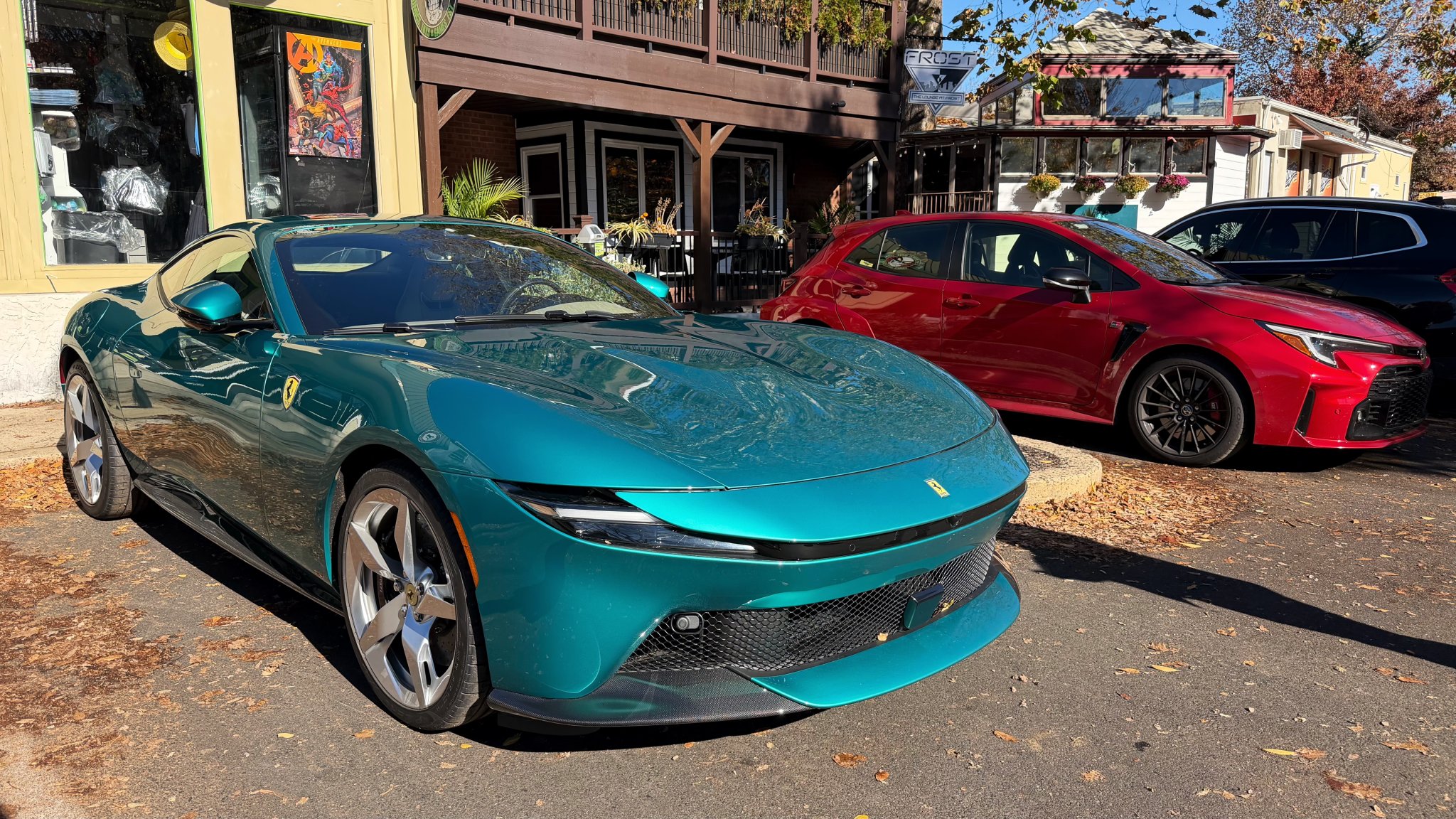
Enthusiasts often fall victim to marketing strategies that make you believe more is better and that range-topping models are the best in the lineup. Whether it's a supercar or an off-roader, this is typically far from true. The post The Ferrari Amalfi Is Proof Enthusiasts Don’t Understand Entry-Level Cars appeared first on The Drive .
“Oh, that was the slow Ferrari for women, right?” some middle-aged guy quickly said after I’d barely finished explaining that the 2027 Ferrari Amalfi I was refueling was the evolution of the California from the late aughts and early 2010s. If you know me, there’s no quicker way of pissing me off than putting someone or something in a box. Even though I wanted to abandon the conversation (and the gas pump), I responded: “Oh, how do you know—did you ever drive one?”
Of course he hadn’t, and neither have most people who look down on the least expensive and least powerful Ferrari, or the entry-level offering of any automaker. For what it’s worth, and as you’ll read in an upcoming review, I truly enjoyed the Amalfi. It’s about as usable as a Ferrari can get without losing that supercar edge that makes it thoroughly Italian. Plus, you can really explore its breadth of performance because it “only” has 631 horsepower.
Interestingly enough, since driving it, I’ve told several people it might just be my favorite Ferrari; a comment that’s been met with gasps and follow-up questions. I’ve now driven every core model in the range (excluding the F80) and, in some cases, variants of each, and I found the Amalfi delightful. Yet, folks find it hard to believe that the lowest model can wow, or in some cases, be more likable than the one at the very top. I believe a combination of “more is better” and excellent marketing by car companies is to blame.
This applies to all cars in every segment, not just supercars. When it comes to off-roading, you’d be surprised how capable a base Jeep Wrangler really is. If you ventured onto a technical trail, you’d quickly realize that good tires, good ground clearance, and a short wheelbase reign supreme. Unless you’re doing a version of the Camel Trophy , the other switches and gizmos are rarely necessary. People love them, though, just as much as they love their off-road stickers and badges. In recent years, a base-model Lexus GX500 , a Honda Passport TrailSport , and a bare-bones Defender have surprised me with extreme capability on some very tough trails.
Over a decade of testing cars for a living, I’ve instilled in the car enthusiast closest to me—my son—that simple cars, slow cars, and often cheap cars are the best. Sure, we all love a BMW M or an Audi RS , but have you ever driven a non-hardcore car on a closed course with a professional driver? If you did, you’d quickly realize most entry-level sporty cars are plenty capable, and you don’t need to spring for carbon everything and extra power to make it “go faster.” I’ll never forget my 20-year-old’s reaction to riding along for a lap of the Nürburgring Nordschleife in a Genesis G70 Ring Taxi —he simply couldn’t believe the car’s performance. Same thing when he rode shotgun in an Acura Integra at the Daytona road course or an MDX at the Long Beach street circuit.
Is this a bit of a rant? Maybe. But really, I’m hoping at least one person reads this and understands that cars are cool, no matter where they sit in the lineup or how much they cost. A base Porsche 911 (or even a Honda Civic Si) is likely the most fulfilling car you could ever drive at speed—you don’t need to spring up to the GT3 RS (or Type R). You just have to know what you’re doing.
Drive happily.
Email the author at jerry@thedrive.com
The post The Ferrari Amalfi Is Proof Enthusiasts Don’t Understand Entry-Level Cars appeared first on The Drive .