Camaro Owner Claims 35 MPG Out of Small-Block Chevy V8 By Combining Turbo With Motorcycle Carb
The Drive ·
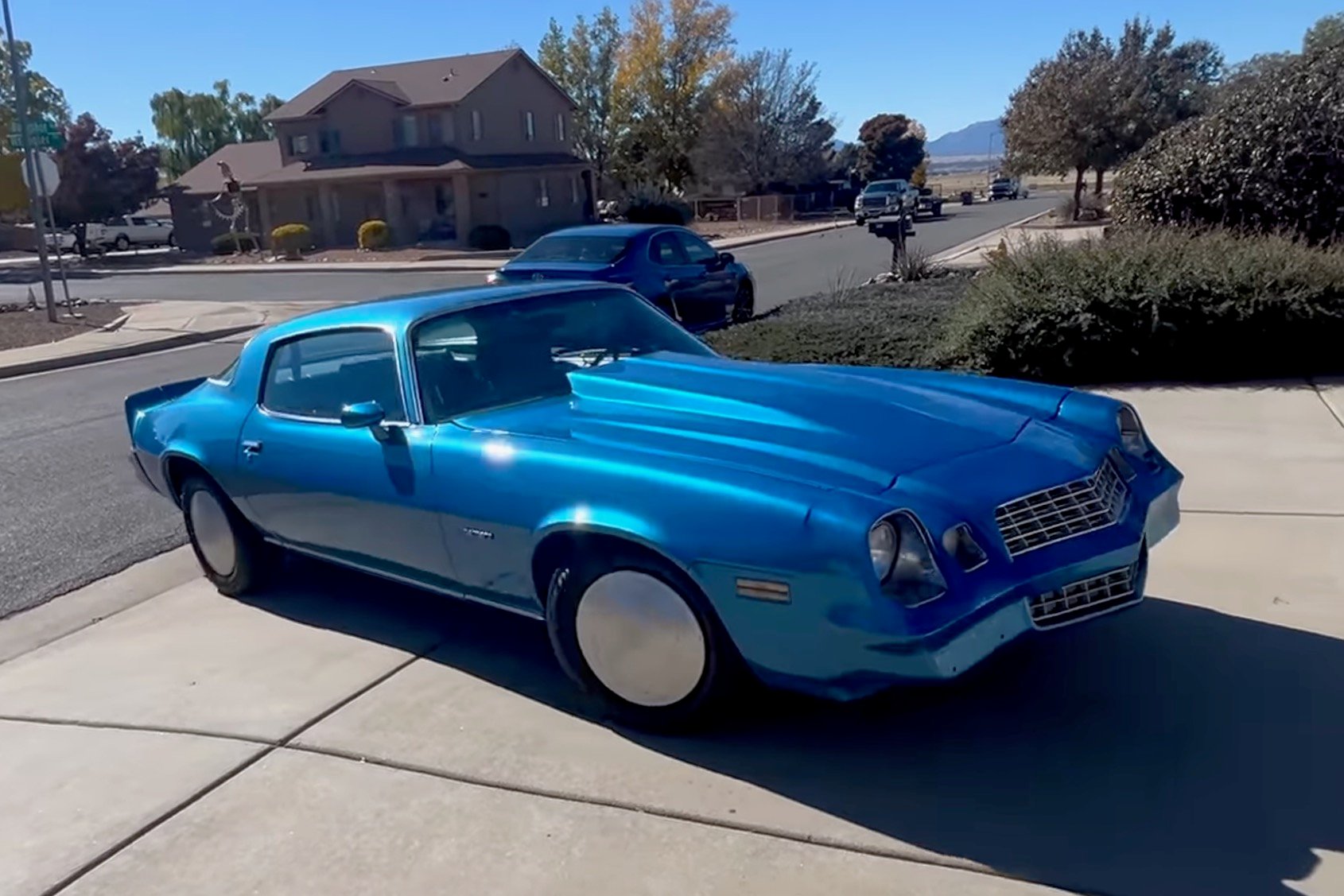
It may not be Prius-rivaling, but that's a pretty good number for an old American V8. The post Camaro Owner Claims 35 MPG Out of Small-Block Chevy V8 By Combining Turbo With Motorcycle Carb appeared first on The Drive .
The Chevrolet small-block V8 is a versatile engine. It can go in anything from muscle cars to work trucks. But it was never ( and still isn’t ) fuel-efficient. It’s hard to get a big-displacement engine like the ubiquitous 350-cubic-inch (that’s 5.7 liters) to be anything other than a gas guzzler. One tinkerer found a way—and it involves a turbocharger, as well as a motorcycle carburetor.
This is not a case of simply installing an undersized carburetor and tuning the engine to work around it ( although that is also possible ). As detailed in a video from YouTube channel Automotive AZ Rancher , a gentleman named Mike Vannozzi built an entirely new fueling system for his 1978 Chevy Camaro incorporating a Mikuni carburetor normally found on Harley-Davidson engines and a turbo. With it, the 350-powered Camaro gets up to 35 mpg on the highway. That’s better than a 2.0-liter, turbo-four sixth-gen Camaro could manage in EPA testing.
What Vannozzi calls the “turbocharged gasoline vapor system” takes advantage of the fact that gasoline easily vaporizes, turning from a liquid into a gas. He had an epiphany when driving his Dodge Charger around Las Vegas as a teenager in 115-degree heat. When the Charger was low on fuel, popping the fuel filler cap created a hissing noise, the sound of all that vaporized gasoline being released. Vannozzi thought about burning gasoline in this state, a bit like natural gas or propane , building 17 prototypes over three years to perfect the idea. As noted in the video’s comments, many others—including NASCAR legend Smokey Yunick—have tried vaporized-gasoline engines over the years. But how many of those do you actually see driving around?
The finished system uses a modified swimming pool heat exchanger to vaporize the fuel. Hot exhaust gases heat it to approximately 500 degrees Fahrenheit to affect the phase change from liquid to gas before it’s combined with air. The motorcycle carburetor, which operates at just 1 psi, ensures the amount of air and fuel being fed into the system is manageable. The fuel-air mixture is pressurized by the turbo, allowing the engine to run properly.
As for why this system produces better fuel economy, it’s all about efficient combustion. Conventional engines can’t fully burn all of the fuel that goes into them, so a little extra is always being consumed and converted into harmful exhaust gases without doing any work. Vannozzi claims fully vaporized gasoline gets burned off completely in his Camaro’s modified engine, requiring less fuel to do the job. It also “burns super clean,” according to Vannozzi.
Turbos, motorcycle carbs, and pool hardware won’t replace hybrids and EVs as the solution to reducing emissions. Vannozzi built this as a one-off retirement project. But it still shows what’s possible with the good old 350. Alternatively, you can convert one to run on wood .
The post Camaro Owner Claims 35 MPG Out of Small-Block Chevy V8 By Combining Turbo With Motorcycle Carb appeared first on The Drive .