NASA, Northrop Grumman Complete Cygnus XL Space Station Reboost
NASA Science ·
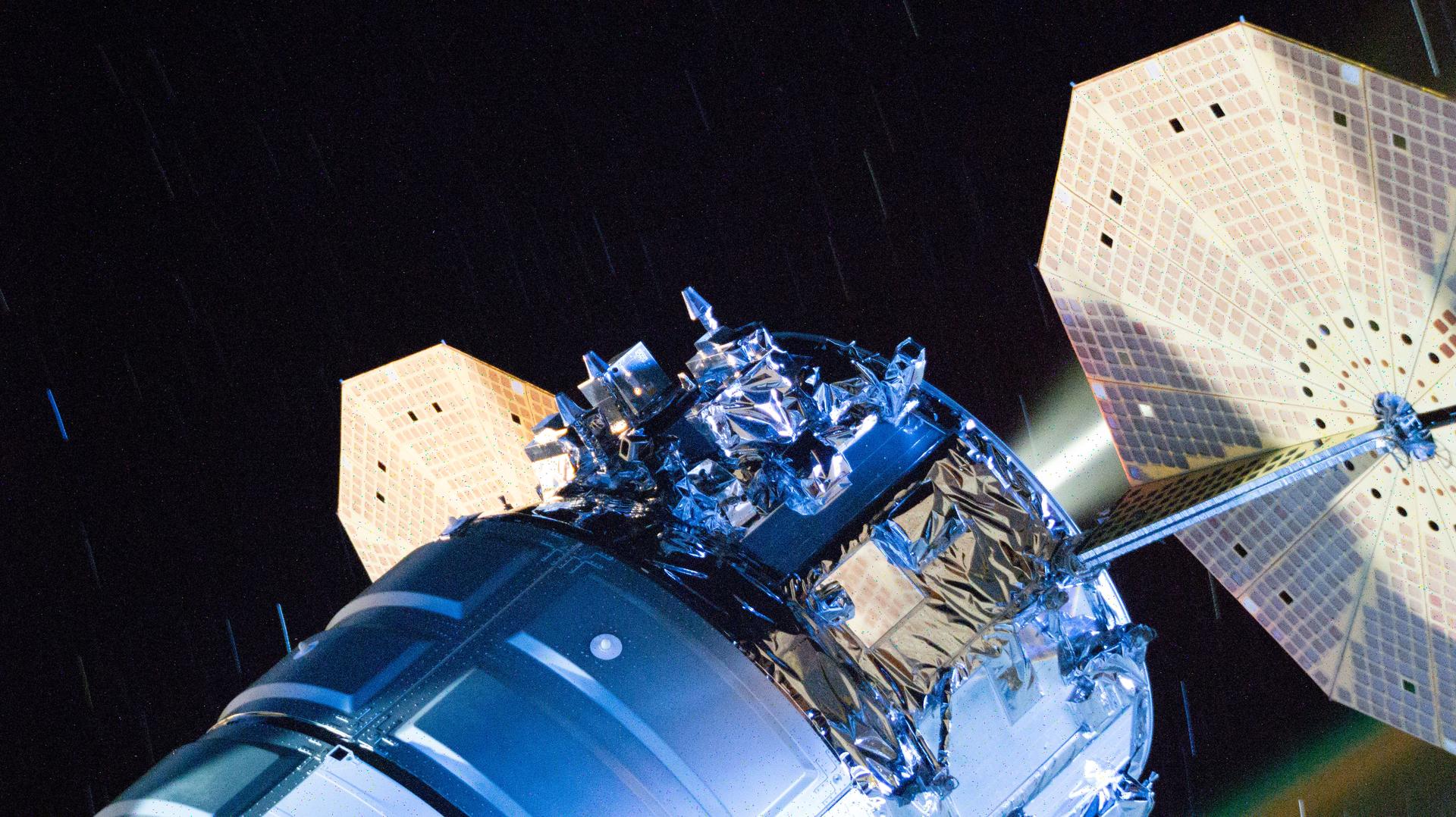
Northrop Grumman’s Cygnus XL spacecraft today fired its thrusters for XX mins, XX seconds boosting the International Space Station’s orbit. The post NASA, Northrop Grumman Complete Cygnus XL Space Station Reboost appeared first on NASA Science .
Northrop Grumman’s Cygnus XL spacecraft today fired its thrusters for 18 minutes boosting the International Space Station ’s orbit.
The Cygnus XL’s gimbaled delta velocity engine was used to adjust the space station’s altitude by 1.5 miles at apogee, or highest point of station’s orbit, 0.8 miles at perigee, or lowest point of station’s orbit, placing the station in an orbit of 265.5 x 256.8 miles.
The Cygnus XL spacecraft, which is supporting NASA’s Northrop Grumman Commercial Resupply Services 24 mission, arrived at the orbital complex on April 13 , delivering more than 11,000 pounds of science and supplies to the space station. Cygnus will remain berthed to space station until October when it will be filled with disposal cargo, unberthed from station, and then harmlessly burn up during its destructive reentry into Earth’s atmosphere.
This reboost sets up the phasing for NASA’s SpaceX Crew-13 mission slated to launch no earlier than Oct. 1 aboard SpaceX’s Dragon spacecraft on the company’s Falcon 9 rocket from Space Launch Complex 40 from Cape Canaveral Space Force Station in Florida.
As part of Crew-13 NASA astronauts Jessica Watkins and Luke Delaney will serve as spacecraft commander and pilot, respectively. They will be joined by CSA (Canadian Space Agency) astronaut Joshua Kutryk and Roscosmos cosmonaut Sergey Teteryatnikov, who will serve as mission specialists. After arriving at the orbiting laboratory, Crew-13 will become members of the space station’s Expedition 75.
Learn more about station activities by following the space station blog , @space_station on X, as well as the ISS Facebook and ISS Instagram accounts.
The post NASA, Northrop Grumman Complete Cygnus XL Space Station Reboost appeared first on NASA Science .