RedMagic 11S Pro review: Active liquid and fan cooling meets aggressive pricing
Latest from Tom's Guide ·
null
From the iPhone 18 Pro Max to the Galaxy S26 Ultra , I’ve tested virtually every major flagship phone released this year. They’re all striking in their own way, but they generally follow the same blueprint of what makes them the best phone contenders.
The RedMagic 11S Pro is a departure from the norm, leaning closer to a niche phone that prioritizes gaming above all else. That really shows in its radical design, which pairs a flagship Snapdragon processor with an active liquid-and-fan cooling system built to keep frame rates consistently smooth.
After testing it for a week, I can tell you that this over-the-top hardware offers fair value and comes in at a price that easily undercuts every mainstream flagship on the market. Here's how.
RedMagic 11S Pro
Price
$799
Display
6.85-inch AMOLED
Refresh Rate
144Hz
CPU
Snapdragon 8 Elite Gen 5 Leading Version
RAM
12GB, 16GB
Storage
256GB, 512GB
Rear Cameras
50MP main (f/1.8), 50MP ultrawide (f/2), 2MP macro (f/2.4)
Front Camera
16MP under-display selfie (f/2)
Battery
7,500mAh
Charging
80W wired, 80W wireless
Software
Android 16 with RedMagic OS 11.5
Size
6.45 in x 3.01 in x 0.35 inches (163.82 x 76.54 x 8.9 mm)
Weight
8.11 ounces (230 grams)
Colors
Nightfreeze (transparent black,) Subzero (transparent silver)
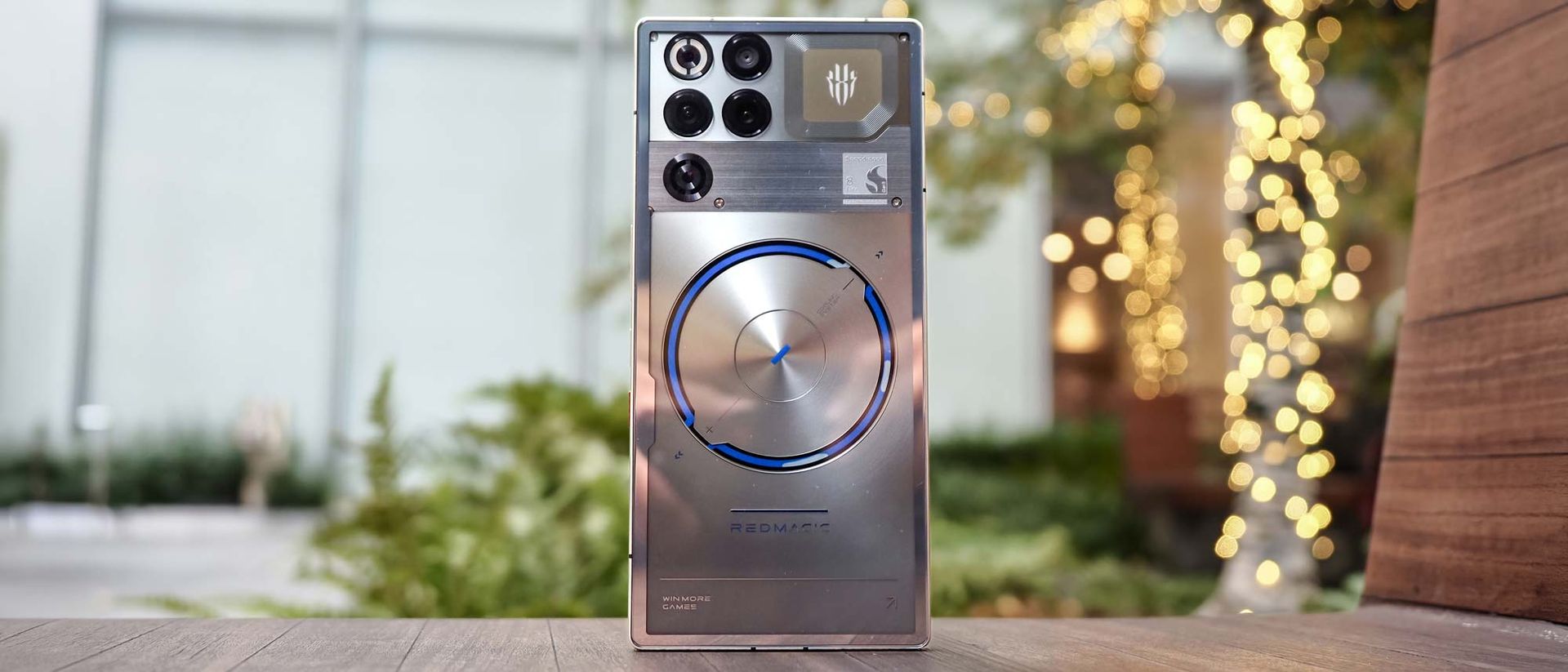
While most flagship phones look alike with their respective camera housings on the back, the RedMagic 11S Pro leans hard into its gaming PC-inspired aesthetic. In fact, there’s nothing different about its design compared to the previous RedMagic 11 Pro from earlier this year — boasting a flat metal frame and boxy lines that give it a dense build quality that feels substantial in hand.
I'm particularly mesmerized by the design on the back of the phone, as the brushed aluminum material behind the glass panel and flush camera housing are a radical departure. And with subtle RGB accents, a visible liquid-cooling loop, and an LED-lit fan, the whole package makes it look more like a miniature custom PC rig than a conventional smartphone.
Most flagship phones get toasty during extended play, usually after 15 minutes of demanding 3D gaming, which leads to thermal throttling — but that’s not an issue with the RedMagic 11S Pro. By combining its upgraded AquaCore liquid-cooling loop with a high-speed 24,000 RPM fan, it actively pulls heat away from the overclocked Snapdragon 8 Elite Gen 5 Leading Version chip to keep sustained performance intact.
Even after 30 minutes of dungeon hunting in Diablo Immortal and killing time with Call of Duty Mobile, the phone remains noticeably cooler to the touch than mainstream flagships. Best of all, I don’t see dropped frame rates like I do on other phones.
As much as I love gaming on the RedMagic 11S Pro’s 6.85-inch AMOLED display, watching videos on it is just as satisfying. This panel produces colors that pop with deep saturation, and alongside a 144Hz refresh rate that keeps UI animations fluid, it actually holds up well outdoors. In our lab testing, the panel reached a peak brightness of 1,950 nits, beating RedMagic’s own 1,800-nit rating and making it easy to view under the harsh midday sun.
You wouldn’t know it just by looking at its sleek 8.9 mm profile, but the RedMagic 11S Pro packs a massive 7,500 mAh silicon-carbon battery inside. In our battery drain test, it lasted an impressive 19 hours and 47 minutes , easily cruising through a full day of normal use in my experience — with plenty of gas left in the tank by night’s end.
When I do finally need to plug in, its 80W wired charging gets it back to 60% in just 30 minutes from a dead battery. Another feature I really appreciate is that RedMagic lets me activate the internal fan to optimize charging and reduce heat buildup.
Perhaps the most surprising thing about the RedMagic 11S Pro isn’t its liquid cooling or its overclocked Snapdragon chip — it’s how little it costs. Starting at $799 for the 12GB/256GB model and going up to $899 for the 16GB/512GB variant, it’s a flagship-caliber phone for hundreds less.
It comes equipped with a top-tier chipset, a massive 7,500 mAh battery, and active thermal hardware, which makes the $1,299+ cost of other flagships look bloated. Even against value-minded flagships like the OnePlus 15 , the RedMagic 11S Pro still comes in at a lower entry price without cutting corners on raw power. And yes, it’s unlocked right from the get-go!
In order to hit that $799 price point, RedMagic doesn’t offer a triple-camera system — you just get two usable rear sensors: a 50MP main camera and a 50MP ultrawide. It clearly forgoes a dedicated telephoto lens, and as a result, zooming tops out at 10x digital zoom. At that maximum, photos come out extremely soft, muddy, and practically useless.
Low-light photography is a mixed bag too because, while the main sensor does a respectable job of keeping image noise under control, the overall picture comes out noticeably dark and underexposed. Under ideal lighting conditions, though, it captures usable shots worthy of posting on social media.underexposed. Under ideal lighting conditions, though, it captures usable shots worthy of posting on social media.
Even if the RedMagic 11S Pro has the same hardware found in other flagships and is built to last for years, the software support window is regrettably short — and a big reason why some people might pass it over.
Under RedMagic’s official update policy , the 11S Pro is guaranteed just two major Android OS upgrades, which effectively puts it at Android 18 given that it still ships with Android 16. You do get three years of security patches, but that’s still far too short for a phone of this caliber.
Given that Samsung and Google now promise seven years of full OS and security support, RedMagic’s commitment feels painfully short.
Despite packing the overclocked Snapdragon 8 Elite Gen 5 Leading Version chip, the RedMagic 11S Pro kinda underperforms in some synthetic benchmark tests. The phone averaged Geekbench 7 scores of 3,138 in single-core and 7,616 in multi-core, which trails rival Snapdragon 8 Elite Gen 5 flagships by a noticeable margin.
Switching into RedMagic’s high-performance Rise mode, however, dramatically improves the multi-core score up to 10,725, though single-core performance unexpectedly dips to 2,016 in the process.
Fortunately, those weak Geekbench numbers don't tell the whole story when you're actually gaming. In the 3DMark Wild Life Extreme Stress Test, the RedMagic 11S Pro achieved a stability score of 79.4% — matching the iPhone 18 Pro Max. In real-world gameplay, performance remains strong, holding high frame rates for extended stretches without dipping.
I know very well that the RedMagic 11S Pro isn’t trying to beat the Galaxy S26 Ultra or iPhone 18 Pro Max at being an all-purpose flagship. It succeeds by prioritizing mobile gamers, seeing that it delivers standout hardware you simply won’t find elsewhere at $799.
You do have to accept clear trade-offs to get that value. Its synthetic performance scores trail rival flagships out of the box, the dual-camera setup tops out at a soft 10x digital zoom and struggles under low light, and RedMagic’s two-year major OS update policy falls well short of mainstream competitors.
Still, if you want a dedicated gaming powerhouse with unmatched endurance and thermal control at a fraction of the cost, the RedMagic 11S Pro is easily worth getting.