Meet the MBA Class of 2028: Karrah Findley, Columbia Business School
Poets&Quants ·
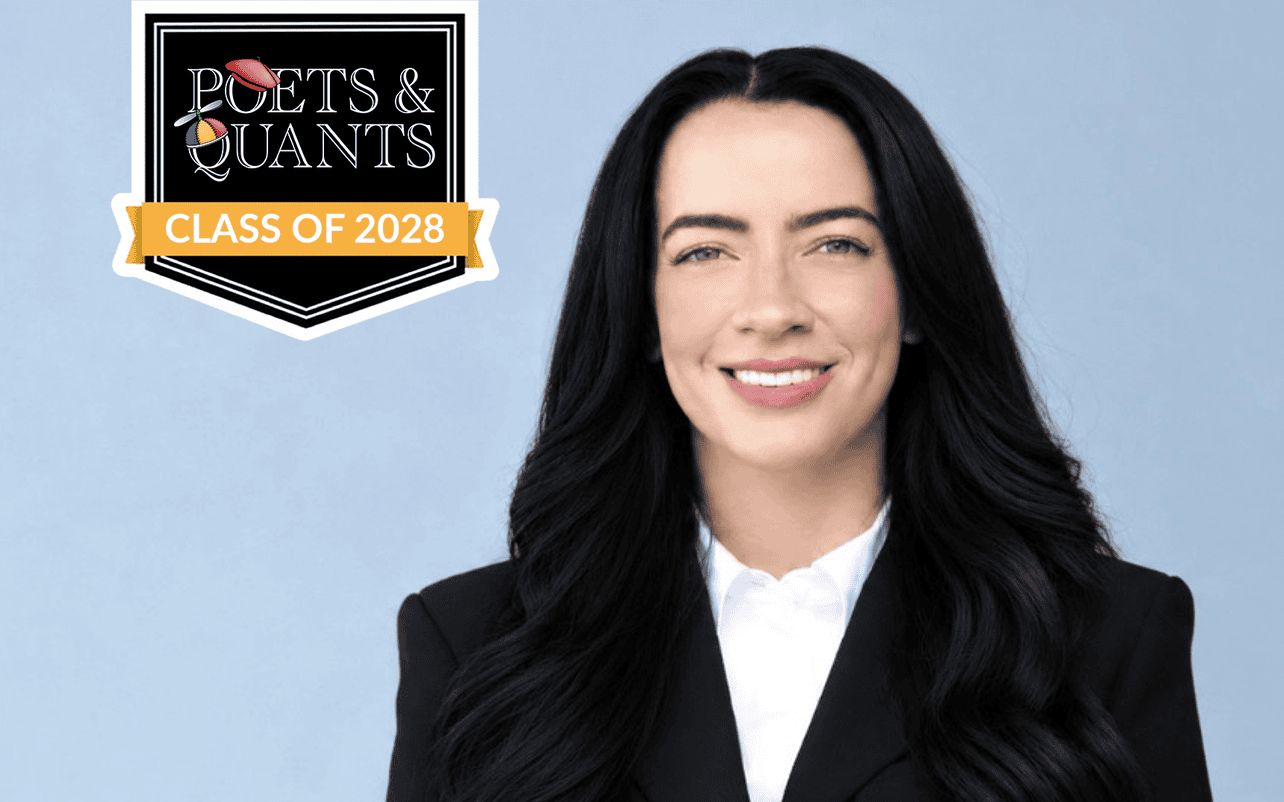
Karrah Findley Columbia Business School “Fueled by curiosity, driven by possibility, happiest when bringing people together to build something extraordinary.” Hometown: Prince Frederick, Maryland Fun Fact About Yourself: I am one of five children, and three of us ... The post Meet the MBA Class of 2028: Karrah Findley, Columbia Business School appeared first on Poets&Quants .
“Fueled by curiosity, driven by possibility, happiest when bringing people together to build something extraordinary.”
Hometown : Prince Frederick, Maryland
Fun Fact About Yourself: I am one of five children, and three of us share a rare genetic condition that is not-so-rare within our tribe.
Undergraduate School and Major:
Towson University
Bachelor of Science, Double Major: Forensic Chemistry; Molecular Biology, Biochemistry & Bioinformatics
Most Recent Employer and Job Title: NewYork – Presbyterian, Project Lead
What makes New York City such a great place to earn an MBA? One of the greatest things about earning an MBA in New York City is that the opportunities for growth extend far beyond the classroom, both professionally and personally.
From a career perspective, it’s hard to imagine a better place. Wall Street is practically in our backyard, and we’re surrounded by some of the world’s leading financial institutions, hospital systems, and healthcare innovators. As someone transitioning from the healthcare industry into investment banking, that proximity is invaluable. But what’s so exciting about New York is that this access extends to practically every industry, meaning every one of my classmates has the opportunity to explore their interests and connect with people at the forefront of their fields.
But as much as I love the professional opportunities, I think what makes New York truly special is everything else! Where else can you spend an evening cheering on a classmate at their DJ set, going on a dumpling tour through Flushing, spontaneously catching a Broadway show, or finding yourself at one of 11 major professional sports team’s games? There’s always something happening, something new to try, and someone willing to join you.
I think that’s what makes NYC such an incredible place to spend these two years. You’re not just growing academically or building your career; you’re growing personally, too. You’re discovering new interests, stepping outside your comfort zone, and experiencing things you might never have thought to try. And getting to do all of that alongside classmates who are just as eager to explore makes the experience that much more special.
Aside from your classmates and location, what was the key part of Columbia Business School’s MBA curriculum programming that led you to choose this business school and why was it so important to you? One of the biggest draws for me was the opportunity to be part of the broader Columbia University community, something I had already been fortunate enough to experience while working at Columbia University Irving Medical Center (CUIMC).
Throughout my time there, I worked alongside graduates of Columbia Business School, the Vagelos College of Physicians and Surgeons, and various PhD programs. What struck me wasn’t just how accomplished everyone was, but how genuinely connected they remained to the university and to one another. Years after graduating, they were still incredibly invested in the Columbia community, and that enthusiasm was contagious. When I shared that I was applying to CBS, they were some of my biggest supporters, and when I was admitted, they were just as excited as I was!
Coming from a scientific background, I was also drawn to the opportunity to explore the intersections of business, medicine, engineering, and entrepreneurship across the university. I wanted an MBA experience that would allow me to build on my existing knowledge, while challenging me to think in entirely new ways.
Having already experienced how collaborative, welcoming, and close-knit the Columbia community could be, I knew I wasn’t just choosing a business school, I was joining a community I already felt fortunate to be part of and that CBS encouraged to foster.
What course, club or activity excites you the most at Columbia Business School? Without a doubt, serving as Chief of Staff for Cluster C’s Board!
As the inaugural Cheetahs, we have a unique opportunity to build something from the ground up, establishing traditions, creating a sense of identity, and hopefully leaving a legacy that future Cheetahs will carry forward.
One of the things I love most about Columbia is the cluster system. The core curriculum brings us together academically, but I think it’s just as important to create opportunities to connect, have fun, and build friendships outside the classroom. As Chief of Staff, I’ve really enjoyed finding creative ways to make that happen, from helping coordinate events and keeping everyone in the loop to building an app that will serve as a central hub for our cluster’s news, events, and activities.
What excites me most is that we’re not simply participating in traditions that already exist; we get to create them! Whether it’s something as simple as a weekly newsletter, a spontaneous get-together, or an event that becomes an annual tradition, I want to help build a community that feels just as connected outside the classroom as it does during the core.
After all, we only get two years together, but there’s no reason the Cheetah legacy can’t last much longer!
What is your unique quality that will enable you to make a big contribution to the Class of 2028? Why? I love bringing people together, especially people who might not otherwise cross paths.
Throughout my career, I’ve often found myself working between very different groups, ranging from scientists and engineers at a genomics startup to physicians, laboratory leaders, and technology teams across a major hospital system. Those experiences taught me that bringing people together isn’t necessarily about getting everyone to think alike. It’s about recognizing what makes each person different and finding ways for those perspectives to complement one another.
I bring that same energy into my personal life. I’m usually the person making introductions, organizing plans, or convincing people who have never met that they absolutely need to know each other.
At Columbia, I hope to contribute to a community where people feel comfortable stepping outside their usual circles, exploring new interests, and building friendships they might never have expected. With such an incredible collection of people in one place, it would be a shame not to make the most of it!
Describe your biggest accomplishment in your career so far: One of my proudest professional accomplishments has been helping lead the standardization of diagnostic laboratory services across NewYork-Presbyterian’s 10-hospital network, which collectively performs more than 14-million diagnostic tests annually.
When you’re operating at that scale, differences in laboratory equipment, testing methodologies, and workflows across campuses can create significant variability in how diagnostic services are delivered. Although our goals were quite ambitious, we were ultimately successful, so much so that NewYork-Presbyterian is poised to become a Roche Diagnostics Center of Excellence as a result of this project.
What made this project particularly meaningful to me was the impact beyond the laboratory. At its core, this initiative was about ensuring that, regardless of where a patient lives or which NewYork-Presbyterian campus they visit, they have access to the same high-quality, state-of-the-art diagnostic care. A patient’s ZIP code or choice of hospital shouldn’t determine the quality of care they receive.
Leading an initiative of this scale required navigating complex operational challenges, challenging long0standing practices, and aligning stakeholders with different priorities around a shared vision. It reinforced something I’ve come to appreciate throughout my career: some of the most meaningful innovations aren’t about creating something entirely new, but about making exceptional care more consistent, accessible, and equitable for everyone.
What do you hope to do after graduation? After graduation, I hope to stay in New York City as a healthcare investment banking associate.
I’ve spent my career experiencing healthcare from several different perspectives, from precision oncology and an early-stage genomics startup to enterprise operations at one of the country’s largest hospital systems. Each experience has given me a greater appreciation for the scientific innovations, operational complexities, and strategic decisions that shape the industry.
I’m excited to take that foundation into investment banking, where I’ll have the opportunity to work with companies across different healthcare subsectors and stages of growth, helping them navigate some of their most consequential financial and strategic decisions.
Long term, I hope to build a career in healthcare investment banking. The industry is constantly evolving, and the opportunity to keep learning, solving new problems, and working with different businesses is exactly what excites me about the profession.
What advice would you give to help potential applicants gain admission into Columbia Business School’s MBA program? Don’t underestimate yourself. I know, easier said than done.
It’s very easy to look at the profiles of other MBA applicants and start comparing your experiences, accomplishments, or career trajectory to theirs. Especially if you’re coming from a nontraditional background, it can be tempting to convince yourself that you don’t quite fit the mold.
But that’s the beauty of business school. There isn’t one mold.
I hadn’t followed the traditional path into business and, for a long time, I wasn’t entirely sure how my experiences would translate into an MBA classroom.
What I eventually realized was that the very things I thought made my background unconventional were also what made my perspective valuable.
My advice is to own your story, be intentional about what you want to accomplish, and don’t disqualify yourself from an opportunity before you’ve even given yourself a chance.
You might be surprised by just how much you have to offer.
The post Meet the MBA Class of 2028: Karrah Findley, Columbia Business School appeared first on Poets&Quants .