The Impact of Webb on Our Understanding of Black Holes
NASA Science ·
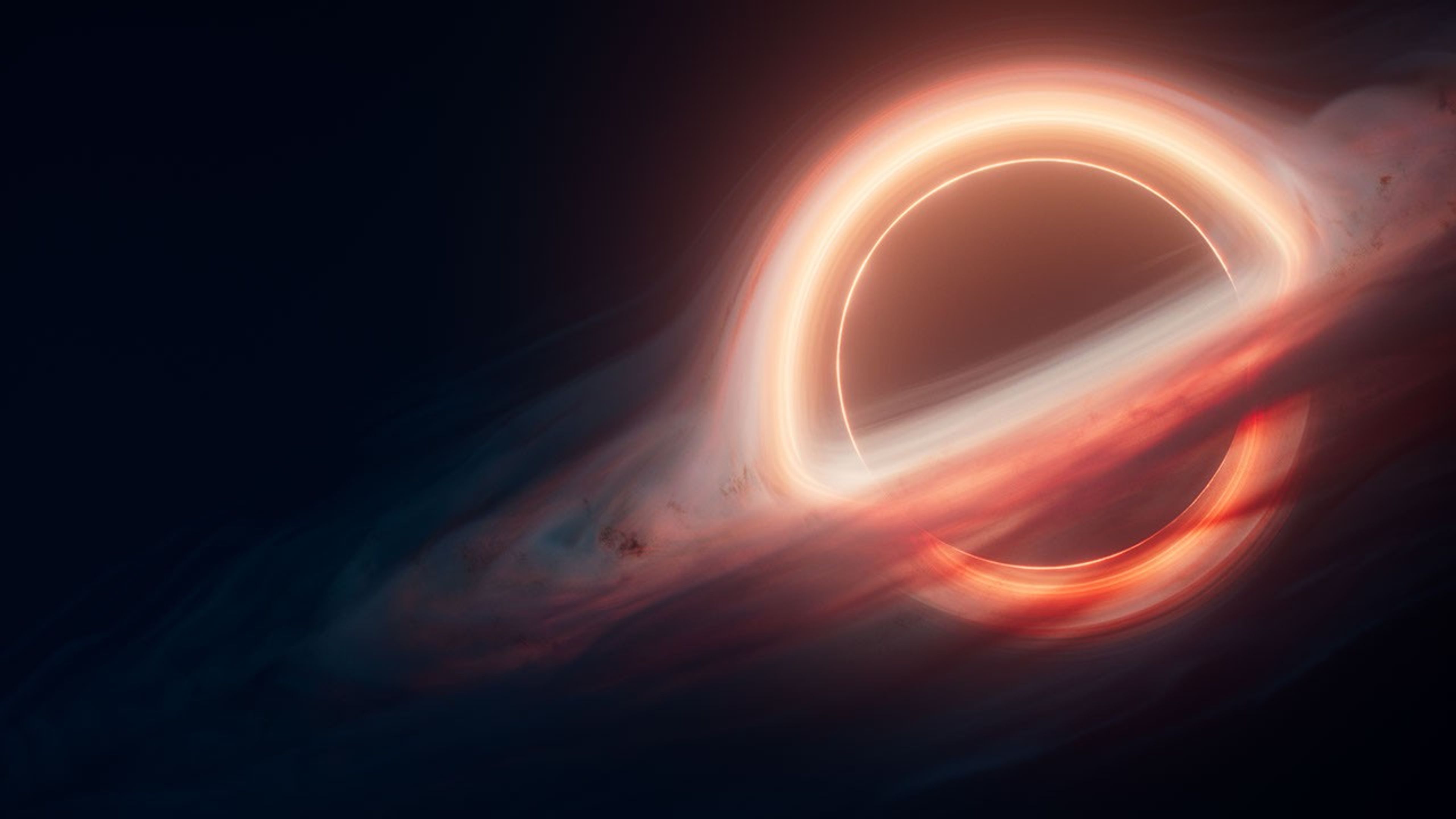
How has Webb improved our ability to study black holes? Black holes are among the most studied yet most mysterious astronomical objects in the universe. While the immediate environments around black holes have been observed for decades, key questions, such as how they form, remain unresolved. NASA’s James Webb Space Telescope is opening avenues for […] The post The Impact of Webb on Our Understanding of Black Holes appeared first on NASA Science .
… Science Explainers The Impact of Webb on Our… Webb News Latest News Latest Images Webb’s Blog Awards X (offsite – login reqd) Instagram (offsite – login reqd) Facebook (offsite- login reqd) Youtube (offsite) Overview About Who is James Webb? Fact Sheet Impacts+Benefits FAQ Webb Timeline Science Overview and Goals Early Universe Galaxies Over Time Star Lifecycle Other Worlds Science/Engineering Explainers Observatory Overview Launch Deployment Orbit Mirrors Sunshield Instruments & ISIM Module Instrument: NIRCam Instrument: MIRI Instrument: NIRSpec Instrument: FGS/NIRISS Optical Telescope Element Backplane Spacecraft Bus Webb vs Hubble -> Multimedia About Webb Images Images Videos Products & Activities Podcasts Webb Image Sonifications What is Webb Observing? 3d Webb in 3d Solar System Webb’s First Images Team International Team People Of Webb More For the Media For Scientists For Educators For Fun/Learning 10 min read
Black holes are among the most studied yet most mysterious astronomical objects in the universe. While the immediate environments around black holes have been observed for decades, key questions, such as how they form, remain unresolved.
NASA’s James Webb Space Telescope is opening avenues for astronomers to study actively growing, supermassive black holes in the early universe in detail that was previously impossible to match. With its sensitive, high-resolution near- and mid-infrared tools, astronomers can characterize properties that have never been observed before, challenging theories about how black holes evolved across cosmic time. Perhaps there is no clearer indication of the significance of these early universe black holes than little red dots, a class of objects discovered by Webb that astronomers are still investigating.
Black holes are dense objects that have a gravitational force so strong that they significantly warp the space around them. They contain a boundary, known as the event horizon, beyond which nothing, not even light, can escape. Astronomers have not been able to observe the interior of black holes past this threshold. Black holes can be the result of the death of high-mass stars. However, the origins of supermassive black holes, such as the black holes like the one at the center of our Milky Way galaxy and others that are millions to billions of times the Sun’s mass, remain a mystery.
By using models that simulate the formation of present-day galaxies, astronomers have connected the growth of these black holes to the growth of their host galaxies, a process known as co-evolution. Notable examples of co-evolution are found in nearby galaxies, where the black holes at their centers scale with the properties of their host galaxies, such as star formation rate. Our understanding of black holes is key to understanding how galaxies evolve and what the universe looks like today.
Based on those models, the most prevalent theory behind the co-evolution of black holes and galaxies is that, as galaxies merge, their black holes also merge. These newly formed black holes take in nearby gas and dust, which spiral inward, eventually forming a flat, rotating cloud of matter known as an accretion disk . This material heats up through friction and glows. The energy released from the accretion disk, in turn, energizes the surrounding gas and dust and turns the region into an active galactic nucleus (AGN).
AGN don’t just consume matter. They also eject large amounts of it back out in the form of superheated astrophysical jets , large outflows of moving gas capable of slowing down or even stopping star formation. Astronomers theorize that these processes explain how black holes inject energy into their host galaxies.
Active galactic nuclei emit light across the entire electromagnetic spectrum . Different parts of the AGN shine more strongly at different wavelengths. For example, the accretion disk shines brightly in ultraviolet light, while the surrounding dust emits mainly infrared light. Although most AGN show features across many wavelengths, emission within some wavelengths can appear weaker depending on an AGN’s orientation or environment.
However, there are still questions. For example, how did the first supermassive black holes initially form, and how did the impact of AGN change throughout time? To best study co-evolution, we need to find galaxies and black holes in the early universe. For the first time, Webb has enabled astronomers to observe this period, which helps us fill in the missing pieces to better understand the universe’s evolution. As Webb finds objects — such as little red dots, which don’t have characteristics of typical active galactic nuclei — we acquire new information that we can compare to other supermassive black holes and galaxies throughout cosmic time.
Through studies of the early universe with Webb, astronomers are beginning to focus in on finding evidence of black hole “seeds” — the first black holes theorized to grow. There are two types of seeds with a broad spectrum of types between them:
Even though we can’t see black holes themselves, astronomers can employ several techniques to infer their masses from nearby stars, gas, and light.
In the nearby universe, a common method is observing stars as they orbit the centers of galaxies. Webb’s high resolution helps astronomers to measure the velocities of nearby stars’ orbits around a black hole. This allows us to calculate the mass of that black hole, just as we can measure the masses of planets by watching the orbits of moons around them. Observing stellar orbits within galaxies, however, can be quite difficult, even in those close to the Milky Way galaxy.
To indirectly infer the masses of black holes in the early universe, astronomers use spectroscopy , a method of studying objects by analyzing the wavelengths of light that they emit, absorb, transmit, or reflect. With this method, astronomers can use Webb to determine both the velocity of gas and, in certain cases, the size of the region surrounding the AGN, which enables astronomers to infer the mass of the black hole.
Webb’s spectroscopic tools make it uniquely capable of analyzing the light emitted by superheated and glowing matter in the accretion disks of black holes in the early universe. Depending on the velocity of the surrounding gas, the spectrum that an AGN produces takes a different shape.
The Doppler effect is responsible for showing us the direction that the gas moves. Gas that moves away from an observer results in spectral lines that shift toward red wavelengths of light ( redshift ), while gas that moves toward the observer results in lines that shift toward blue wavelengths ( blueshift ).
The same phenomenon also tells us how fast the gas is moving. Gas that moves at a lower velocity produces a narrow distribution of shifted wavelengths, while higher-velocity gas produces a broader distribution. Since gas moves more quickly around more massive black holes, supermassive black holes produce very broad spectral lines.
A common indirect method for determining the size of the region surrounding an AGN relies on estimating it from the brightness of specific light signatures emitted by gas around the black hole — approximations that were impossible before Webb. A more challenging method involves monitoring the changes in the region’s brightness.
As the brightness of an AGN changes, surrounding gas and dust become more energized. This added energy eventually causes these regions to glow as well, starting a cascading effect from the inside out. The more massive the region, the slower the propagation. Webb helps inform astronomers about the amount of time this process takes, which provides an idea of the region’s mass. Plotting these changes across AGN is known as reverberation mapping. This method can be challenging, however, since it requires a large amount of time observing a region to catch the small changes propagating through a system.
Since Webb can detect the infrared emissions that come from objects in the early universe, astronomers have a path to observe the spectral features of galaxies and their supermassive black holes in this period of time. These observations enable them to approximate the masses of black holes from spectral lines that have been cosmologically redshifted into the near- and mid-infrared wavelengths. These details dramatically increase the amount of samples for astronomers to study, which helps us determine if black holes in the early universe share properties with black holes in the nearby universe.
Webb has discovered a new class of objects known as little red dots (LRDs), named for their compact, red appearance, through its observations of the early universe. These objects tend to appear even in observations where they weren’t the focus and astronomers note that nothing we’ve seen before looks like them.
Many LRDs appear as early as 600 million years after the big bang, although some have been detected as late as 1 billion years afterward. However, LRDs seem to all but vanish by about 2 billion years after the big bang, with only a handful observed from then to the present day. Astronomers are using Webb to solve the mysteries of why little red dots are found where they are.
Astronomers theorize that LRDs could be active galactic nuclei. If little red dots are AGN, then observations of little red dots reveal that there may be many more AGN than were predicted. However, despite the similarities between the two types of objects, astronomers note that there are many characteristics that differ, which are driving a conversation in the astronomy community about their connection to black holes.
Because AGN are so well studied, making comparisons between them and LRDs is the easiest way for scientists to identify LRD characteristics. However, their differences have also bred much disagreement. Are little red dots actually AGN? Or are they a mixed bag of other theoretical objects that share traits, such as massive gas clouds, “ quasi-stars ,” or “ black hole stars ”?
This distinction could bring changes to one or more major astronomical fields of research. If, for example, little red dots aren’t accreting black holes and are instead exotic types of stars, then it would influence thinking on how much starlight could be emitted from such a small area, impacting early universe astrophysics.
Webb’s observations of supermassive black holes and little red dots have set astronomers on a brand-new path, stoking discussion about the initial conditions in the early universe and how these impact the evolution of black holes and the galaxies that host them.
Populations of galaxies in the early universe can also be compared to similar objects in the local universe — namely dwarf galaxies. Many of these galaxies, some of which host active black holes, have not undergone significant mergers. This makes them valuable for studying intrinsic black hole properties that little red dots may help illuminate, including clues about black hole seed types.
As Webb continues to observe the universe both nearby and far away, complementary data from other observatories like NASA’s Nancy Grace Roman Space Telescope will be crucial in uncovering thousands of supermassive black holes. Roman will be able to survey huge swaths of the sky and uncover thousands of supermassive black holes in the early universe much faster than Webb, providing more targets for Webb to study spectroscopically to understand their natures.
Over time, this cooperation will help astronomers develop a more robust set of parameters that constitute objects like little red dots and usher in a new era of understanding black hole evolution. In particular, Webb’s work in connecting early black holes to those we see today will deepen our knowledge of galaxies across the universe, including our own.
By Matthew Brown Space Telescope Science Institute in Baltimore, MD
Image: Dissecting Supermassive Black Holes
Through studying the early universe, NASA’s James Webb Space Telescope has brought us closer to understanding one of the most prominent theories that explain the origins of supermassive black holes, that of black hole “seeds.”
How To Measure What Can’t Be Seen Although black holes themselves can’t be seen, astronomers can employ several techniques to infer their masses. For nearby black holes, astronomers observe the motion of orbiting stars, while, for those further away, astronomers study the motion of gases surrounding black holes.
Reading Motion in Light At large distances, astronomers use Webb to tell how fast gas moves. Slower gas produces a narrow distribution of wavelengths, while faster gas produces broader distributions. Gas moves faster around supermassive black holes, producing very broad spectral lines.
Little Red Dots Astronomers theorize that little red dots, which are mostly present in the early universe, are active supermassive black holes. But, despite some similarities that little red dots have with active galactic nuclei , astronomers note that there are many characteristics that differ.
Share Details Last Updated Oct 09, 2026 Location NASA Goddard Space Flight Center Related Terms James Webb Space Telescope (JWST) Active Galaxies Astrophysics Astrophysics Division Black Holes Galaxies Goddard Space Flight Center Quasars Stars The post The Impact of Webb on Our Understanding of Black Holes appeared first on NASA Science .