Is that really a Christmas cactus? How to spot the difference before you buy (and choose a healthy plant)
Latest from Tom's Guide ·
Camilla is the Homes Staff Writer and covers everything to do with homes and gardens. She has a wealth of editorial experience, mounting over 30 years, and covers news and features, tests products for reviews and compiles buying guides. Her work has appeared in business and consumer titles, including Ideal Home, Real Homes, House Beautiful, Homebuilding & Renovation, and Kitchen & Bathroom Business. She’s even appeared on the cover of Your Home, writing about her own house renovation. Although she’s obsessed with decorating her home, she also enjoys baking and trying out the latest kitchen appliances. But when she’s not inside, you’ll find her pottering about in her yard, tending to her vegetable patch or taking in her prized hydrangeas. She also enjoys keeping fit, and if she's not on a spin bike trying to keep up with the class, she'll be in the pool, or trying to perfect her headstand in a yoga class.
Walking through my local garden center over the weekend, I expected to see the usual autumnal display — rich foliage, striking grasses, and at least a pumpkin or two. Instead, spooky season had been entirely cleared away days before Halloween had even arrived. In their place stood aisles of tinsel, glittery ornaments, and holiday decor, overshadowing the plants.
While I usually refuse to acknowledge the holidays this early, the sea of sparkle got me thinking about gifting — and how a plant makes a year-round present , not something short-lived.
And once I made my way through the seasonal clutter, I noticed a display of Christmas cacti, and it instantly transported me back to my Nana’s living room. I remember watching her plant in awe and seeing how those extraordinary, jagged leaf segments seemed to chain together before bursting into blooms at their tips.
But on a second look, I noticed another plant with a similar appearance, this time with smooth leaves rather than spiky ones. It turns out I was looking at a real Christmas cactus, and my Nana’s was the Thanksgiving type.
I always assumed there was only one type of holiday cactus, and I’m not alone in thinking that. So to set the record straight, here’s what you need to know about the different types of holiday cacti you can buy.
It can be easy to confuse a Christmas cactus with a Thanksgiving cactus, as they look very similar and flower around the same time of year. So, you’ll have to look a little closer to correctly identify the one you own or plan to buy. But there’s also another holiday cactus to add into the mix, and it's known as the Easter cactus.
Here’s the breakdown on each plant’s form, leaf type, bloom time and flowers:
A Thanksgiving cactus ( Schlumbergera truncata ) has an upright growth habit and defined, serrated leaves that remind me of teeth along the edges. It also comes in a wide range of colors: red, pink, orange, or white, and the blooms face upward or horizontally. The Thanksgiving cactus will start blooming in November, ready for Thanksgiving.
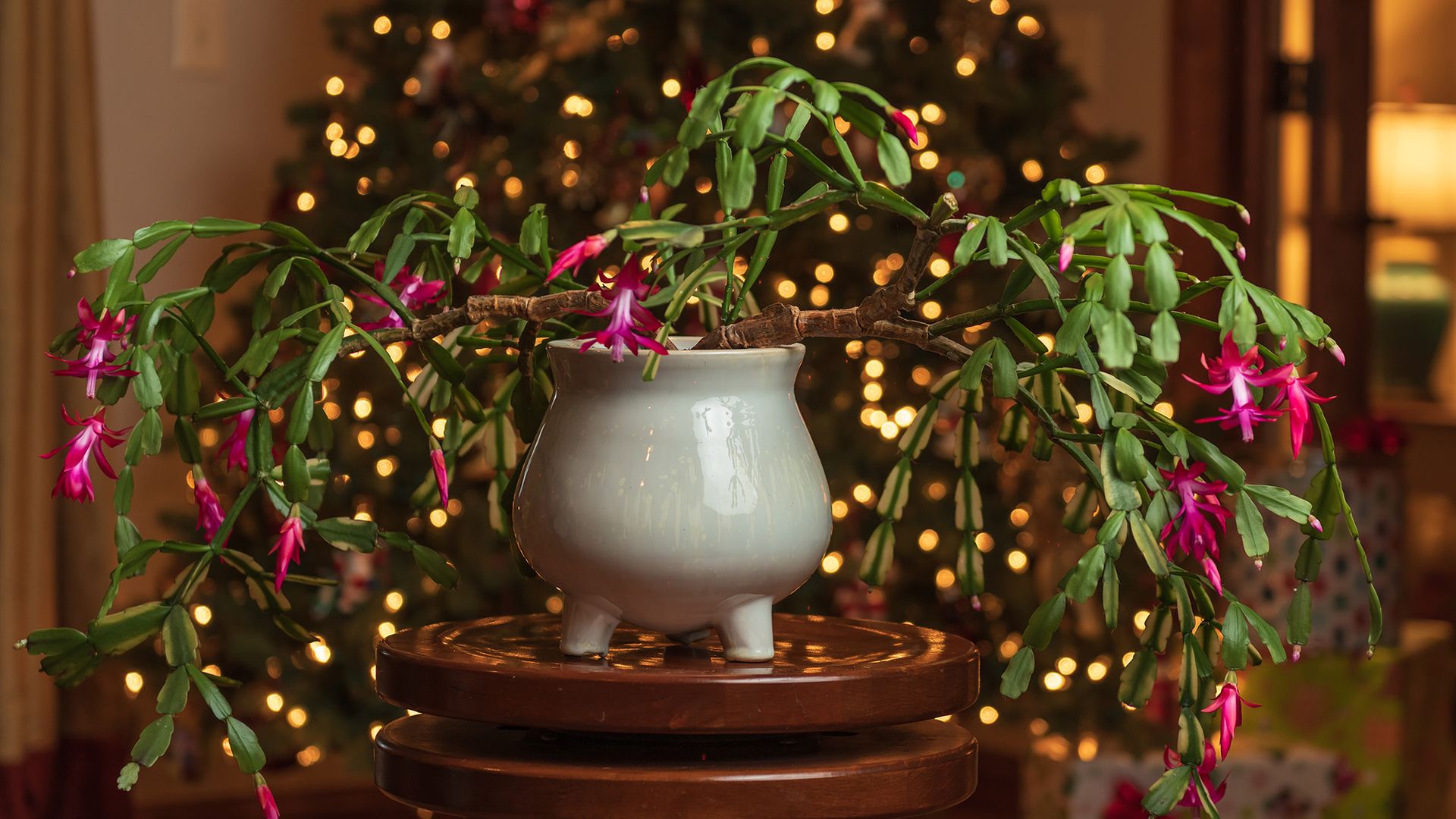
Rather than spiky leaves, a Christmas cactus ( Schlumbergera x buckleyi ) has smoother, scalloped edges, and its stems cascade over the side of the pot rather than sitting upright. Color options are much more limited, and if you buy the plant when it’s blooming, you’ll spot purplish-red flowers.
Although both start to bloom in November, the Christmas cactus doesn’t start flowering until the end of the month, which makes it more timely for Christmas gifting.
Although Easter is still a few months away, another type of holiday cactus is enjoyed in the spring. However, unlike the Thanksgiving and Christmas varieties, which belong to the Schlumbergera genus, the Easter cactus belongs to the Rhipsalidopsis genus.
So how do you tell it apart from the others? The Easter cactus has more rounded segments than its two companions, and its blooms also take a different form. Instead of tubular flowers, they have a star-shaped appearance. One of the most common colors is pink, but you can also find the Easter cactus with red, orange, white and purplish blooms.
Plant pots: was $36 now $29 This set of three ceramic planters features a reactive beige glaze and includes drainage holes and saucers. They are the ideal gift for the plant lover in your life. You can place them together or spread them across different rooms in your home. The largest pot measures 6.5 inches in diameter, the medium pot 5 inches and the smallest container 4 inches. View Deal
Whether you're buying a Thanksgiving, Christmas or even an Easter cactus, your buying decision should be based on the same criteria.
"Select cactus plants that have plump, luscious flower buds that are just beginning to show color, rather than plants that are already in full bloom or completely bare of buds," advises Jocelyn Ho, plant expert at Palmstreet .
Ho also recommends looking for a plant with plenty of buds that are still closed, explaining, “Tight, small buds mean more bloom time ahead. A few open flowers are fine, but not too many so the plant has time to grow and shine.”
For a healthy plant that will survive the holiday season, she says to look for firm, strong green segments, rather than limp, shriveled, or yellowing pads, which suggest over- or underwatering.
If you can, also check the roots and soil. “The soil should be lightly moist, not soggy or very dry,” she says, adding, “and the stems should feel strong and not weak.”
It's also worth checking the joints and the spaces between segments for pests, with Ho advising me to look for “tiny white spots and sticky residue” left behind by mealybugs.
As a final tip, Ho says avoid picking up a specimen that’s been kept by a cold draft near a store entrance, as “chilling can cause buds to drop.”