Technology and ecology: CIPCC-2026 media tour in Chengdu
Turkmenistan RSS Feed · · g1815286
In the People's Republic of China, the «China International Press Communication Centre (CIPCC) 2026» international training program for journalists is continuing as part of the «International information centre» project.
In the People's Republic of China, the «China International Press Communication Centre (CIPCC) 2026» international training program for journalists is continuing as part of the «International information centre» project. Trips to various regions of the country are organised for media representatives from different countries, including Turkmenistan. The program has already turned into a genuine school of practical experience. One such trip was a visit to the city of Chengdu in the People's Republic of China, which took place from the 21 st to 24 th of September.
In an epoch of global geoeconomic and political transformations, science, technology, and innovation are becoming not only the most effective tools for economic development but also crucial instruments of international diplomacy. Scientific and technical cooperation in the Chengdu-Chongqing region of the PRC, implemented within the framework of the «One belt, one road» initiative, has brought together journalists and specialists from various countries around the world. The main themes of the organised trips were sustainable development, green energy, and technological interconnectedness.
On the first day of the visit to Chengdu, the opening ceremony of the science and technology cooperation event took place at the «Shijiazhuang» International convention-centre. During the event, the general state of innovative scientific and technical cooperation within the framework of the «One belt, one road» initiative was presented, as well as the event program. The participants were introduced to the scientific, technical, and innovation potential of Sichuan province. In addition, foreign scientists working in the region gave presentations on the topic «My research work in Sichuan».
On the 22 nd of September, during a visit to the Sichuan energy internet Research Institute of Tsinghua University, achievements of PRC in the fields of environmental diplomacy and new energy were presented.
Scientific cooperation is one of the most enduring elements of international diplomatic relations. The joint China-New Zealand kiwifruit research laboratory is a prime example of this, demonstrating that nations geographically distant from one another and with different political systems can advance agriculture and biotechnology through collaborative scientific research. This demonstrates that «One belt, one road» initiative is aimed not only at developing physical infrastructure but also at fostering an international scientific community.
In addition, a visit to the Tianfu International biomedical park took place on that day. This area, part of the Western China Science City in Chengdu, has been designated as a cutting-edge bio-economy zone and a «park city» demonstration site. A program aimed at establishing a global bioeconomy innovation centre is being actively implemented here; its primary objectives are «optimizing and enhancing quality, developing the site based on specialisation, increasing efficiency, and ensuring the full-scale operation of enterprises». The platform focuses on four main areas: biomedicine, medical equipment, bioservices, and biomanufacturing.
As part of the trip, a visit to the Chengdu Research Base of Giant Panda Breeding took place on the 23 rd of September. Pandas are not only a symbol of nature conservation and biodiversity but also a diplomatic symbol of friendship and peace between nations. Founded in 1987, the centre was designated a state-run 4A-category tourist attraction in 2006 and has twice received the prestigious UN «Global 500» environmental award.
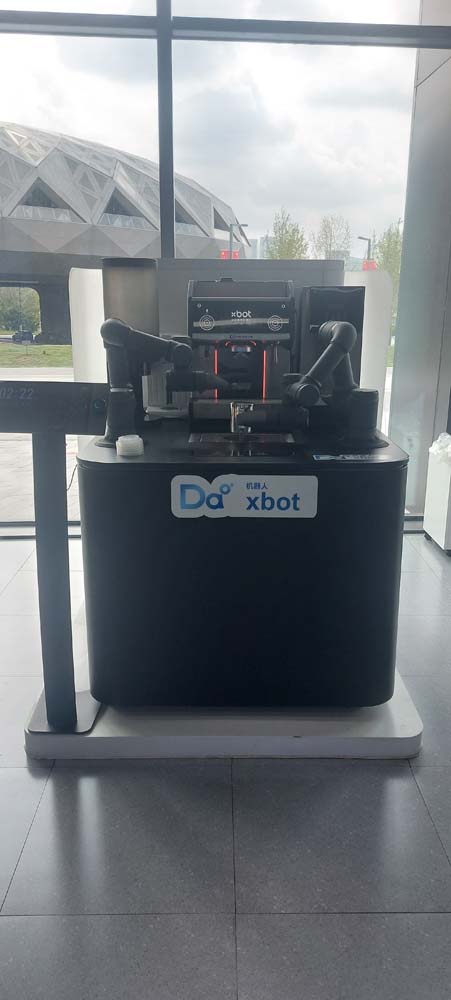
The program participants were particularly impressed by their visit to the exhibition hall of the Chengdu science and innovation eco-park and the Chengdu humanoid robot innovation centre. Chengdu Humanoid Robot Innovation Centre Co., Ltd. was established in April 2024 and is the largest entity in the field of humanoid robotics in Central and Western China. Taking local conditions into account, the centre is developing new production capacities and facilitating the refinement and industrial implementation of engineering robots featuring «embodied intelligence». The centre is one of the pioneers in China engaged in the development of «humanoid robots with true intelligence».
On the 24 th of September, visits to Chengdu Guoxing Aerospace Technology Co., Ltd. and the «Tongwei» Photovoltaic technology museum were organised.
To conclude the trip, a final meeting was held to exchange experience. Representatives of foreign media outlets shared their impressions of the trip and discussed promising opportunities for future cooperation.
All the meetings and introductory events held have once again clearly demonstrated that stability and peace in the XXI century are achieved not only through dialogue but also through joint scientific and technological development. As a result, the «One belt, one road» initiative continues to offer the world a new direction for multilateral development, bringing together technology, the environment, and people.