Kellogg’s MBA Class Of 2028: More STEM, Fewer Internationals – And A Bigger GI Bill Benefit For Vets
Poets&Quants ·
Kellogg enrolled 528 students in its Two-Year MBA Class of 2028, a record 45% of them STEM majors, while its international share fell to 35%. Kellogg photo Northwestern University’s Kellogg School of Management has ... The post Kellogg’s MBA Class Of 2028: More STEM, Fewer Internationals – And A Bigger GI Bill Benefit For Vets appeared first on Poets&Quants .
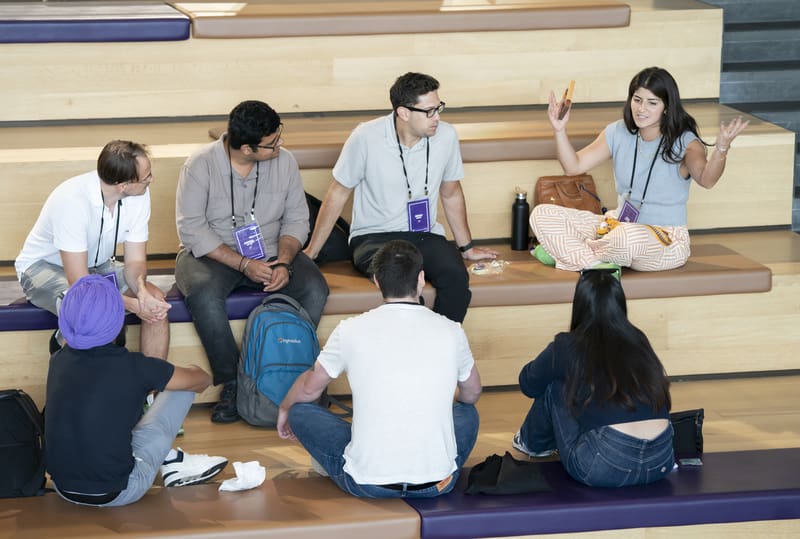
Kellogg enrolled 528 students in its Two-Year MBA Class of 2028, a record 45% of them STEM majors, while its international share fell to 35%. Kellogg photo
Northwestern University’s Kellogg School of Management has a new MBA class with more STEM majors than ever, a slightly smaller headcount and a shrinking international share. What it still doesn’t have, at least publicly, is a count of women.
For the second consecutive year, Kellogg’s profile doesn’t report the percentage of women, U.S. students of color, underrepresented minorities, LGBTQ+ students or first-generation students.
Kellogg enrolled 528 students in its Two-Year MBA Class of 2028, down from 534 a year earlier. The class posted a median GMAT Focus score of 685 and a median undergraduate GPA of 3.72. A record 45% of the class majored in a STEM field as undergraduates. That’s up from 41% for the Class of 2027, which was itself a record.
International students make up 35% of the class, down from 37% last year and 40% for the Class of 2026. It’s the second straight decline and Kellogg’s lowest international share since the pandemic-affected Class of 2022 (26%).
This year’s profile gives medians, not averages, for its headline test scores and GPA, which makes year-over-year comparison tricky. For the Class of 2027, Kellogg reported an average GMAT Focus score of 687 and an average GPA of 3.68.
“We have been transitioning to reporting medians across our reports to keep them consistent across our programs,” the spokesperson says. Kellogg declined to share averages or any testing data beyond what appears in the profile.
The profile does show the spread. GMAT Focus scores range from 595 to 805, the top possible score on the exam, so at least one member of the class earned a perfect score. Undergraduate GPAs range from 2.9 to 4.0, a higher floor than the 2.7 Kellogg reported for the Class of 2027. The median GPA covers only students who attended U.S. institutions that report on a 4.0 scale. GRE takers posted medians of 163 on verbal and 164 on quant.
Kellogg doesn’t disclose application volume or its admit rate, and it didn’t this year either. “As in previous years, we do not publicly release this information,” the spokesperson says.
The academic mix keeps tilting quantitative. Along with the record 45% STEM share, 46% of the class majored in economics or business and 22% in the humanities, up a point from last year. Students with double majors count in more than one category, so the totals exceed 100%.
Consulting remains the largest pre-MBA industry at 30%, down from 32% for the Class of 2027. Financial services fell to 20% from 24%, which had been its largest share since 2021, and technology slipped to 13% from 15%. Healthcare and biopharma held steady at 6%. Manufacturing, media and entertainment, and consumer packaged goods each account for 5%. Military and government, education and nonprofits each account for 3%, and 10% of the class came from other industries. Students averaged 5.1 years of work experience, unchanged from last year.
Kellogg’s international share fell again, but the group is more varied. International students in the Class of 2028 represent 34 countries by primary citizenship, up from 25 last year. Counting secondary citizenships, the figure is 44, up from 41.
“This is a challenging time for international students, who are weighing a lot of uncertainty as they decide where to invest in their education,” the spokesperson says. “A global perspective in the classroom is central to a Kellogg education, and we remain committed to bringing talented students from around the world to Evanston.”
Kellogg isn’t alone. Michigan Ross’s international share fell to 31% from 40% this year, and Wharton’s dropped to 22% from 26%.
Source: Kellogg
Kellogg also has news for prospective students who served in the military. Starting in fall 2027, the school will increase its Yellow Ribbon benefits so that tuition is fully covered for admitted veterans in the full-time MBA program who have 100% Post-9/11 GI Bill eligibility, a Kellogg spokesperson tells Poets&Quants . The school plans to announce the change in the coming days.
Veterans make up 7% of the domestic students in the Class of 2028, down from a record 9% last year. Kellogg confirms both figures are shares of domestic students. By P&Q ’s estimate, that’s about 24 veterans this year, compared with roughly 30 in the Class of 2027.
Kellogg points to its Matt Caldwell Veterans Program, launched last year, as part of its pitch to military applicants. “Veterans bring the kind of leadership Kellogg values,” the spokesperson says. “They make decisions under pressure and bring teams along with them.”
The new Yellow Ribbon commitment is the school’s biggest move yet to attract that group. Starting with students who enroll in fall 2027, Kellogg will cover the full tuition gap for admitted full-time MBA veterans with 100% Post-9/11 GI Bill eligibility.
Kellogg’s silence on gender began within a year of its biggest milestone, and in a period when the school and Northwestern came under pressure from critics of diversity programs.
In the fall of 2024, Kellogg became the second M7 school to enroll 50% women in its full-time MBA program, following The Wharton School, which became the first elite business school to enroll a majority of women in 2021. The school promoted the milestone, with Haydon writing that “a record high 50% of these students are women, making this class the first in the Two-Year MBA program’s history to reach that milestone.”
Weeks later, Kellogg was the subject of a Title IX complaint . Adam Kissel, a former U.S. Department of Education official, filed it on October 27 with the Illinois branch of the Office for Civil Rights, targeting programs aimed at women, among them the Women’s Director Development Program, Women’s Senior Leadership Program, and Empowering Women through Poker . His complaint also cited the Drake Scholarship and Forté Foundation Scholarship , which the complaint says are limited to female students. Kissel argued that a gender parity target in admissions is “a quota on the basis of sex that is likely unlawful,” though he said it was unclear whether Kellogg uses sex-based admissions preferences.
More followed in 2025. In February, Kellogg removed its Diversity, Equity and Inclusion Pathway from its online list of offerings for MBA students following President Donald Trump’s executive orders. In April, the Trump administration froze roughly $790 million in Northwestern’s federal research funding, citing concerns that the university had not adequately addressed antisemitism during pro-Palestinian protests on campus in 2024. Northwestern President Michael Schill resigned in September amid ongoing tensions with the Trump administration.
Two months later, in November 2025, Kellogg released its Class of 2027 profile without the share of women and confirmed it was no longer a Forté member. Days after that, Northwestern agreed to pay $75 million over three years to settle complaints the administration raised over the school’s admissions standards, transgender policies and handling of antisemitism on campus. Interim President Henry Bienen said the university was already abiding by federal law and U.S. Supreme Court rulings as reflected in the agreed-upon terms of the settlement, including merit-based admissions and anti-discrimination rules.
Kellogg’s explanation hasn’t changed. The spokesperson says the school isn’t releasing gender or race/ethnicity data “given that gender and race/ethnicity are not considered in Kellogg’s admissions decisions.” Last year, a spokesperson told P&Q that the share of women in the Class of 2027 had declined but didn’t give a number; U.S. News earlier this year put the class share at 41.4%.
Most of Kellogg’s peers still publish the figure, and their latest classes show women’s share slipping across B-schools. Women make up 41% of Wharton’s Class of 2028, 43% at MIT Sloan, 42% at NYU Stern and 38% at Michigan Ross.
In a November 12 blog post , Emily Haydon, assistant dean of admissions and financial aid, introduces several new students by first name. Lia is a former senior finance manager at Microsoft who focuses on affordable housing and the built environment and is aiming for a career in impact investing. Ethan, an F.C. Austin Scholarship recipient, managed operations at Amazon, where he used psychology research to expand cross-training and team autonomy. He hopes to move into tech operations consulting.
Matheus is a Brazilian immigrant and U.S. Army veteran who helped repatriate displaced women and children from Syria. He’s also an Austin Scholar, with a background in computer science and Special Operations, and he’s pivoting to investing and private equity. Lindsey, another Austin Scholar, worked in finance and digital operations at a biopharmaceutical company. She’s targeting healthcare consulting and is interested in how digital health can speed up diagnosis.
Haydon writes that admissions looks “beyond any one measure.” She says the school seeks candidates who pair intellectual curiosity with a willingness to collaborate, lead and help classmates grow.
Kellogg’s class shrank less than Wharton’s or Ross’s, and its international share sits well above both. MIT Sloan went the other way, holding its class size steady and raising its international share to 45%. On test scores, Kellogg’s median GMAT Focus of 685 is 10 points above MIT Sloan’s and level with Wharton’s average. Kellogg’s 45% STEM share is 14 points above Wharton’s 31%.
Kellogg’s Round 2 deadline for the Class of 2029 is Jan. 6, 2027, and Round 3 is March 31, 2027.
DON’T MISS KELLOGG ENDS FORTÉ PARTNERSHIP, OMITS DIVERSITY DATA IN 2027 MBA PROFILE
The post Kellogg’s MBA Class Of 2028: More STEM, Fewer Internationals – And A Bigger GI Bill Benefit For Vets appeared first on Poets&Quants .