Human Factors: Designing Systems with People in Mind – Part 2 of 2
NASA Science ·
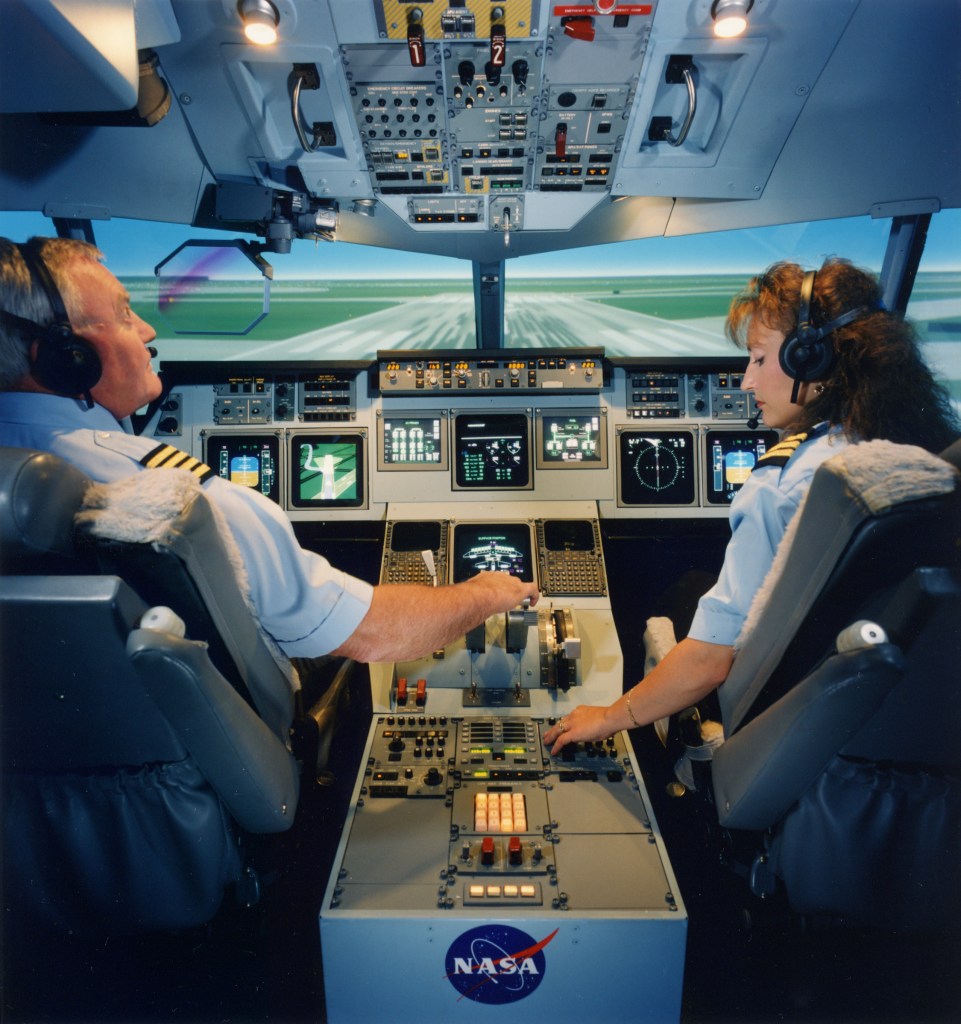
Dr. Cynthia Null, NASA Technical Fellow for Human Factors, discusses the myths of human limitations and how she got involved in the scientific discipline of human factors. The post Human Factors: Designing Systems with People in Mind – Part 2 of 2 appeared first on NASA Science .
Host Andres Almeida: In the last episode, we introduced you to Dr. Cynthia Null, NASA Technical Fellow for Human Factors, for a conversation about how understanding human capabilities can lead to safer, more effective systems.
This week, we’re continuing that conversation. We’ll take a closer look at how memory, perception, and even intuition shape the way we interact with complex systems, and why designing with those human capabilities in mind can make all the difference.
This is Small Steps, Giant Leaps .
[Intro music]
Welcome to Small Steps, Giant Leaps , the podcast from NASA’s Academy of Program/Project & Engineering Leadership, or APPEL. I’m your host, Andres Almeida. Let’s jump back into the conversation on human factors with Dr. Cynthia Null.
Null: Let me talk a little bit about memory. So, one of the times of memory that you really notice that is a little bit problematic is short term memory (when somebody dictates a phone number to you and you’re trying to remember it).
There was a very famous study done, late ‘50s, early ‘60s. And what that was was the number of items that you could hold in short-term memory, so that you could repeat them. Seven is sort of like the number of digits in a phone number without the area code. If you’re actually getting a phone number from your area code, that becomes really easy. You only have to learn, you only have to memorize the seven digits because the first three, you go, “Oh, mine!” and then seven more.
And so that, it’s held up pretty well. But if you put somebody under stress, that seven sort of creeps down. Maybe four might be a better estimate. And then you’d say, “Oh, my goodness, people’s short-term memory is horrible. What are we going to do about that?”
There are other things about short-term memory that weren’t obvious when that paper was written, and that is the number of items doesn’t have to be a singular item. It could actually be a group of items.
So, I don’t know if you ever did this at a birthday party, but we used to do this at birthday parties. The mom would dump 20 or 25 “somethings” on the floor; toys, so, whatever they were, plastic fruit things, right? And then after a few seconds, well, maybe a couple minutes, she’d throw a towel over it or something, and then you were supposed to remember or write down all the things you could remember.
If you actually were trying to be competitive and play that game, you’d probably get somewhere around seven. That could be a little less, could be a little more.
But if you took the task a little bit differently and looked at them and put them into categories and went, “Those are animals, those are vegetables.
Host: Mhm!
Null: Those are transportation items! Then those groupings end up the seven things, and the items in the group are also buried within that. And so, if you actually categorize them, organize them, that 20 things don’t becom — aren’t 20 things anymore. Twenty things can become a much shorter list.
And so, people will remember things like the year they got married. And so, if that’s in a phone number, you don’t have to remember all the digits. It’s just the year you got married, the year you graduated from high school, the year you were born, right? Those kind of things. Numbers that are meaningful just in life.
Now, the other part of forgetting is that the brain is designed to be very efficient, and it has rules about essentially getting rid of stale memories, organizing memories into networks, and just dumping stuff that’s not important.
So, in life in general, unless you’re someone diabetic or with some other medical concern, which would make this data important, knowing what you ate for lunch yesterday has no real value, no survival value, doesn’t much have much social value. And so, the brain doesn’t decide to keep that. Now, if you actually have to know that for medical reasons, then you can override that general process that says, “I forget what I eat yesterday.”
But we sort of think like, like, if you really were good at memory, you’d memorize everything. Our memories don’t work like that. Our memories are looking for patterns. Our memories are looking for…
Host: Utility?
Null: Yes, utility, and it organizes things so that they’re valuable to you.
It also has essentially what’s been called two systems. One is the very system that runs in the background, [Daniel] Kahneman and [Amos] Tversky called it System 1.
System 1 is not something you can access consciously. You can’t go, “Hey, System 1, I want to know the answer to this question,” but it’s in the bag doing things. It’s been in the bag doing all sorts of things. If you’re an athlete, or that’s what you’re training when you’re doing all those repetitions, so that you can hit the tennis ball from wherever it comes to, or all those kind of things.
But System 2 also has a lot of other knowledge besides balance and reaction time and all those other kind of things. For our generation, that’s where the multiplication tables are. So, things can be in that memory and can get there very, very intentionally, and they don’t have to be just physical things; they can actually be cognitive things. And that’s where most of our brain works. And it’s very efficient, and it’s highly networked and organized.
When you’re trying to remember something sometimes, and you’re trying to remember somebody’s name, and you just say, “Well, it’ll come to me later.” Well, that’s System 1 that’s searching for it for you, and sometimes the first thing you’ll get is things like, “It begins with an ‘S’.” Well, that could be part of the organizational structure, or they might be organized by where you knew them – childhood friend, or someone in graduate school, or someone at work. There’s a variety of ways that can be organized. That could be fairly different from one person to another, but they are highly networked and it’s highly organized.
So, what System 2 does is it answers the hard questions, which could include, “What am I having for lunch?”
[Laughter]
But mostly what I, you know, I usually sa y, you know, like, “Engineering should be done with a pencil,” because that’s where System 2 works. But the thing about System 1 is, it also can give us lots of answers to questions.
So, sometimes when you have this thing that you call an intuition, you know somebody’s asked a question that just pops in your head out of nowhere. Well, that’s actually expertise. It’s all buried in System 1. The network was busy. It went and found the answer to the question and then pops it in your head, and you don’t know where it came from because it didn’t come from you making a list. It didn’t come from you doing that kind of problem solving you do actively, right? It didn’t come from you saying, “All right, six times two divided by, add pi, and I’ll get something, right?” Okay.
And so, when something pops up, and it just pops up, we call that intuition. So, what cognitive psychologists call that is expertise, and that’s part of what’s in our massive memory. So, there are ways that our memory can fail us, absolutely, and there are ways that you can help so it doesn’t fail you. And that’s one of the things that human factors bring to the table when you decide how to phrase things, how much information to put on display, where you should put it on a display, how to display it, all those other kinds of things.
If you understand how the sensory system works, you would know that the sensory system will continue to take a signal as long as the signal is changing. But if the signal becomes completely constant, the sensory system goes, “I’m out of here.”
You can feel that for yourself by just pushing a fingernail into your thumb with your, just put push any fingernail into your thumb, and just, like, put it behind your back, or don’t pay any attention to it. Talk to me. Do something else, and eventually you won’t actually feel your fingernail pushing into your thumb, even though it’s still there. You can then move your hand forward and you go, “Oh, it’s still there.”
That’s because when a signal is the same over and over and over again, the system says, “No new information. I’m out of here.” Okay. So, that should tell you something about whether people are very good at monotonous tasks.
So, if you’re sitting in front of a display that’s not changing, think about a nuclear power plant. Think about a nuclear power plant where there are dials and things like that, but if everything’s working, the temperature is the same, the pressure is the same, this rate’s the same, everything’s the same, and it looks like that almost every day, all day long, okay?
And so, you can say, “Well, man, people are really bad at monitoring.” I hear this all the time. And the fact is, we’re horrible at monitoring when nothing changes because we were designed to respond to things that are changing because what could change be? Change could be something good. Change could be something bad, and you need to be able to know the difference. Otherwise, you end up lunch.
No signal at all is not interesting. So, if you have a complicated array of displays, and they don’t change for a long period of time, and then on one of them a light goes out because data is no longer coming in, you might not see that for a long time, because you’ve got so many things you’re supposed to be scanning, and nothing is changing, and your brain is just going like, “Nothing’s changing again.”
Host: Is it…but that’s not complacency?
Null: No, it’s not complacency.
And so, what happens is that if you make a signal that’s red and flashing in a monotonous display, you’ll see it. If you make a small white light go away, you’ll eventually see it, but it’s not meaningful, and it doesn’t work very well with our perceptual system that’s looking for changes, and that’s really too minor a change to notice in a sea of no change.
And so, we can come up with all sorts of words for this, like complacency, but it’s, actually, you’ve designed in an error trap. You’ve designed a task that people are not good at. But are we designed for monitoring? Well, let’s think about that.
Where did we start? Well, we started like all the animals, somewhere. And what is it? What’s your job? Your job is to find food. Your job is to not get eaten.
Host: Yeah, avoid predators.
Null: Avoid predators. And so, it’s a massive monitoring job. The amount of signals that our sensory system is taking in all the time.
Now, your two eyes are not exactly lined up, so your brain then lines them up to give you depth perception, and it’s doing all that work all day long, and then it’s looking for change.
And seeing that change may have you when you’re driving actually slam on your brakes and then you’re going, “Why did I do that?” and then you look around and go, “Oh, red car!” and then you go, “Thank you, System 1!”
Because you can’t actually be looking everywhere all the time, but System 1 can be analyzing the scene and looking for changes. When you’re looking for things that you are worried about, it’s looking for the things that it’s worried about. All of these things are happening simultaneously. So, monitoring is something we’re amazingly good at.
But I can design, a technical system that defeats all of your ability to monitor, and you will look like a bad monitor. Or I could design a system that was actually meant for you to monitor, and that worked with your capability as opposed to sort of falling into the trap of what your system is saying, “Not interesting,” to.
And so, that’s one of the important things that we do as we look at problems and tasks, and we try to say, “Well, what are the capabilities we’re bringing to the table, and how do we make things so that they’re consistent with our capability as opposed to working against it?”
So, when we ask you to memorize long lists of things to transfer it from one screen to another, we’re working against you. When we make cut and paste, so you can do it with a Control+C, then we’re working with you.
You have to understand what the memory, what memory does, to then decide whether you’re good or bad at it, and then how to design the workspace, the work environment for that. I mean, it doesn’t matter whether it’s mental or physical, right?
I could have you attaching things, and I could say this has to be torqued to a certain level, and if I create the place so you’re working blind and can’t see the torque wrench, then you could under torque or over torque it. When you under torque it, you can probably pull the wrench out, read the number, and then put it back on. But you’ve over torqued it. Now you’re in a problem. If you can’t see it, you can’t actually control that and can’t feel it. So that’s a bad design. That goes back to that access thing.
And so, you can say, well, “People, he was careless. He didn’t, he wasn’t paying attention to torquing.” Well, you can’t do it blind. And so, unless you create a different system, now you could add things onto your torque wrench, so it gave you an auditory signal or some other signal when it was getting to the max of the torque, and then that would be fine.
So, you either have to give them visual access, or you have to redesign the tool to give them the information they need. It’s not neither. And so, that, that’s sort of the trick.
And so, when we’re doing human factors, we think about the sociotechnical context, the organizational context, the environmental context, all of those contexts, and then we ask, what is the job of the human? And we also want to make sure we take advantage of all the human’s capability. We’re flexible. When something happens we don’t expect, we can still have hypotheses about what the right way, what the right thing to do is next. We are highly resilient, and we’re needed until we can develop technologies that never fail.
And I’m pretty sure as long as they have mechanical parts or whatever else, that that there’s going to be roles for humans everywhere. The trick is balancing the technology, the mission, the humans to make sure that you end up with success, efficiency, safety in the end. And that’s where human factors comes in.
Host: How did you get into this role in the first place? What has led you to this?
Null: So, I started my undergraduate degree in mathematics. And when I was ending my undergraduate career, I didn’t quite know where to go and my dad said I had to go to graduate school. So, I was a, I said, “Okay. I’ll figure it out.”
So, I picked quantitative psychology because it sounded like math and it’s basically all the statistical and mathematical modeling that you might do of human behavior. And so, most of my classes in graduate school were statistics and some of them were basically about human performance and human behavior. And then I ended up a college professor at William & Mary.
And when you’re the only statistician in the department, you end up helping everyone do their projects. And so, one day you’re helping a faculty member do some work on, say, memory. And the next day you’re helping a student who’s doing a project on fetal alcohol syndrome with rats or something like that. And so, you’re getting every part of behavior, from sensory behavior to team behavior and everything in between.
And I never felt like I should just, like, n ot know anything. And so, they, you know, I’d, I’d read a little bit about it. I learned a little bit about it so I could be more helpful in helping design experiments and things like that.
And so, although I had my own research career, I spent a lot of time, you know, developing knowledge of all aspects of behavioral performance. And at some point, NASA called me and asked me if I’d like to work for NASA. My first thought was, “Has anyone ever turned NASA down?”
[Laughter]
I was a college professor at William and Mary, but I got called by Ames. I had done a project at Langley with someone in human factors about seven years or so before on a topic called workload, one of the many metrics we use. Just not about doing the task correctly, but how much work are you doing.
Anyway, I’d done a workload task, and so they offered me a job to be a branch chief at in the human factors division at Ames. And I went, “Okay, yeah, that sounds good!” So, even though I love being a professor and I love teaching students, I brought my family to California.
Host: Wow.
Null: And the group that I was in charge of was the group that was doing the scientific data on how people work, and also how they work with tasks, but they were mostly very basic scientists still doing behavioral performance, but in the context of NASA’s environment. So, the different kinds of stresses NASA has because all the basic work we have on human capability doesn’t necessarily apply in all the environments that we use because we’re doing these extreme environments like CO2 or in, n the Moon we’re going to be in very dark places and things like that. All the knowledge we have doesn’t necessarily go to all those places.
And so, my job was to translate what we did to other people at NASA to essentially explain why whatwe are doing in human factors was important across the agency, which again gave me, expanded my view of behavioral performance as I was working with all the different groups at Ames and then at Langley and JSC, eventually, and eventually across the agency.
And so, I ended up with a broad breadth of at least, you know, the one-sentence elevator speech on why it’s important to consider whatever it is. So, short-term memory or decision making or whatever it might be. So, I, I became the person that that had the, the essentially experience and allowed me to think about how you triage a problem.
So, when someone comes to you and you hear that they’re working on a particular problem, well, what kind of human factors do you need? There’s over probably 200 specialties you could have in our discipline that you can get a PhD in.
And so, all my background in doing things that were helping doing statistics for a variety of different projects, trying to explain the work we did, which meant I had to learn what the work was, right? Getting deeper into work in different directions sort of put me in the, in a really good position to be the person who looks across the agency and says, “Are we using the right methods?”
I don’t expect myself to have the expertise, I expect that I can have a, have a good view of what the discipline is and I also have a pretty good view of the capabilities of the people within NASA.
And then I can match those up with the problems that the NESC has, or if it’s just a program and I just hear that there’s a problem that might not be something that needs an investigation, but could use a different point of view, then I can suggest who they can talk to.
Host: What are some best practices in knowledge management? Like, how do you ensure everyone has that knowledge?
Null: One of the things we do in the NESC is we have NESC Academy videos, where if somebody is doing something interesting, we try to get them to come and talk about it.
The NESC Academy has things for all of the disciplines so it’s not just human factors, but we have quite a few human factors things there. Some of them are about assessments we’ve done. Some of them are about things we did for a program and project that really turned out well, kind of things.
We’re beginning to do more of the, you know, interviews like this with different experts on very specific topics that we think would be useful.
And the other thing we’re doing is we’re building, we’re building new tools that are specifically designed for NASA. So, our target mission was Humans to Mars and the question was, well, what kind of expertise do you need? And how much can you put in one person’s head? How do you think about that? What kinds of things need onboard expertise and what can wait to phone home even if phoning home is infrequent?
And so, we’ve actually built a modeling tool where you can redesign your mission and then we can put that in and see what that pushes out for the for the crew size. So, there’s lot of thought process that has, that has to go into how you think about what crew role really is.
Host: What was your giant leap?
Null: My giant leap was just holding the flag.
I wasn’t the kid who, I saw all the launches, but I, I didn’t imagine myself working for NASA the week before they called.
[Laughter]
A lot of my, a lot of my colleagues they knew NASA was their destination, and then they just had to figure out how to get here.
I didn’t know NASA was my destination. But I think if you look at what I’ve done since I’ve gotten here, you realize I, I bought in immediately. And that was my big leap, was probably holding the flag and swearing in.
Host: That’s great. Well, thank you, Cynthia, thanks for your time.
Null: It was fun. Thank you.
Host: That’s it for this episode of Small Steps, Giant Leaps. For a transcript and to hear all other episodes, visit nasa.gov/podcasts. While you’re there, check out our other podcasts like Houston, We Have a Podcast , Curious Universe , and Universo curioso de la NASA . As always, thanks for listening.
[Outro music]
Outro: Three. Two. One. This is an official NASA podcast.
The post Human Factors: Designing Systems with People in Mind – Part 2 of 2 appeared first on NASA Science .