Teacher Created Heliophysics Lesson Plans
NASA Science ·
During a week-long virtual professional development, teachers (grades 5-12) trained with educators and scientists from NASA HEAT on the Framework for Heliophysics Education and worked collaboratively on writing heliophysics-focused lesson plans that they piloted in their classrooms during the 2022-23 school year. Grades 5-6 Our Sun as a Natural System Level: 5-6th grade Time: 12 […] The post Teacher Created Heliophysics Lesson Plans appeared first on NASA Science .
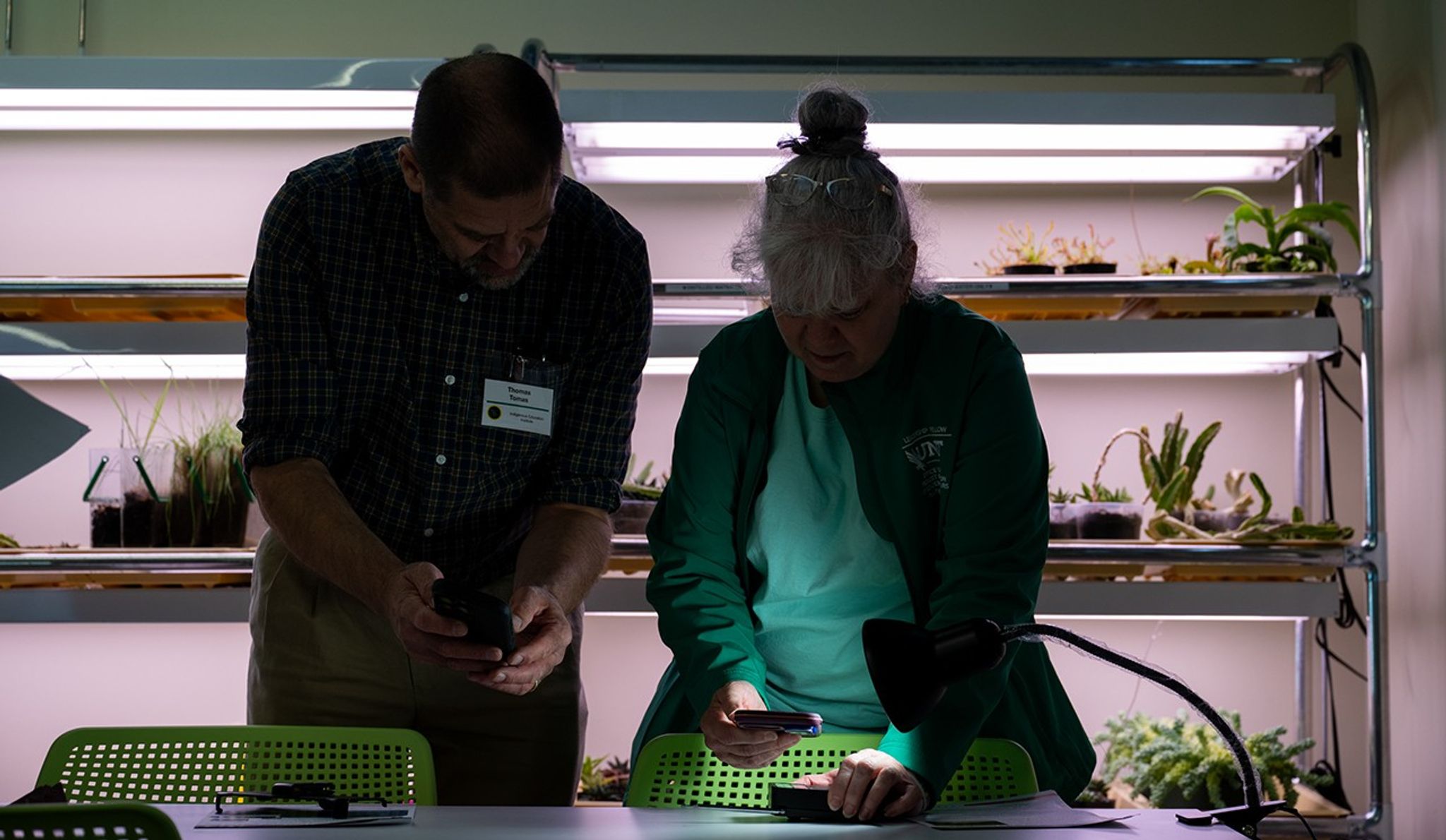
Home Framework for Heliophysics Education About 1.1 Eclipses & Seasons 1.2 Space Weather 1.3 Climate 2.1 Habitable Zones 2.2 The Heliosphere 2.3 Light 3.1 Solar Magnetism 3.2 Structure of the Sun 3.3 Life Cycle of Stars Helio Topics Educational Resources Search All Resources Grades K-5 Grades 6-8 Grades 9-12+ Space Math Activities Professional Development About NASA HEAT Local educators participate in heliophysics activities during a teacher professional development event hosted by the NASA Heliophysics Education Activation Team (HEAT) at the Dallas Arboretum, Saturday, April 6, 2024, in Dallas, Texas. Photo Credit: (NASA/Keegan Barber) During a week-long virtual professional development, teachers (grades 5-12) trained with educators and scientists from NASA HEAT on the Framework for Heliophysics Education and worked collaboratively on writing heliophysics-focused lesson plans that they piloted in their classrooms during the 2022-23 school year.
Our Sun as a Natural System
Level: 5-6th grade Time: 12 (1-hour) class periods
Students will learn about the Sun’s spectral lines that include hydrogen, helium, argon, neon, and sodium using DIY spectroscopes to understand how scientists use hightech spectroscopes to study distant stars and exoplanets. Students will also develop systems thinking by studying the Sun as a natural system and spacecraft such as satellites as human-designed systems. Credit: Tom Thomas
What Happens When Solar Weather Reaches Earth? Aurora Borealis and Aurora Australis
Level: Grades 5-6 Time: Ten 60-minute class periods
This lesson will fit within a broader interdisciplinary thematic unit. Students will learn about relationships between the Sun and Earth by researching how the Sun creates patterns on Earth. Students will begin by asking, “Why are there satellite outages and radio drop-outs?” This question will lead students to auroras and solar storms. Students will study the NASA EZIE mission: Electrojet Zeeman Imaging Explorer (EZIE). Students will also study the Magnetospheric Multiscale (MMS) Mission, a Solar-Terrestrial Probe that is used to study magnetic reconnection. Students will use magnets and iron filing containers to explore, engage in, examine, and visualize magnetic fields. Credit: Tom Thomas
Exploring Eclipses
Level: 6-8 Time: 3 class periods
Students will use models to show how both total and annular solar eclipses occur. They will use another model to show both the difference between total and partial lunar eclipses as well as why lunar eclipses do not occur each month. Credit: Cris Dewolf
How Does a Habitable Planet Develop?
Level: 6-12 Time: 2 (55- minute) class periods
Earth is just one of innumerable objects in the universe, but it is the only object known to be able to support life. How did the planet Earth develop into the life-bearing planet that it is today? Is it possible that other habitable worlds have also developed? Students will research particular events in the history of Earth that have led to its present state, synthesize their findings and share them with the class, and contemplate the possible rarity of habitable planets. Credit: Marvin Nationales
How do the Sun and Earth’s Magnetospheres Interact to Cause Aurora?
Level: 8th Grade Time: 50 minutes
Students will learn about the Kp index, and look at the last several months Kp values to investigate the question, When could we have seen an aurora in our town? Students will look at the forecast for this month to answer the question, How does the magnitude of a geomagnetic storm affect the visibility of an aurora in our town? Credit: Rachel Geiter
How Does the Sun’s Magnetosphere Cause Aurora?
Level: MS Time: One 48-minute class period
Teachers discuss the ‘ingredients’ for solar wind and use bubbles as a model. Students then participate in a jigsaw activity on the creation of the solar wind. Students will create a kinesthetic memory aid for one of the five vocabulary words. Credit: Rachel Geiter
Introduction to Solar and Lunar Eclipses
Level: Grades 6-8 Time: 1-2 class periods
Students will watch the video Eclipses Explained and complete the video question worksheet. Students will then explore the NASA eclipse website. Using the eclipse model pieces students will cut and paste the Moon, Sun, and Earth into the proper order for each type of eclipse. Students will use a ruler to draw the shadow cones that occur during a solar eclipse and a lunar eclipse. Students will then do an activity to demonstrate why solar and lunar eclipses do not happen every month. Credit: Tanya Anderson
Why Do We Have Seasons?
Level: Grades 6-8 Time: 3-4 class periods
After completing a class KWL chart students will watch the video NASA Spotlight: What Causes The Seasons and answer questions. Students will then explore the concepts introduced in the video through exploration of several different websites. Next, students will show how light at different angles behaves. Then using hands-on materials, students will experiment with how Earth’s 23.5 tilt causes different areas of Earth to receive different amounts of sunlight throughout the year and relate that to Earth’s seasons. Students will also use hands-on materials to experiment what would happen on Earth if Earth’s axis was not tilted. Finally, students will research the rotational tilt of other planets in our solar system and use the hands-on resources to form conclusions about whether or not other planets experience “seasons” during their revolution around the Sun. Credit: Tanya Anderson
Experience a Solar Eclipse
Level: High School Time: Two 55-minute class periods
In this lesson, students explore the experience of a total solar eclipse and learn about the mechanics of eclipses. Photographs and videos from the August 21, 2017, total solar eclipse can give students a sense of the event. Students also work through an interactive lesson to investigate the orbits and relative positions of the Moon, the Sun, and Earth to understand what causes eclipses and why they are rare. Credit: Marvin Nationales
Impact Cratering and the Age of the Solar System
Level: 9-12 Time: 3-4 class periods
For this lesson, students will gather evidence through a variety of media to support the claim that Earth is 4.6 billion years old, and formed along with the rest of our solar system from material in a nebula. Assessment of learning goals will be based on the student’s CER (Claim-Evidence-Reasoning) essay. Credit: Cris DeWolf
Urban Heat Islands: Using Simulated Regolith Mars Soil
Level: 9-12 Time: Five class periods
In this lesson students will study the effects of human impact on the environment and its relationship to changes in temperature. Unlike other lessons, in this one we will usesimulated Mars soil. This will allow them to measure the different changes that Martian soil may have had when the planet Mars was habitable at some point. Credit: Christian Mercado
The post Teacher Created Heliophysics Lesson Plans appeared first on NASA Science .