States Are Forcing Hospitals To Offer More People Financial Aid. In Oregon, It’s Working.
KFF Health News · · g5165734
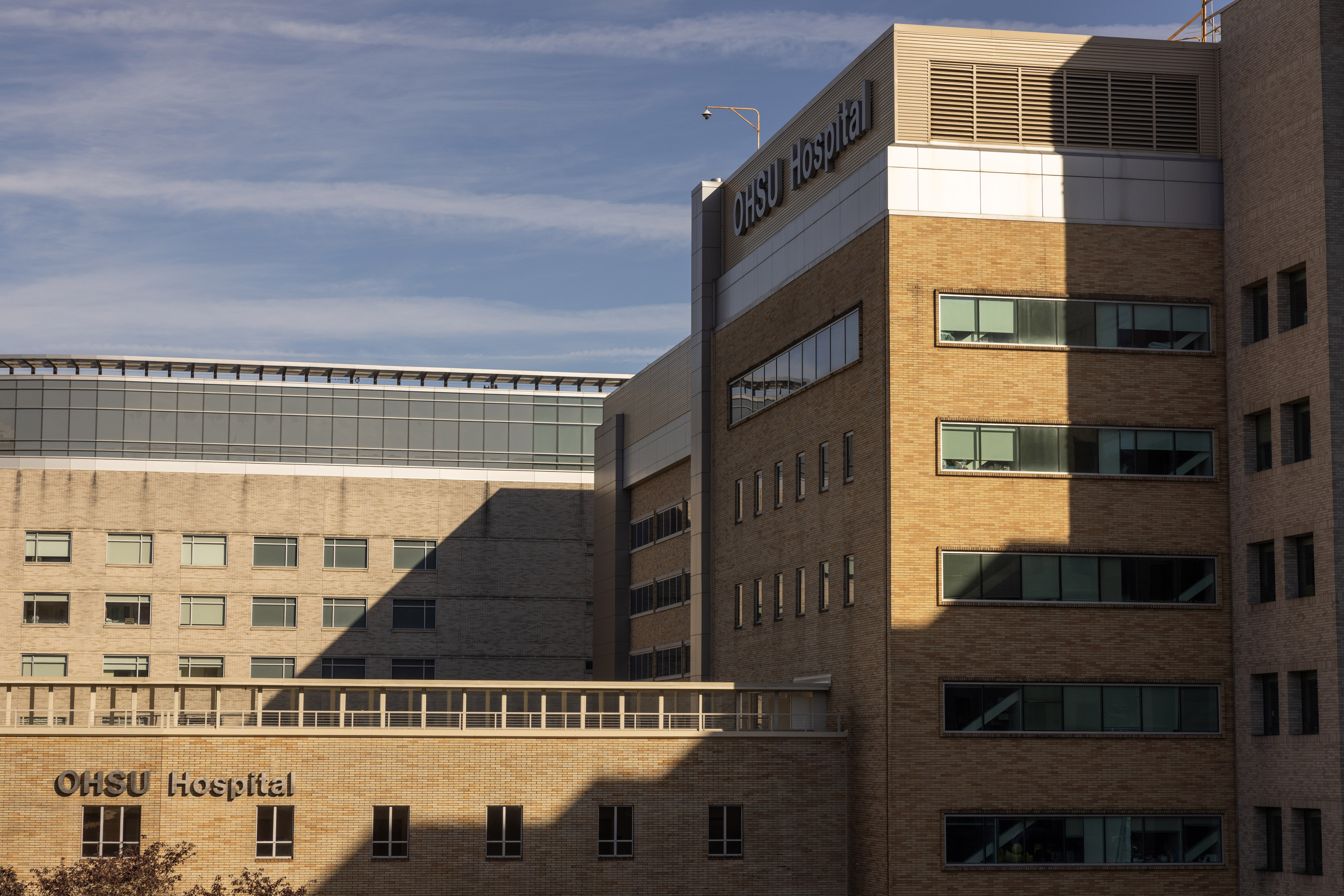
Oregon passed a law to require hospitals to proactively screen patients to see if they qualify for financial aid. Patients got immediate relief. Hospitals pushed to roll back the law following federal cuts to Medicaid and Affordable Care Act subsidies.
Four years ago, Oregon hospitals were under fire from state authorities and patient advocates . Hospitals, critics said, had made it too hard for patients to apply for and receive help paying their bills.
Within months, the state enacted a sweeping law that required hospitals to proactively screen patients and give financial aid to those who qualify for it. Oregon’s new rules, which took effect in July 2024, required hospitals to skip applications for nearly all patients — a rarity among hospitals nationwide.
“They will be told up front, Hey, we got you ,” said Democratic Oregon state Sen. Lisa Reynolds, who introduced the legislation. “ You are here at a very scary time in your life because of illness or injury, and we got your back. ”
The law worked.
Oregon Health & Science University’s hospital, one of the largest in the state, saw 64% of its patients automatically qualify for financial assistance in the early months of the new law, up from 12% previously.
In their first full fiscal year under the law, spending by Oregon hospitals on financial assistance more than doubled, on average, according to federal financial reports from about two-thirds of the state’s hospitals. That’s compared with their last full year before the change.
For patients, the switch meant direct relief from high healthcare costs, advocates said.
“They don’t have to have the late nights being like, how am I going to afford my mortgage? How am I going to afford these medical bills?” said Adam Zarrin, a director of state government affairs for the advocacy group Blood Cancer United.
Hospitals in the state have pushed back on the requirements, saying they need better screening tools , and they face added financial strain from the Trump administration’s domestic policy agenda. Millions of people are projected to lose health insurance in coming years under cuts to Medicaid pushed through by Republicans in Congress.
Oregon’s early success is the first big test of a new approach that more states are turning to, known as presumptive eligibility . Hospitals skip the applications and screen patients automatically to determine if they qualify for aid.
North Carolina this year expanded its screening requirement to include patients with income up to triple the poverty line. California and Delaware are requiring hospitals to automatically grant financial aid by July 2027.
A Promising Tool To Prevent Medical Debt
As many as 100 million adults in the U.S. have healthcare debt, according to a KFF Health News analysis . That financial burden can alter people’s lives, forcing them to skip prescriptions and follow-up care to avoid further bills.
Hospitals are a major source of that debt, and they have faced growing scrutiny over their prices and billing practices .
Policymakers have focused specifically on nonprofit hospitals, which account for about half the sector. Nonprofit hospitals typically don’t pay taxes , in exchange for providing benefits to their communities — a vaguely defined standard under federal law. Many hospitals meet this requirement by providing free or discounted care to low-income patients.
That financial assistance, however, can be difficult to get . Applications can be onerous and confusing. Congress and state officials have spent years testing policies to promote the help and make it easier to receive , with mixed results.
Research finds hospital financial aid spending varies , as does the degree to which hospitals benefit by not paying property, sales, or income taxes.
“Hospitals have been on the winning side of this deal for a long time,” said Reynolds, the Oregon lawmaker. “They enjoy millions and millions and millions of dollars in tax breaks, and that money is supposed to be then spent on poor people who can’t afford their care or even their copayments. It has not penciled out.”
Reynolds pressed for Oregon’s screening requirement, she said, to hold hospitals “accountable for what they should have been doing all along.”
Early evidence suggests the law is doing what Reynolds hoped. Oregon hospitals’ spending on free and discounted care increased to 2.7% of all operating expenses, on average, from 1.4%, among the roughly two-thirds of hospitals with available federal data.
That brings hospitals in Oregon closer to the national average for nonprofit hospitals, which from 2021 to 2024 was about 2.4%, according to an analysis by Johns Hopkins University researcher Hossein Zare, who studies the industry.
More Help for the Insured
Among those in Oregon who started to get more help: patients with health insurance.
OHSU’s spending on help for insured patients reached about $39 million in the first year under the law, federal data shows, about five times as much as in previous years.
Lawrence Furnstahl, then OHSU’s chief financial officer, said in a public meeting in January 2025 that, before the law, insured patients often didn’t apply for help and instead paid their share of the bills. The new automatic screening often wiped out or reduced what they owed — including for large deductibles that patients have to meet out-of-pocket before insurance will kick in.
Patients who pay hospital bills often still carry medical debt, surveys show, because many use credit cards or loans from family, friends, or banks to afford their care.
A 2025 survey from the Commonwealth Fund found that 1 in 3 adults with private insurance have medical debt.
“It defies the purpose of health insurance coverage, which is to enable people to get healthcare when they need it and protect them from serious costs,” said Sara Collins, an economist and senior scholar with the Commonwealth Fund.
‘A Very Different World’
For hospitals, the new requirements come as healthcare costs are climbing and federal support for the safety net is shrinking. Nationally, an estimated 14 million more people will be uninsured in 2034 as a result of President Donald Trump’s signature tax-and-domestic-spending law and the expiration of enhanced Obamacare subsidies that Republican lawmakers allowed to lapse at the end of last year.
Hospitals supported Oregon’s new presumptive eligibility law, said Sean Kolmer, an executive vice president for the Hospital Association of Oregon. But they’re feeling more financial pressure, with the organization expecting the state’s uninsured rate to climb to 10% or higher in coming years, he said, up from about 3% before Oregon’s screening law passed .
“That’s a very different world,” he said.
OHSU saw costs rise rapidly. “It is a good thing, but it is an expensive thing,” Furnstahl said in a public meeting as he gave an update on the first months under the law.
In the first year under the new law, OHSU spent about $64 million on free and discounted care — about 1% of what it spent on operations that year.
The true cost of more up-front screening is hard to quantify, medical debt experts said. It must also take into account how many people would have never paid their bills anyway and how much hospitals save by not chasing payments.
Lawmakers said hospitals pressed them for relief, and in April, Oregon enacted a new law to ease the state’s screening requirement.
The original law required hospitals to screen everyone on Medicaid or who was uninsured and anyone who owed $500 or more. Lawmakers raised the monetary screening threshold for a single visit to $1,500 . The Medicaid or uninsured requirement remains.
Reynolds, who spearheaded the original law, was unsympathetic to hospitals’ cost concerns. But she agreed to the rollback because she wanted hospitals to have some relief as they fine-tuned their screening process. Oregon hospitals reported that their screening data was less accurate for patients with higher incomes, leading some people who didn’t qualify for help to receive financial assistance.
OHSU studied economic data for Oregon’s residents and reported that about 57% likely had incomes that qualified them for its financial assistance, slightly under the 64% of patients who were receiving help.
Hospitals’ warning of increasing financial stress was a motivator for Democratic Rep. Rob Nosse, who chairs the healthcare committee in the Oregon House of Representatives.
“I don’t want any suburban or rural hospitals to close on my watch,” Nosse said.
People who are no longer automatically eligible can still apply for help with bills less than $1,500, he said.
“I’ve got to make it more expensive for someone to get healthcare so that the hospitals can stay in business,” he added. “What a country.”
This article is part of “ Hidden Help ,” an investigative series from Tradeoffs and KFF Health News about how hospitals can protect their patients from the life-altering harms of medical debt.
This article first appeared on KFF Health News and is republished here under a Creative Commons Attribution-NonCommercial-NoDerivatives 4.0 International License .