GM’s Future Silverados Should Need Fewer Dealership Visits. One Computer Is the Key
The Drive ·
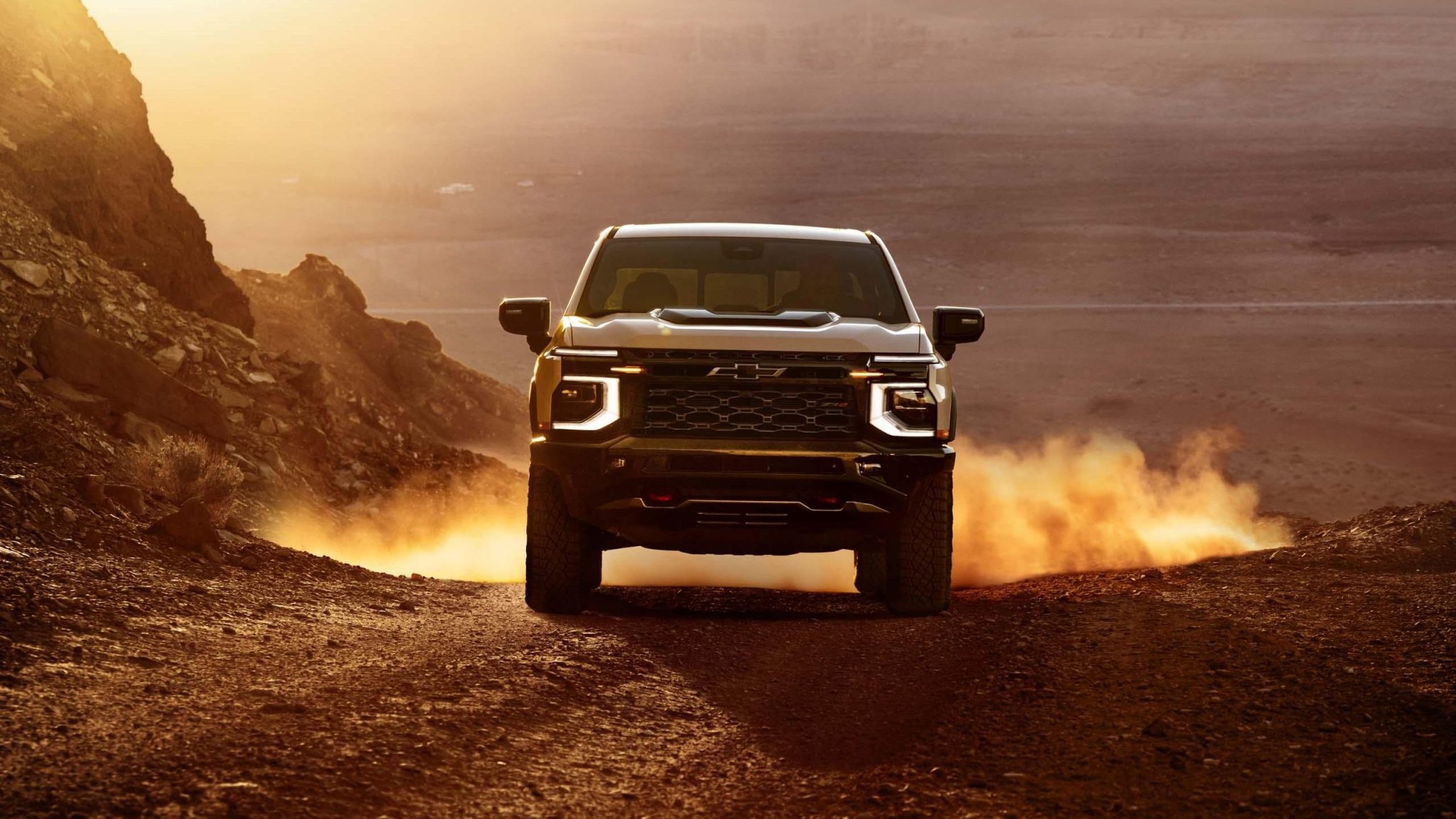
GM Senior VP of Vehicle Products Jaclyn McQuaid told The Drive, "The goal is to significantly reduce what would need a dealership visit versus what can be done OTA." The post GM’s Future Silverados Should Need Fewer Dealership Visits. One Computer Is the Key appeared first on The Drive .
General Motors is not making moves to sell its vehicles directly to consumers like some automakers, but your interactions with dealerships after buying a vehicle just might be changing in the future.
On the latest episode of The Drivecast , Senior Vice President of Vehicle Products at General Motors Jaclyn McQuaid told The Drive , “The goal is to significantly reduce what would need a dealership visit versus what can be done OTA.” The statement came in response when asked if the company’s new central compute system is capable of true over-the-air updates that won’t require trips to the dealership if physical hardware doesn’t need to be touched.
Listen below to the moment McQuaid addresses the topic of software updates and dealerships.
On Wednesday, General Motors laid out its entire future and revealed that it will revolve around an AI-reboot of OnStar , LMR-powered next-gen EVs , and autonomy for the automaker’s best-selling trucks and SUVs. But the heart of all this will be a new central compute system that is the backbone of its next-generation electrical architecture.
The new central compute system and electrical architecture will first debut on the 2028 Cadillac Escalade IQ , which will feature eyes-off driving capabilities that let you watch movies while behind the wheel.
McQuaid noted the system will come with significantly enhanced over-the-air upgrades and opportunity.
“I can’t sit here and say that everything will be OTA-able, there may still be some, but the goal is twofold, the goal is to significantly reduce what would need a dealership visit versus what can be done OTA,” McQuaid said.
While the consumer benefit that will be felt, amongst other things, will include fewer trips to a dealership, there’s much larger benefits to this new system for General Motors.
McQuaid explained, “Candidly, when you’re doing a central compute and when you’re doing a central compute that can flow across the entire portfolio, whether it’s gas or whether it’s electric, and so you have common software, and this gets back to the value of commonization where brand specificity isn’t necessary, when you can be common across this software that’s in a central compute, it should significantly reduce the amount of times that you would have to go to a dealership anyway because you’re engineering it one time and you’re validating it one time, and you’re using it more broad-based.”
McQuaid’s commonization comment translates to a fact that GM’s only going to have to validate one set of software instead of multiple, it will only have to test and launch a singular set of code, and if there’s an issue, one update can address it for all its vehicles rather than just a subset requiring multiple fixes to be developed. This can be something as simple as headlight programming or Bluetooth operations.
General Motors’ current lineup is capable of over-the-air software updates today, but it’s messy and at times limited in what can be done. “Just to be clear, this wouldn’t be brand new for GM. We have that today. I’m in a gas-powered truck today, I’m in one of our brand new light duties, and I got an over-the-air update just a couple days ago, 15 minutes, I said, ‘Yep, go ahead and accept,’ and got in and the software had been updated,” McQuaid said.
When asked if tomorrow’s central compute system will go farther than today’s capabilities McQuaid said, “Absolutely, because today we’ve got dozens of different modules, and some of them are OTA-able, some of them might not be, when you go to a central compute, you significantly expand what is capable of an OTA.”
The upcoming central compute system, as McQuaid put it, “Really takes pretty much dozens of modules and puts it into one unit.” It’s different from Rivian’s zonal architecture, which has only seven ECUs, which has pros and cons. “There is still the opportunity for fragmentation and latency when you’ve got zonal compute as opposed to a single central compute. Pros and cons with a central compute as well, it’s quite large, and so you have to package it, but you eliminate some things like latency and fragmentation when you’re central,” McQuaid said.
While the central computer is the key to unlocking what comes next for GM, the automaker is using the moment as a launch point. “We’re bringing the software in-house when we do this. And so we’ve got our engineering team, our software engineering team writing all of the code and making sure that everything is speaking to each other, it is available for OTA. It’s quite a large undertaking, but it allows us to move with faster speed, the connectivity is going to be faster, the headroom for growth of features is going to be significantly greater than what we have today, we’re going to want the vehicle to be able to grow with the consumer in a way that right now today we can tap out pretty quickly to that headroom, and so those are some of the advantages that central compute’s given us,” McQuaid said.
The new system will have 40 times more compute power than today’s architecture, according to McQuaid.
Regardless of what’s powering GM’s future vehicles, dealerships and shops will still be necessary, even if visiting them is less frequent. No software is going to change a tire or worn out shock absorber.
Got a story? Send us a line at tips@thedrive.com
The post GM’s Future Silverados Should Need Fewer Dealership Visits. One Computer Is the Key appeared first on The Drive .