An urban test for South Africa’s unity government
Semafor ·
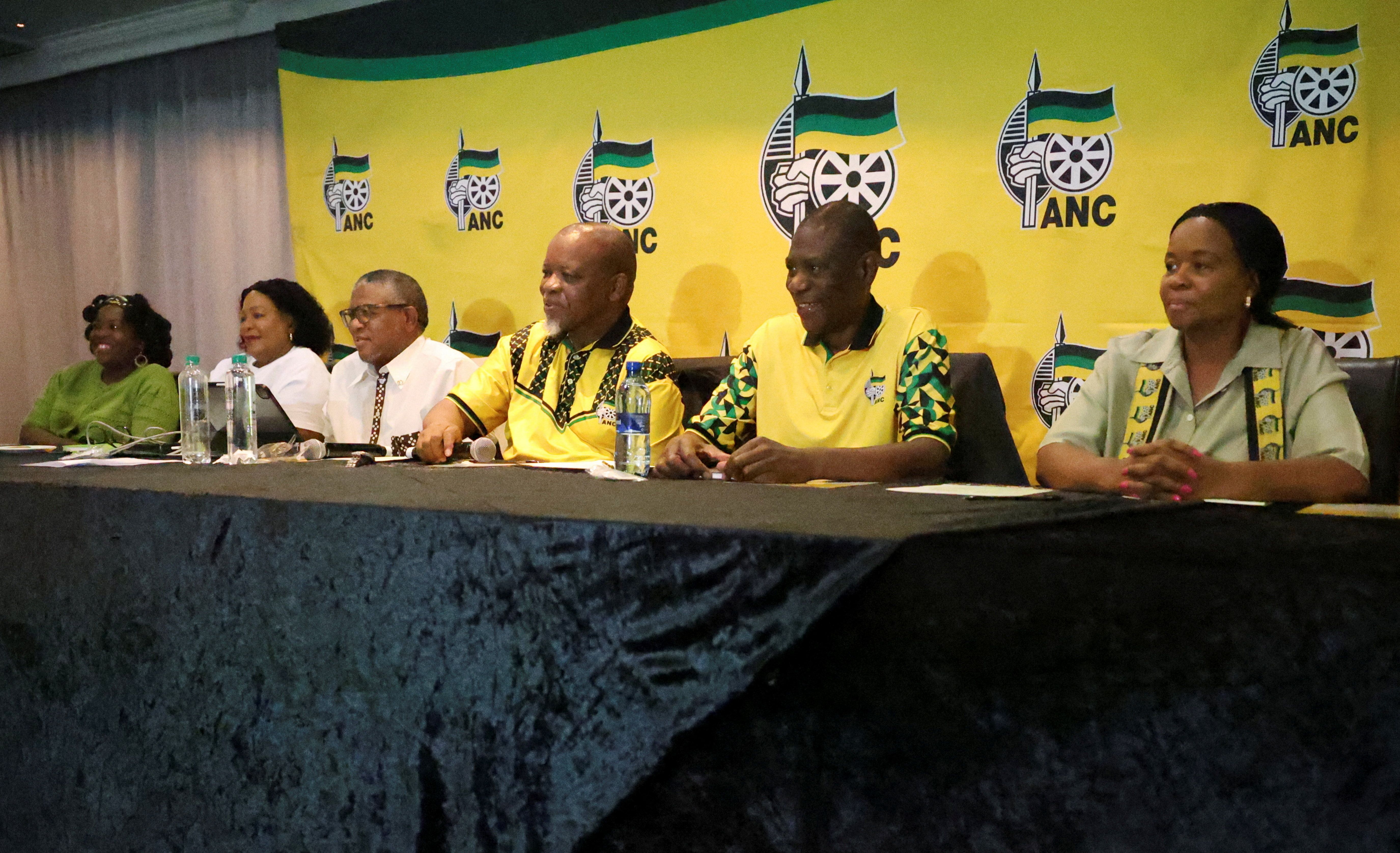
The ANC’s push to retake three key cities with populist allies risks deepening tensions with its national governing partner, the Democratic Alliance.
South Africa’s African National Congress is negotiating with smaller populist parties for control of three cities that anchor the country’s economy.
The proposed deal, following local elections this month, could leave the Democratic Alliance in opposition in all three, even though it finished first in each. The two parties govern together nationally, but now the prospect of a fight across Gauteng province — which is home to Johannesburg, the financial hub of Africa’s biggest economy — is adding to investor anxiety about how long that partnership can last.
On Thursday, Helen Zille, a former DA leader and Western Cape premier who ran as the party’s mayoral candidate, conceded defeat in her bid to become mayor.
Zille’s concession came as a frantic bargaining window entered its final week. South Africans voted on Nov. 4, and councils have until Nov. 27 to hold their first meetings, following the publication of elected councillors in the Government Gazette. Nationwide, 140 of 213 councils emerged without a party holding a majority, roughly twice as many as in 2021.
Herman Mashaba, whose ActionSA party finished third in Johannesburg, told Semafor the proposed deal would return him to the mayor’s office, which he held from 2016 to 2019. He said ActionSA would also share power with the ANC, Economic Freedom Fighters and uMkhonto weSizwe Party in two other Gauteng cities, Tshwane and Ekurhuleni.
For the ANC, the deal would mean returning to power in Gauteng’s cities with the help of its own radical-left populist breakaways. The EFF was founded by Julius Malema after his expulsion from the ANC in 2012, while uMkhonto weSizwe was founded by former president Jacob Zuma, whose campaign helped cost the ANC its national majority in 2024. Mashaba, who left the DA, completes a coalition of defectors. Voters who deserted the ANC in the metros would find it back in government, supported by parties that campaigned against it.
The ANC’s national leadership gave its negotiators a broad mandate last week to talk to “all political parties, large and small.” Within a day, Secretary-General Fikile Mbalula was in talks with the EFF. A source familiar with the leadership’s discussions said the ANC remained open to a deal with the DA, despite calls from the ANC Youth League to end the national partnership.
For investors who had hoped the ANC and market-friendly DA would extend their national partnership to Gauteng, the proposed deal would be a setback. It would give the EFF and uMkhonto weSizwe influence over two major cities, adding uncertainty for businesses planning around municipal rates and infrastructure spending. The bigger concern is whether the dispute will undermine confidence in the Government of National Unity.
The GNU was a marriage of necessity. After the ANC lost its parliamentary majority for the first time in May 2024, it assembled a 10-party coalition with 287 of parliament’s 400 seats. The DA brought its votes and standing with investors while the ANC kept the presidency and most of the cabinet. The parties have since clashed over the 2025 budget, VAT, land expropriation, national health insurance and schools policy, but neither has walked out. A collapse would reopen the question of who governs Africa’s most industrialized economy and threaten reforms investors are counting on to revive growth.
Ronak Gopaldas, a director at Signal Risk, told Semafor the national coalition’s stability “is itself being used as a bargaining chip in the municipal negotiations.” His firm expects the coalition to hold, partly because of the market backlash a breakup could trigger. He sees practical reasons for the ANC and DA to keep governing together, even as recurring disputes limit what they can deliver.
President Cyril Ramaphosa’s position, potentially, compounds the risk. His term as ANC leader ends next year, although he remains president until 2029. A source familiar with the party’s discussions said its national executive took collective responsibility for the election defeat, shielding Ramaphosa from being singled out. But the argument over the coalition he built will carry into the succession contest, when every compromise with the DA could become ammunition against him within his own party.
If the ANC helps put Mashaba in the mayor’s office, the DA could spend the run-up to 2029 fighting the ANC across South Africa’s economic heartland while governing alongside it nationally. Both parties may have enough reason to stay in the cabinet. Agreeing on what to do there could get harder with every fight outside it.
Hill-Lewis said this week the DA was not yet considering pulling out of the GNU. But its ministers could find themselves defending a national government while their councillors fight ANC-backed administrations across Gauteng. That contradiction could make it harder for DA ministers to compromise with the ANC on budgets and economic reforms.