NASA SmallSats Launch to Advance Science, Technology, Orbital Operations
NASA Science ·
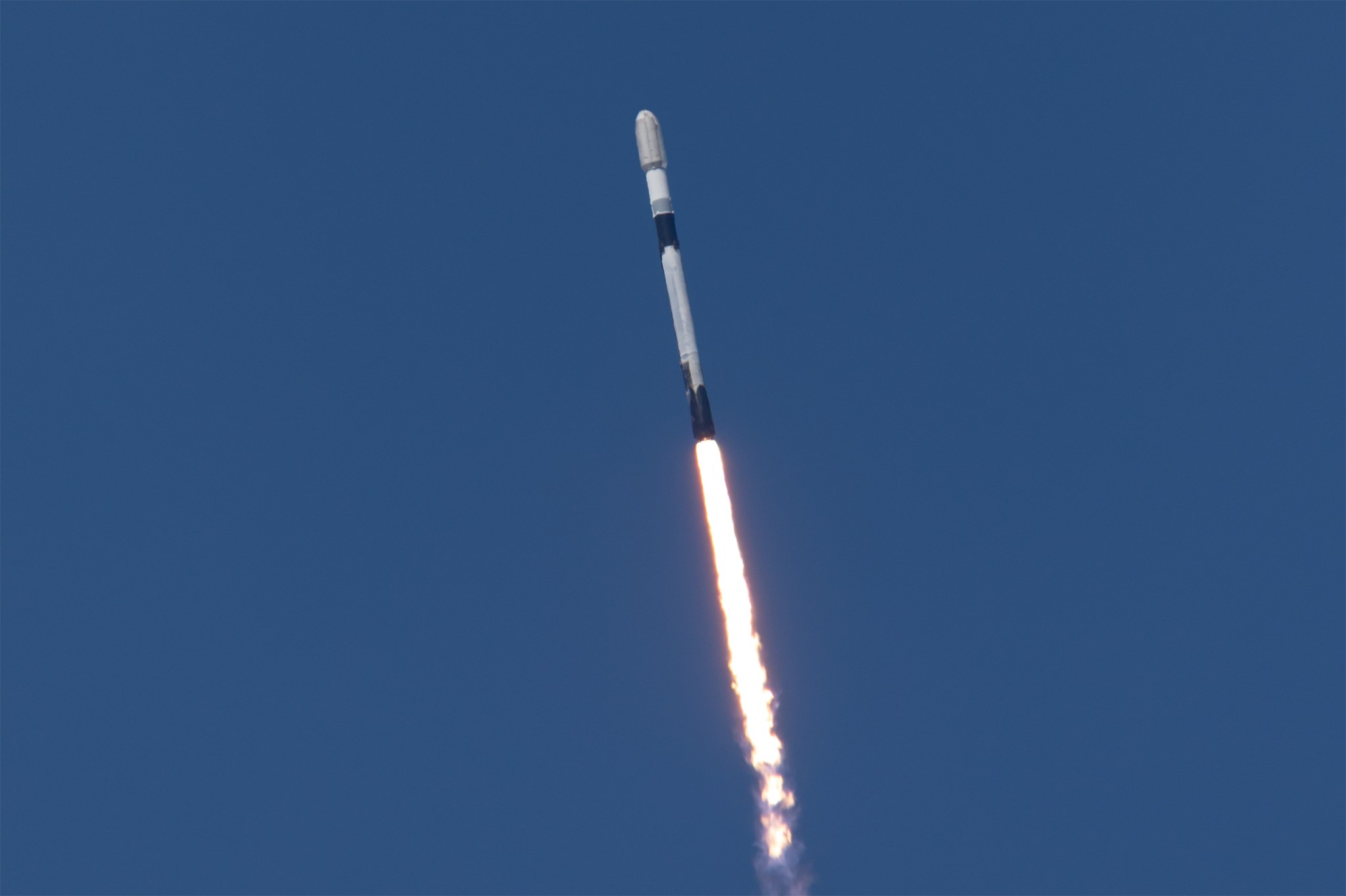
Three NASA-supported small spacecraft launched at 11:32 a.m. PDT Thursday to demonstrate new propulsion technologies, study how galactic dust and high-energy radiation move through galaxies, and advance capabilities for inspecting inactive satellites. The missions launched aboard a SpaceX Falcon 9 rocket from Space Launch Complex 4 East at Vandenberg Space Force Base in California as […] The post NASA SmallSats Launch to Advance Science, Technology, Orbital Operations appeared first on NASA Science .
Three NASA-supported small spacecraft launched at 11:32 a.m. PDT Thursday to demonstrate new propulsion technologies, study how galactic dust and high-energy radiation move through galaxies, and advance capabilities for inspecting inactive satellites.
The missions launched aboard a SpaceX Falcon 9 rocket from Space Launch Complex 4 East at Vandenberg Space Force Base in California as part of the company’s Transporter-18 commercial rideshare mission.
The ASCENT Propulsion Dual Mode CubeSat will demonstrate two forms of propulsion. The spacecraft’s single chemical thruster will demonstrate maneuvers requiring a higher degree of power, while the CubeSat’s four electrospray thrusters will perform lower-power operations. Both systems will be fueled using a common supply of Advanced Spacecraft Energetic Non-Toxic (ASCENT), a low-toxicity propellant that’s safer to handle during spacecraft processing and has 50 percent higher specific impulse density than conventional propellants like hydrazine.
The CubeSat will demonstrate how a small spacecraft could gain the advantages of both kinds of propulsion using the same propellant and feed system. NASA’s Marshall Space Flight Center in Huntsville, Alabama, leads the ASCENT propulsion dual mode mission in collaboration with the Massachusetts Institute of Technology and Georgia Institute of Technology, and Rubicon Space Systems, a division of the material contractor Plasma Processes.
Also aboard the launch is the Supernova Remnants and Proxies for ReIonization Testbed Experiment (SPRITE) CubeSat. Developed and operated by the University of Colorado Boulder’s Laboratory for Atmospheric and Space Physics and funded by NASA’s Astrophysics Division, SPRITE will help us better understand how the universe evolved to look the way it does today.
The SPRITE spacecraft will be NASA’s first astrophysics CubeSat to detect a specific range of ultraviolet light that cannot be observed from the ground. This capability will allow SPRITE to examine how gas, dust, and high-energy radiation move through galaxies and escape into the vast spaces between them. Ultimately, SPRITE will offer new insight into how radiation transformed the opaque, neutral gas that fogged up the early universe and cleared the way for light to spread through the cosmos as it does today.
During its one-year mission, SPRITE will unravel these mysteries by observing star-forming regions and the remnants of exploded stars in and near the Milky Way. Despite its compact size – 13.5 inches long by 9 inches wide and high, or about the dimensions of a shoebox – SPRITE uses highly sensitive detectors, specialized mirror coatings, and an innovative telescope design that could match the performance of some much larger space instruments. The advanced technologies SPRITE demonstrates in space will directly benefit the development of future, larger-scale ultraviolet observatories.
Rounding out the NASA spacecraft that launched is the Small Spacecraft Propulsion and Inspection Capability (SSPICY) mission, which will demonstrate technologies needed for future in-space satellite inspection and servicing.
For SSPICY, the aerospace firm Starfish Space will operate its Otter 24C spacecraft to inspect up to four inoperable satellites in low Earth orbit of U.S. origin. The Otter spacecraft will use new propulsion, autonomous guidance, navigation and control technologies to approach and gather information about the objects’ surface condition, geometry, and orbital characteristics. The technology demonstration and data from the inspections will help NASA and industry better understand how spacecraft could inspect and eventually service or assist with the disposal of objects in orbit.
The SSPICY mission will test additional technologies developed by Starfish Space, including an articulating robotic boom for directing thrust, as well as computer-vision-based navigation software for approaching objects safely. The mission is expected to operate for about two years, with inspections beginning in 2027.
SSPICY builds on NASA investments in small-business technologies for future in-space servicing and orbital debris assessment.
Maverick Space Systems provided support during the integration campaign for ASCENT Propulsion Dual Mode, SPRITE, and the Otter 24C spacecraft.
Both SSPICY and the ASCENT Propulsion Dual Mode mission are managed and funded by NASA’s Small Spacecraft and Distributed Systems (SSDS) within the agency’s Research and Technology Mission Directorate at NASA Headquarters in Washington. SSDS is based at NASA’s Ames Research Center in California’s Silicon Valley.
The NASA spacecraft launched on what’s known as a commercial rideshare, which allows NASA science and technology demonstrations to share a rocket with other government and commercial spacecraft, creating additional opportunities to economically test emerging capabilities in orbit. NASA’s Launch Services Program Office, based at the agency’s Kennedy Space Center in Florida, manages the CubeSat Launch Initiative, which selected the ASCENT dual mode propulsion demonstration in 2024 and SPRITE in 2021. The initiative offers launch opportunities for selected missions, enabling participants to gain practical experience designing, developing, and flying hardware.
The post NASA SmallSats Launch to Advance Science, Technology, Orbital Operations appeared first on NASA Science .