Roman Coloring Pages
NASA Science ·
The post Roman Coloring Pages appeared first on NASA Science .
… Nancy Grace Roman Space Telescope Roman Coloring Pages Home About Roman Mission Overview Why is Roman Important? Who is Nancy Grace Roman? Frequently Asked Questions Mission Timeline Partners Meet the Team Launch Details Science Science Overview Dark Energy Dark Matter Exoplanets Planned Observations General Investigator Program Observatory Roman Observatory Explore the Roman Systems (Spacecraft Interactive) Roman Commissioning Building Roman Wide Field Instrument Coronagraph Instrument Roman/Webb Comparison Roman/Hubble Comparison For Scientists Resources for Scientists Core Community Surveys General Astrophysics Surveys Science Teams Scientific Observatory Details Technical Details & Data Repository WFI Reference Information Anticipated Performance Tables Engaging with Roman Science Events Papers & Publications News In the News Roman Blog Find an Event Mission Timeline Social Media Media Resources Multimedia Educational Activity Center Roman Podcast Series Brochures and Fact Sheets Posters and Infographics Spacecraft Illustrations Roman’s Launch Site Photos Videos and Animations Roman’s Flickr Photo Gallery Scientific Visualizations Technical Graphs and Data Roman Observer Video Game Roman Coloring Pages
Unleash your creativity to bring these Nancy Grace Roman Space Telescope scenes to life.
Nancy Grace Roman, NASA’s first chief astronomer, smiles out at us from our first color page. She’s considered the mother of our Hubble Space Telescope because she helped everyone understand why it was important to have observatories in space – not just on the ground. If it weren’t for her, Hubble might not have ever become a reality.
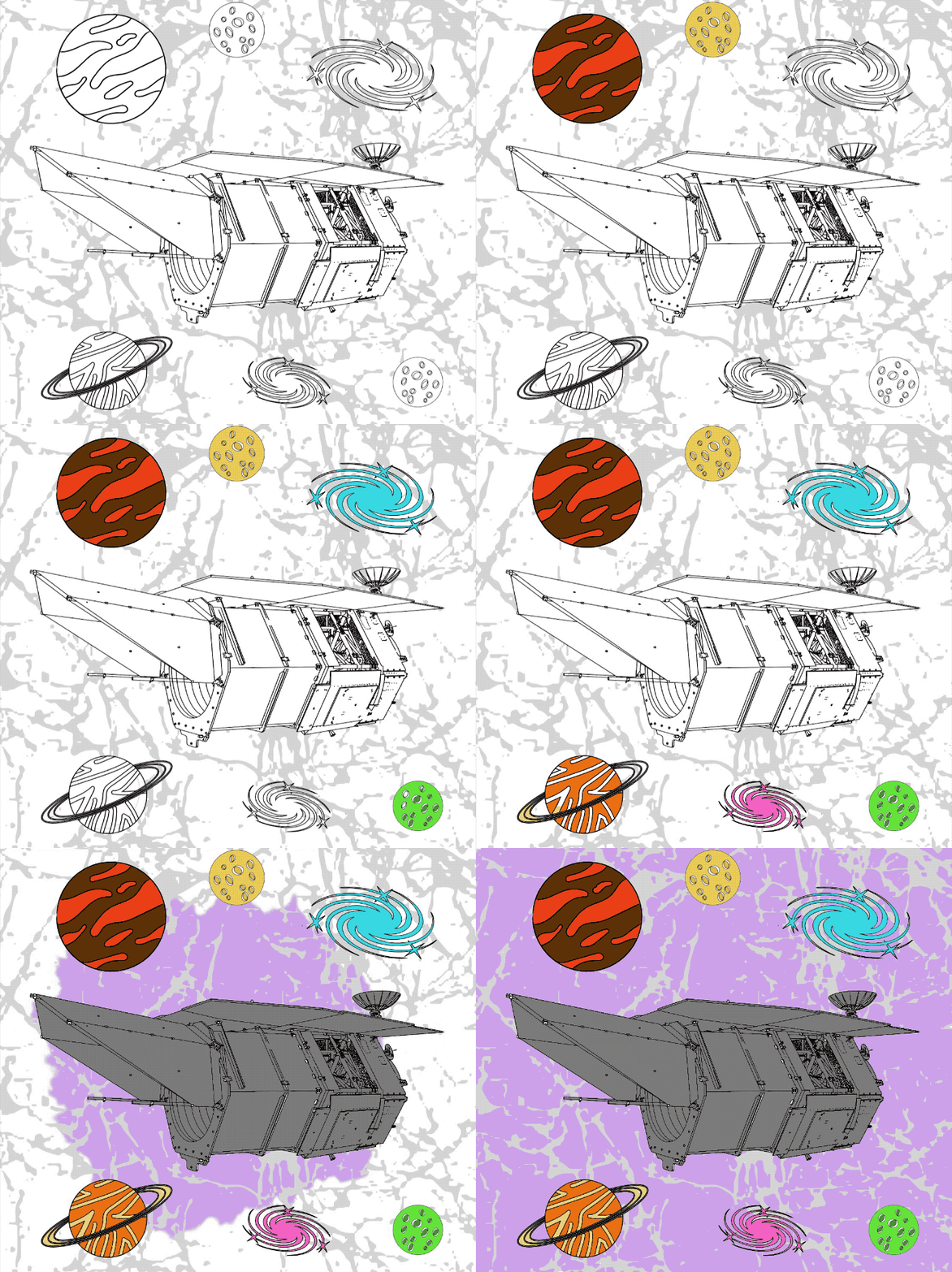
This coloring page highlights a few of the things the Roman Space Telescope will help us learn more about. The mission will find thousands of planets beyond our solar system and hundreds of millions of galaxies. It will also help us unravel the mysteries of dark matter and dark energy, represented by the gray web-like pattern in the background. With so much exciting new data, who knows what else we may learn?
The Roman Space Telescope is named after Nancy Grace Roman to honor the legacy she left behind when she died in 2018. Thanks to her, we’ve taken countless pictures of space from orbiting telescopes and learned so much more about the universe than we could have possibly known otherwise!
The Nancy Grace Roman Space Telescope has a field of view that is more than 100 times larger than the Hubble Space Telescope. Roman is designed to advance studies of dark energy and infrared astrophysics. Data from Roman is also used to discover thousands of previously unknown planets around distant stars and will help astrobiologists understand whether or not these far away worlds could be habitable for life as we know it.
The Roman Element Wheel Assembly allows the Roman Wide Field Instrument to both tune the wavelength of light that reaches the detectors and spread the light of astronomical objects into spectra.
The Roman Space Telescope Mosaic Plate Assembly is the heart of the Roman Wide Field Instrument (WFI). Each of these 18 detectors contains more than 16 million pixels that collect visible and infrared light emitted by astronomical sources. The detector array mosaic will enable the WFI to perform deep surveys of large portions of the sky to study dark energy, exoplanets, and more.
NASA COLORING PAGES NASA’s Field Guide to Black Holes Thinking about doing some black hole watching the next time you’re on an intergalactic vacation, but you’re not quite sure where to start? Well, look no further! We’ve taken a page from the best nature textbooks, added a dash of fun, and created our very own field guide to black holes. Check out the video series to learn about fancy and giant black holes and their companions. Then color your own black hole birds!
NASA’s Goddard Space Flight Center The post Roman Coloring Pages appeared first on NASA Science .