2027 Chevrolet Corvette ZR1 Review: The Sum of All Dreams
The Drive ·
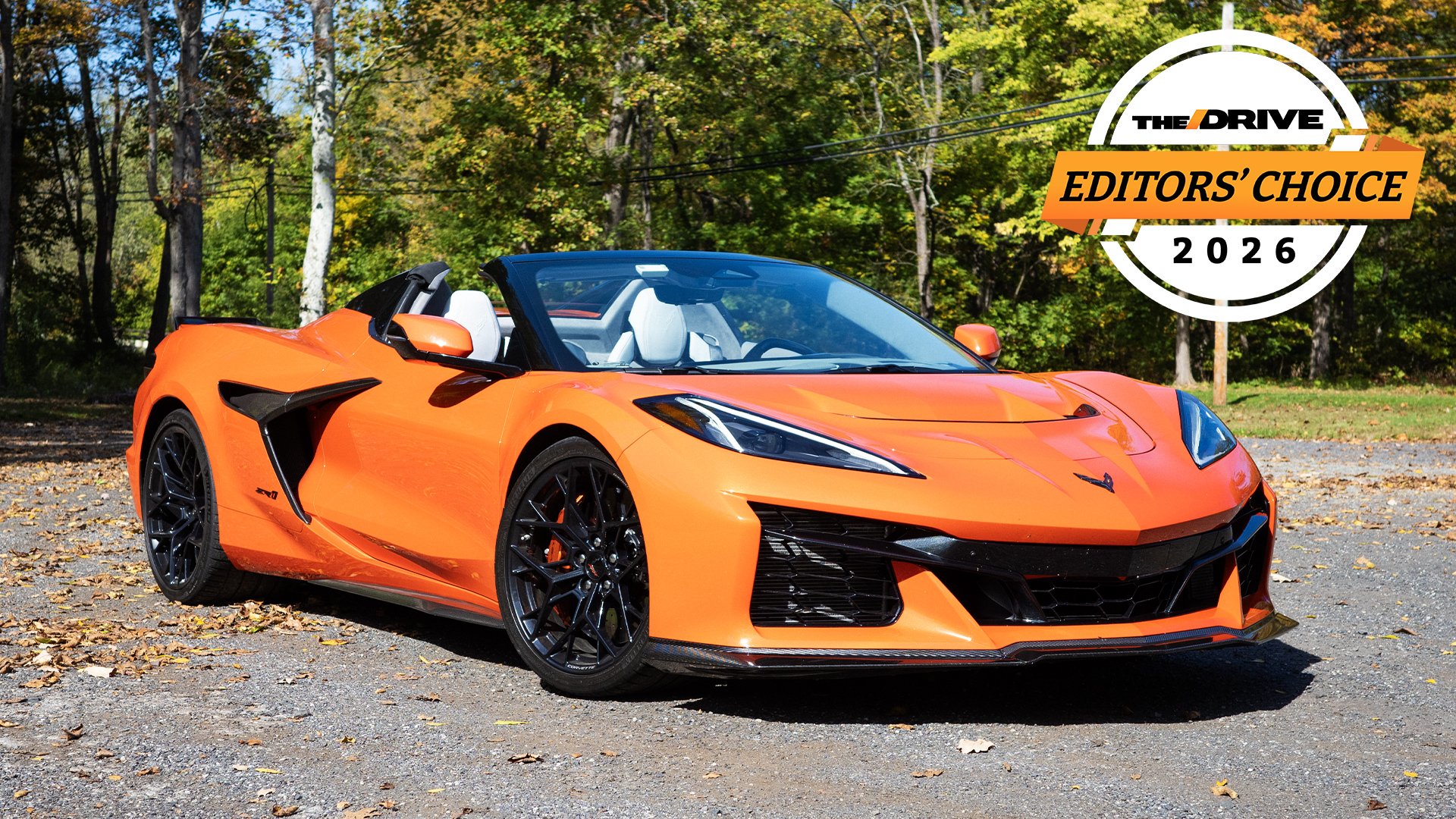
Everything the hypercars of your dreams promise, the Corvette ZR1 makes real. The post 2027 Chevrolet Corvette ZR1 Review: The Sum of All Dreams appeared first on The Drive .
In any conversation about the cars that captivated us as kids, the Ford GT90 will forever be my pick. Nothing about it looked organic or the product of human thought. It had 720 horsepower back in 1995, when that was a lot of horsepower, thanks to four turbochargers that, as Need for Speed II players know, rushed exhaust gases so volcanically hot they’d melt ordinary body panels, forcing Ford to fit ceramic tiles normally used for space travel. It really was otherworldly. And, unlike today’s concept cars, it actually worked.
Still, you can’t drive it; even the keeper of the lone example can’t really drive it because, I mean, how could anyone? It’s a gleaming, one-of-one monument to 20th-century American engineering. The good news is that, while it took about 30 years, today there is actually a Ford GT90 you can drive, only more modern and less rare. It’s called the Chevrolet Corvette ZR1, and it is perfect.
The Corvette ZR1 represents excess in every respect. Its 5.5-liter, twin-turbocharged, LT7 flat-plane-crank V8 makes 1,064 horsepower and 828 lb-ft of torque, sent through an eight-speed dual-clutch gearbox to the rear wheels alone. Because the only Vette that the ZR1 answers to is the 1,250-hp, hybrid, all-wheel-drive ZR1X.
Somehow, it’s not the power figures or the 2.3-second 0-60 mph dash that’s most surprising about the ZR1, though. No—it’s the option to order one as a convertible. Honestly, I did not know Chevrolet sold a ZR1 with a metal-folding roof before driving this one. It sounds almost as pointless as a 911 GT3 with a cloth top , but as I said with that car: When you’re sitting in one with the roof down and the revs high, all questions about purity and purpose have a funny way of disappearing.
Forged aluminum wheels with Michelin Pilot Sport 4S rubber (275/30ZR20 front and 345/25ZR21 rear), Brembo carbon ceramic brakes, and magnetic adaptive dampers all come standard. GM will even let you option the ZTK kit on the convertible, which swaps in more aggressive tires and chassis hardware, but also adds a carbon fiber rear wing for a truly ridiculous pairing.
Thankfully, this Sebring Orange example wasn’t specced as such. Mine had the 3LZ package, which adds better bucket seats with seat memory, suede trim, a carbon fiber steering wheel, and an upgraded 14-speaker Bose sound system, plus other nice-to-haves, for about $10,000 more, plus the vital $2,600 front axle lifter.
If you’re buying this vehicle, I can’t imagine those charges are offensively high—especially since the ZR1 is a bargain among hypercars. This convertible started at $197,495, and my window sticker read $212,175. The coupe’s top speed (233 mph; the folding roof version is rated lower for reasons) brushes past the Ferrari F80’s with comparable power, and it’s 20 times less expensive. Yes, cars like these are bigger than their spec sheets, but nothing is 20 times bigger.
One point on the ZR1’s design, before we move to the main event. I am a noted C8 design hater, but perhaps the sum of my positive experiences with this vehicle is swaying my eyes. The ZR1 naturally benefits from the widebody treatment, and this generation of Corvette only works, for me, when its fenders are punched out. Additional accouterments like the pass-through hood vent, which hilariously sacrifices cargo space for better downforce and cooling, catch the eye, too. Plus, I think the C8 just looks better as a convertible, with buttresses propping up the roof.
I still don’t find it a beautiful car, but it is certainly imposing, with puzzling lines and angles that conceal extreme performance. And that brings us back to the Ford GT90.
The Ford GT90 and Corvette ZR1 share a number of things, in my view. They’re both mid-engined, a style of automotive packaging American sports cars aren’t really known for. When equipped properly—or, in the GT90’s case, at all —they have blue interiors . In their respective eras, both were seen as bids to finally, once and for all, dethrone Europe’s finest. Beyond everything, though, they’re absurd.
Short of a plane, I have never been in anything as fast as a Corvette ZR1. Logically, this is not surprising; most people haven’t. But the gaps in relative speed between different cars, especially when you’re getting into and out of them all the time as I’m lucky to do in this line of work, tend to blend together.
With the ZR1, there is no ambiguity or debate. You step on the accelerator, and the pull is relentless. Some EVs might keep pace initially, but quickly fall off. They also can’t mimic the LT7’s raspy but smooth orchestra nearing 8,000 rpm, or downshifts like speed-of-light gunshots that make your heart skip a beat.
Of course, the street is no place to truly lean into what makes a ZR1 a ZR1. But you can still nibble at this comedy and theater at low-ish speeds; I mean, you should hear this thing even at idle. The smallest steering input yields what feels like unbreakable grip; it’s also perfectly weighted and transmits all the texture you need. The ride is harsher than the E-Ray’s I drove earlier this year even at its cushiest Tour setting, which is to be expected and totally within the remit of a car like this, but it also didn’t necessarily leave me feeling battered and bruised. I wouldn’t change it.
The official spec sheet quotes a dry weight just under 3,800 pounds, but the flatness with which the ZR1 changes direction, and the immense difference a dab of power creates, make it feel lighter than that. At the same time, the wheel and pedals don’t insulate you from the grit of the pavement, and the micro-tremors emitted from the V8 strapped to your back certainly don’t go unnoticed, either. Everything coalesces into a deep, rich, and visceral feeling piloting this thing, that’s paradoxically agile yet grounded, firm, and hefty.
As for the brakes, they come on very strong and very early. There’s not a wide zone of pressure to work with—and in my case, it did ruin me for the next two cars I drove after it—but you get used to them because they’re so powerful, and because they match the ZR1’s capabilities in every other dimension. They’re a bit edgy, but they feel right for the car.
Still, the ZR1 is as easy to drive as anything. Normally I would be a little apprehensive about getting into a 1,000-horsepower hypercar that costs more than five times what my daily does, at least for the first 20 miles. But my experience with that E-Ray prepared me for the ZR1, which dispelled any potential fears. Visibility is great in this thing, parking maneuverability is pretty effortless, and that aforementioned axle-lifter is a godsend. I didn’t scrape once, hand on heart.
I’ll spare some time to touch on the ZR1’s cabin, because it does feel like a special place. Surely more elegant and baroque hypercar interiors exist, but this Corvette succeeds in creating a space fully furnished and arranged for driving, with the fit and finish you’d expect.
Everything is angled toward the driver, including the just-right-sized center screen, and the seats fit my 5’10”, 160-pound frame like a glove. There are a few quirks, even with the C8’s old strip of buttons gone: two wireless chargers that effectively clamp phones in so they stay put, and steering-wheel media controls that feel like paddles flipped from behind rather than pressed down. That said, I liked the squircle-y shape of the wheel, which has slight corners at 10 and 2 that lend a sensation of pinpoint precision when you direct the tires with them.
Overall, though, I think something that gets lost with the C8, even still today, is how deeply it doesn’t feel like sitting in any old Corvette. The total lack of blind-spot visibility, the firewall behind you, and the way it’s all canted with purpose lend a far more exotic feel—though, if I were configuring mine, I wouldn’t opt for light gray inside. A machine like this calls for a tone a little less reminiscent of ’90s Hondas.
As for the roof, it deploys or stows itself away in under 15 seconds. When the rear cover lifts, you get a nice peek at the handiwork within, through a little window. Don’t get me wrong—it’s always nice to get an unencumbered look at a V8—but nothing competes with the feeling of a car that does what this one can, in open air. You can’t admire the engine when you’re using this thing as designed, people.
In this modern world of many good and some great cars, excellence has been somewhat diluted. I find myself often impressed but rarely blown away, even by the best stuff I drive. Reality always seems to fall just short of hype. The Corvette ZR1 is the point where they meet.
Driving this car for four days that went far too quickly, with the V8’s bellow cocooned within the auburn canopies of rural Pennsylvania, is an experience I won’t soon forget. Autumn is my favorite time of year, when summer soup gives way to crisp confidence, and this car is nothing if not crisp and confident.
Objectively, it’s a stunning, perfect performer at a price that I still can’t comprehend. Emotionally, it’s a dream realized, and from a rather unexpected source, which is why I suppose it reminds me of that GT90. Machines like this are the kind you see in movies and video games, spoken about but never grasped. How sweet it is when one slips through the net and into our world.
General Motors provided The Drive with a 4-day loan of this vehicle for the purpose of writing this review.
Everything about the Chevrolet Corvette ZR1 seems too good to be true. It’s very much real, and arguably better without a roof.
The post 2027 Chevrolet Corvette ZR1 Review: The Sum of All Dreams appeared first on The Drive .