Botany, Biomedicine, and Cargo Ops Wrap Up Week Aboard Station
NASA Science ·
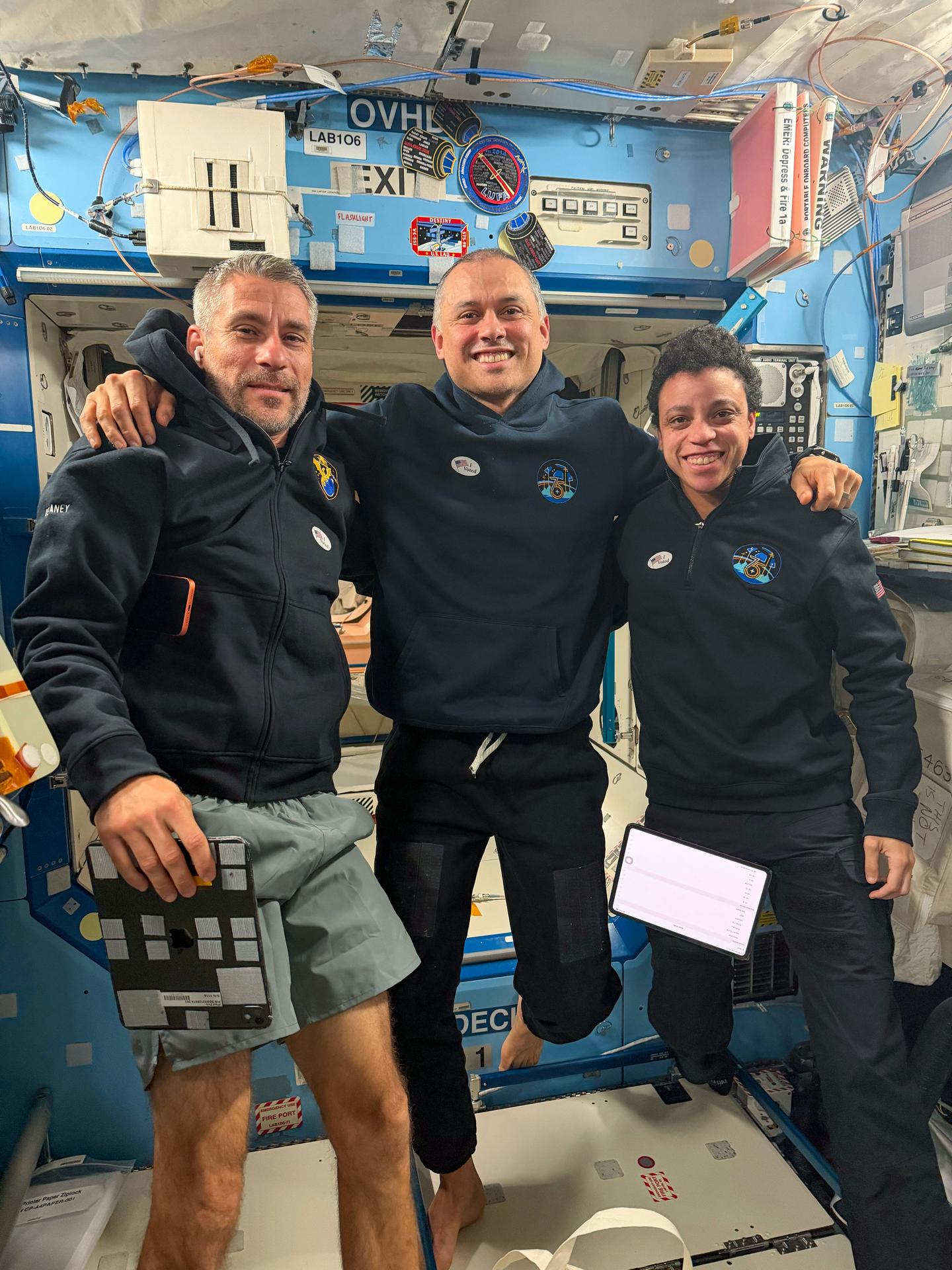
Space botany and biomedical research filled the scientific schedule aboard the International Space Station at the end of the week. Expedition 75 is also continuing to load a U.S. cargo spacecraft before its upcoming departure and return to Earth. The post Botany, Biomedicine, and Cargo Ops Wrap Up Week Aboard Station appeared first on NASA Science .
Space botany and biomedical research filled the scientific schedule aboard the International Space Station at the end of the week. Expedition 75 is also continuing to load a U.S. cargo spacecraft before its upcoming departure and return to Earth.
The orbital residents had their hands full on Friday helping researchers learn how to keep crews fed and healthy on long duration missions. Their studies may help future crews traveling farther away from Earth become self-reliant for nourishment and health care.
NASA flight engineer Luke Delaney investigated how plants grow and fight disease in microgravity. Delaney began his shift harvesting thale cress plants grown inside the Kibo laboratory module ’s Multi-use Variable-g Platform . Next, he treated plant samples inside Kibo’s Life Science Glovebox for preservation and return to Earth. Results may lead to healthier plants grown on spacecraft and better agricultural techniques on Earth for stronger disease resistance.
The crew also serviced an array of high-tech research gear designed to study phenomena difficult or impossible to achieve in Earth’s gravity. NASA flight engineer Anil Menon swapped sample-containing cassettes and hard drives inside the Advanced Space Experiment Processor-4 that recently supported pharmaceutical and microbiology research. NASA flight engineer Jessica Watkins activated student-designed hardware that will examine how critical physical, chemical, and biological processes behave in microgravity. Insights from the experimental hardware could advance Earth and space technologies, lead to new research methodologies, and protect crew health.
Flight engineer Joshua Kutryk of CSA (Canadian Space Agency) began his shift with assistance from Watkins collecting his blood sample, spinning it in a centrifuge, then stowing it in a science freezer for preservation and later analysis. Afterward, he conducted two workout sessions using resistance and rowing techniques on the European Enhanced Exploration Exercise Device (E4D) located in the Columbus laboratory module . The E4D is a new compact exercise device being investigated for its ability to support muscle and bone health on crewed missions to the Moon, Mars, and beyond.
The busy scientific work is also preparing some of the research samples for return to Earth soon aboard a SpaceX Dragon cargo spacecraft that arrived at the orbital outpost on Oct. 15 . Menon and Watkins spent a portion of their shift together on Friday packing and securing cargo inside Dragon that will be retrieved by NASA and SpaceX support personnel after its splashdown in the Pacific Ocean.
Roscosmos cosmonauts Pyotr Dubrov and Anna Kikina partnered together and studied how to use super intelligence tools to transcribe crew audio reports for review by mission controllers on the ground. Dubrov also conducted a photographic inspection of windows inside the Zvezda service module . Kikina measured her blood pressure using arm, wrist, and finger cuffs to monitor spaceflight’s effect on her cardiovascular system. Flight engineer Sergey Teteryatnikov tested the operation of a medical monitoring device by simulating a health check then downlinked the data to doctors on Earth for review.
Learn more about station activities by following the space station blog , @space_station on X, as well as the ISS Facebook and ISS Instagram accounts.
Get the latest from NASA delivered every week. Subscribe here .
The post Botany, Biomedicine, and Cargo Ops Wrap Up Week Aboard Station appeared first on NASA Science .