Bears don’t sleep all winter, and other cold-weather animal myths
Popular Science ·
Squirrels also don't forget where they hide their nuts. The post Bears don’t sleep all winter, and other cold-weather animal myths appeared first on Popular Science .
It’s almost winter in the Northern Hemisphere. While the humans fire up their furnaces (or, ideally, heat pumps ), animals prepare in their own ways.
That brings to mind a number of misconceptions people have about animals in the winter. Most of us were taught things that, over time, were proven to be untrue, and winter behaviors are no exception. Bears, for example, don’t sleep the entire winter. Birds don’t actually care about the cold that much, and migrate for other reasons. And squirrels aren’t constantly forgetting the location of their nuts. Let’s dig into these common winter myths, and what actual research points to.
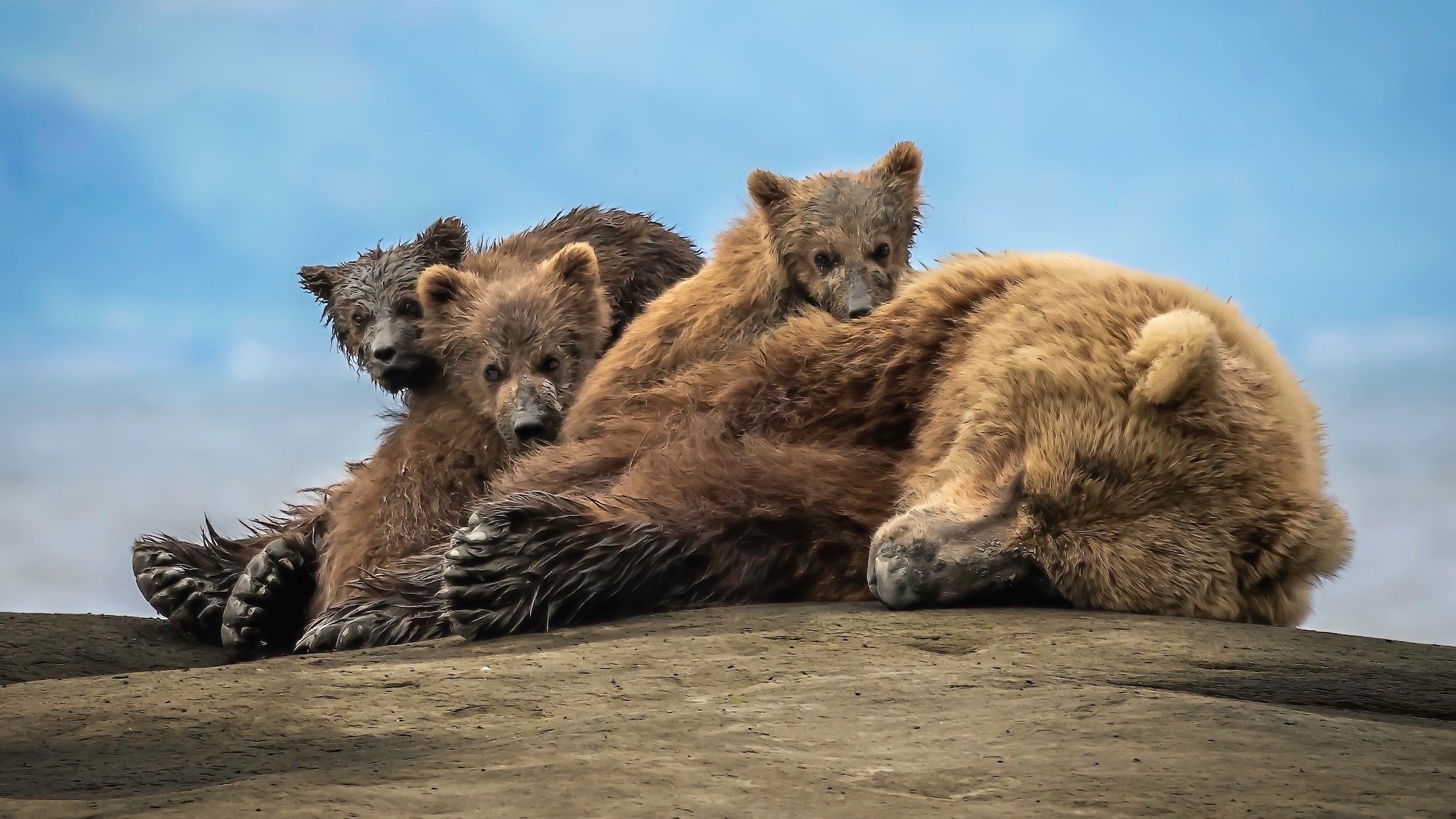
Many of us learned in school or on TV that bears sleep all winter. It’s not true— bears don’t hibernate . At least, not exactly.
An explainer published by the National Park Service states that hibernation isn’t a black-and-white concept: “In recent years the view that the state of hibernation exists on a spectrum rather than as a binary yes-or-no condition is becoming more entrenched.” The piece goes on to say that black bears don’t hibernate as deeply as smaller animals.
There’s real research backing this up. A 2011 study published in Science by researchers at the University of Alaska Fairbanks shows that bears get up and shift position throughout the winter. “Animals changed position twice a day to once every 2 days, when they stood, occasionally groomed, and rearranged bedding material,” the study states. The research also states that bears use a great deal more energy during the winter than smaller animals. “During torpor, metabolic rates of small hibernators decrease to 2 to 5 percent of basal metabolic rate (BMR),” the study explains, before showing that bears’ metabolic rates reach closer to 25 percent. That’s a wide spectrum.
So bears don’t sleep all winter—they regularly get up. That brings us to another myth: The idea that bears give birth without waking up. It’s also not true, according to the National Park Service.
“They’re not only awake during this time, but in the days before birthing, expectant mothers will often add bedding to the den by chewing materials into smaller pieces and arranging them just-so,” the explainer states. “After the 1 to 3 half-ounce to 1 lb cubs are born, she meticulously licks them clean, and provides warmth and mother’s milk as they grow to about 5 lbs by the time they emerge in spring.”
Which isn’t to say that bears are active in winter—they really do slow down. But they don’t hibernate to the same extent as smaller animals.
You might think that birds fly south for the winter because they don’t want to freeze—we even call cold-hating humans who travel in winter “snowbirds,” in reference to this belief. But it turns out birds aren’t directly concerned with cold weather.
If you have a bird feeder you’ve probably noticed that many birds stick around for the winter. An explainer by the Cornell Lab of Ornithology states that birds are perfectly capable of surviving winter temperatures. “Escaping cold temperatures is not itself a major factor that drives birds to migrate, since many species, even hummingbirds, can withstand freezing temperatures as long as an adequate supply of food is available,” the article states.
There’s less food around in the winter, and that’s the actual reason for migration. You might say this is semantics, and you’re not entirely wrong—the cold temperature causes the food shortage. But if you’re picturing shivering birds, desperate to travel somewhere warmer, you’re imagining the wrong motivation. Birds don’t leave in pursuit of warmer weather; they leave in pursuit of food and longer daylight hours. And they head back north (or south) in the spring for the same reason: the thaw means a lot of fresh food, not to mention safe, open areas for breeding.
Squirrels spend a good part of the year hiding nuts, all so they can recover them in the winter. A common legend goes something like this: squirrels forget about most of these nuts, and that’s how forests grow. And while it is true that squirrel caches can become trees, squirrels don’t forget their nuts that often .
They are, in fact, really good at keeping track of their nuts, and this has been known for decades. A 1991 paper published in Animal Behaviour by researchers at Princeton University showed this. In the study, captive grey squirrels were all given hazelnuts to bury in the same area. The nuts were then all removed by experimenters. The squirrels were re-introduced to the site, one by one, with a twist: experimenters buried fresh nuts in the squirrel’s own 10 cache sites and an equal number of sites randomly chosen from caches made by other squirrels.
The results were striking. “Although each squirrel’s own caches were close to the caches of other squirrels, the squirrels retrieved significantly more nuts from their own sites than from sites used by other squirrels, after all delays,” the paper states. “The retrieval accuracy of the squirrels under these conditions indicates that while grey squirrels can locate buried nuts by their odour, they can also remember the individual locations of nuts they have buried.”
Other studies show how well squirrels can remember nuts. A 2023 study published in Urban Ecosystems by researchers from Poland found that hazelnuts cached by squirrels are more likely to be dug up than hazelnuts buried by humans in the same area. This suggests that squirrels are pretty good at remembering where they buried their nuts.
The post Bears don’t sleep all winter, and other cold-weather animal myths appeared first on Popular Science .