Expert reveals 7 common bedroom items that can trigger 3 a.m. wake ups — here’s what to remove from your bedroom to start sleeping through the night
Latest from Tom's Guide ·
Jenny Haward is a U.K. based freelance journalist and editor with more than 15 years of experience in digital and print media. Her work has appeared in PEOPLE, Newsweek, Huffpost, Stylist, ELLE, The Sydney Morning Herald and more. Jenny specializes in health, wellness and lifestyle, taking a particular interest in sleep.
Here at Tom's Guide, we know that nighttime wake-ups are a big issue for many people . Which is why, if you've found yourself repeatedly awake at 3 a.m. and unable to fall back to sleep, it's time to take a look around your bedroom.
You might not realize it, but elements of your sleep space could be contributing to your disrupted rest — from technology and light usage, to elements of your bed itself. The simple act of removing them might be the difference between another broken night's rest and staying asleep all night.
With advice from two sleep experts, we're exploring why bedroom environment matters, what to consider changing and why those adjustments are important for sleep.
Temperature, light and sound pollution can all stop you from staying asleep all night. "People sleep better when it's dark, when it's quiet, when it's cool, when it's free of disturbances [and] when it's safe, says Dr. Aric Prather , sleep scientist and expert at UCSF and BetterSleep . "And so, trying to optimize that environment on those facets, is certainly a step towards a better night of sleep."
While 3 a.m. wake ups have a variety of causes, there are environmental factors that can contribute to them happening, and keep you awake. Here, we explain what they are, and how removing certain items from your room can help.
Both experts we spoke to advised, where possible, to keep work outside of the bedroom. And since many of us work on computers or laptops at home, removing these from your sleep space can help eliminate distracting light sources and potential stress they're associated with.
The Sleep Foundation points out that having electronics near the bed can contribute to nighttime wakeups through the noise and light they can emit. So, we asked Heather Darwall-Smith , a UKCP psychotherapist specializing in sleep and author of The Science of Sleep , if laptops in the bedroom can be impactful on sleep, through the association with work or light from charging cables.
If it's your work laptop and it's near your bed and you see the light [this can prompt], 'Oh, that's my work laptop. Oh, God, did I send that email?'
Dr. Aric Prather
"It's both," she says. "The mind needs to know the day is done. It's like putting work away. It's creating that boundary between work and home," she explains.
Dr. Prather also points out that waking and seeing a light from a laptop charging cable can carry anxiety. "Because if it's your work laptop and it's near your bed and you see the light [this can prompt], 'Oh, that's my work laptop. Oh, God, did I send that email?'" he says, adding that it can also lead to ruminating over the next day being a work day.
He adds that "some people's computers have fans that are constantly running and there's heat coming out of them. So that can change the the temperature of the room or the temperature near their body."
As temperatures drop over the winter, keeping your heating on overnight can appear to be a sensible way to combat the seasonal chill — but being mindful of temperature is key to avoiding waking up.
“High temperatures in your bedroom can interfere with your body’s natural cooling process, which is essential for falling and staying asleep,” Dr. Hannah Patel previously explained .
But turning your heating off in the lead-up to bedtime — ideally anytime from around 9 p.m. (though that's not a hard and fast rule if you're an early bird or a night owl!) — you'll allow your bedroom time to cool down.
Similarly, sleeping with an electric blanket is another nighttime practice to be particularly careful with.
Not only is it unsafe to keep an electric blanket on all night (the Electrical Safety Foundation International says they should never be used while sleeping), even modern models with built-in protection to prevent overheating, advise turning off before falling asleep.
Removing your phone from the bedroom is something the Tom's Guide sleep team swears by, in part because expert advice suggests that scrolling your phone late at night can cause a state of mental arousal that may lead to disrupted sleep.
Not to mention, a recent study found that every hour spent on screens before bedtime increases the risk of insomnia by a whopping 59%. As Dr. Prather points out, "phones on their own aren't really problematic, but if people can't keep their hands off them, then they are."
And while the jury is still out on how much blue light from screens is really going to affect your sleep , looking through your phone in the middle of the night can stimulate your brain and prolong awakenings .
However, Darwall-Smith notes that she often finds "people are more stressed by taking the phone out of the bedroom than having it there."
If that's you, consider "turning off your notifications, thinking about how checking the screen or getting into live activity on your phone is going to keep you awake," the sleep psychotherapist advises.
It's the literal foundation of your sleep, but you might not have considered that your mattress could be playing a big part in disrupting it.
Waking up with back pain or stiffness, aching shoulders and hips, overheating during the night, tossing and turning, and even waking up coughing and sneezing can all be signs that your mattress is the culprit behind your nighttime wake ups .
"If you're constantly having back pain or your mattress isn't okay... look into it," says Darwall-Smith, though she points out that back pain might be caused by factors outside of your mattress.
Dr. Prather suggests finding a mattress that is "the right comfort for you, and that probably changes as you age," and recommends "one that supports your posture [and] that doesn't cause pain."
However, as Darwall-Smith notes, "sometimes it's not in [people's] control to change their mattress. So what can you do to make the mattress comfortable? You might want a topper." The best mattress toppers can adjust the comfort and feel of your mattress, and even help with regulating the temperature, all without the cost involved in replacing your existing bed.
Having the wrong pillow for your sleep position , one that has lost it's shape and support, is aggravating allergies or is causing neck pain can all contribute to nighttime wakeups .
Research shows a relationship between an uncomfortable pillow and poor sleep. One study looking at pillow performance found that everyone "who reported poor sleep quality also reported poor pillow comfort."
Sheets, meanwhile, might be something of an afterthought, but synthetic fabrics can trap heat and cause sweaty wake-ups — even though the often low price-point can seem attractive.
Dr. Prather says that along with the right mattress, "the quality of the sheets," and their "breathability" as well as "the quality of the pillow, can all contribute to how comfortable people are, and certainly comfort is something that we want to foster when we're trying to get people to sleep well."
Our best pillows of 2026 can help you determine what's right for you and our guide to the best bed sheets sets of the year has options for different sleep preferences, seasons, and budgets.
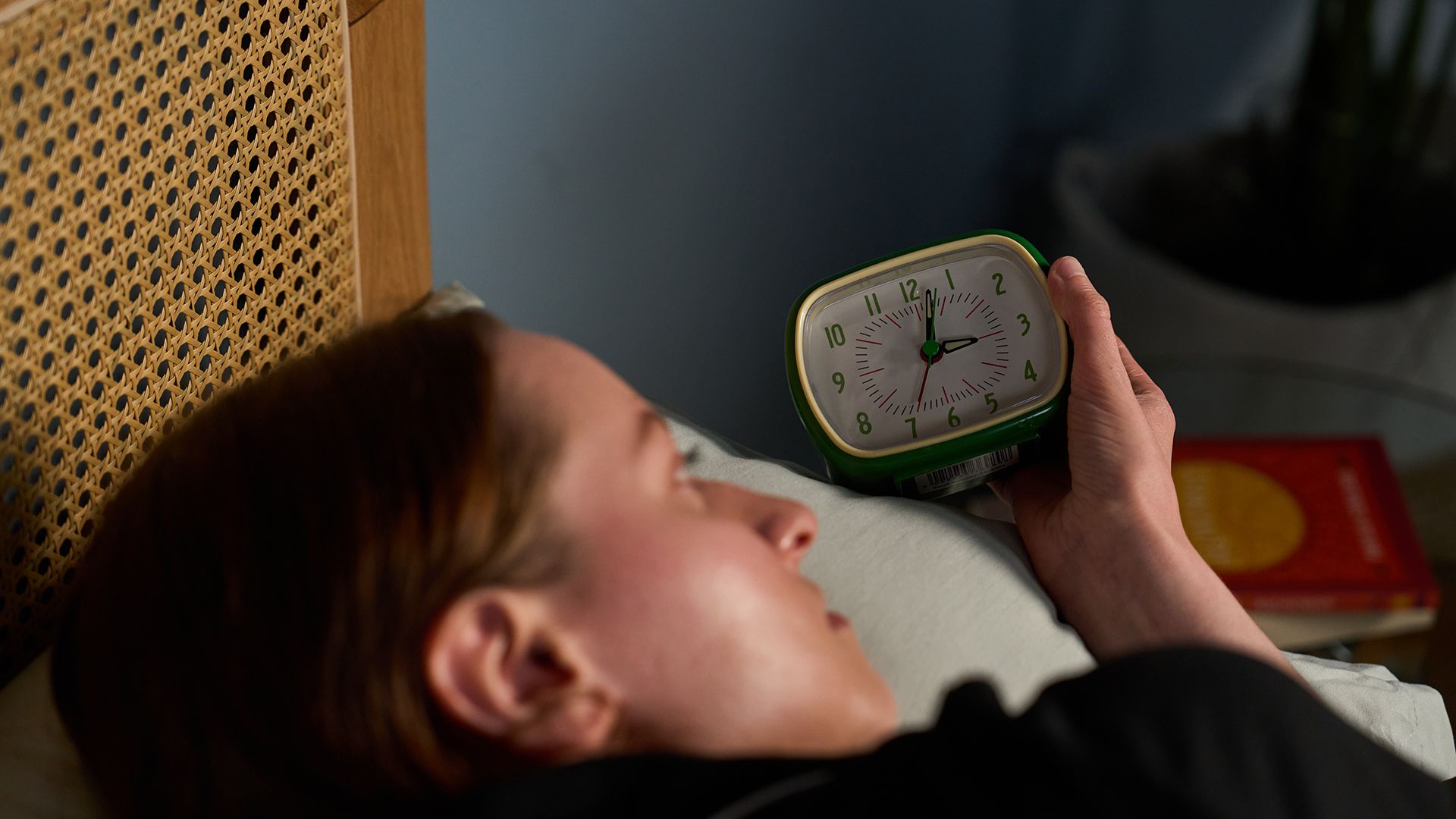
While a basic alarm clock can be a better option that relying on your phone, if it's visible from your bed it's potentially making nighttime wakeups worse.
"I prefer people to use actual alarm clocks and to try and find non-alarming alarm clocks," says Darwall-Smith. However, she adds that "I prefer people not to look at their clock."
According to research, clock-watching or 'time monitoring behaviour' (TMB) is common in people who experience insomnia, and something that perpetuates the symptoms of the condition.
Looking at the clock when you wake during the night is "only bad news" says Dr. Prather. "I deal with people with insomnia, but most people are looking at the clock hoping that it's later in the night than it is. And they're almost always wrong."
Being aware that it's not as late as you hoped then leads to "an immediate anxiety or frustration or discouragement, which pushes against falling back asleep," he explains.
Obviously, we're not suggesting getting rid of the main light in your bedroom altogether, and living each evening in a state of complete darkness.
But if you find yourself awake during the night? "You should not turn on big lights," says Dr. Prather. "If you can keep it low light, that's certainly better."
Speaking of light at night, Darwall-Smith explains that "if you're shining light into your brain at 4 a.m., that's not [good]. Because sleep is reset by the light-dark cycle. As we push towards wakefulness, our eyes register light and it's part of what pushes us up into [being] awake."
However, Dr. Prather cautions against "[sitting] in the dark with your thoughts, usually that isn't a good solution." He recommends activities that are sleep supportive, relaxing and distracting, like reading with a book light, or using a Kindle on low intensity.
Being wide awake in the middle of the night is rarely pleasant, but you don't always have to be concerned by a brief awakening.
"Waking up during the night is normal... it's part of sleep structure . Especially as people get older, it would be very uncommon for people to not wake up during the middle of the night," says Dr. Prather.
Perfectionism is insomnia's best friend.
Heather Darwall-Smith
Darwall-Smith agrees, adding that, "What we're looking at is the quality of what that waking is. If you get up, wander around, go and have a pee, go back to bed, happy days. You get up and your eyes are peeled to the ceiling and you're freaking out, not so happy days."
And though we've covered ways you can help your sleep by adjusting your bedroom environment, the experts we spoke to emphasized focusing on what works for you, and not adding stress by focusing on creating a 'perfect' environment. "We're not looking for perfection. We're looking for good enough to sleep better," says Dr. Prather.
Darwall-Smith agrees: "Perfectionism is insomnia's best friend. And if we're rushing around trying to perfect our sleeping conditions, Well, do we really need to? Good enough is good enough."
We've talked about what to remove, but there are useful products which can help tackle issues with noise, light and comfort that may be impacting your night's rest. You don't need to strive for absolute perfection, consider these as tools for a calmer, more relaxing night. Even better, these three items are all reduced in the Black Friday mattress deals.
In our Ozlo Sleepbuds 2 review we awarded these tiny buds with 4 starts, with our lead tester noting that she "hoped they would drown out noise so I could stay asleep all night. And they do." Right now, you can get a pair for $40 off in Ozlo's Black Friday & Cyber Monday Sale. View Deal
Silk Sleep Mask: was $79.50 now $56 This Sabrina Carpenter approved sleep mask is made with 100% mulberry silk and promises total blackout for a night free from light pollution. It's also adjustable to suit everyone, and the wraparound silk means it's soft on your skin and hair. Plus, it has 30% off in the Amazon Black Friday sale . View Deal
Original Adjustable Pillow (classic shape in queen): was $89 now $66.75 If your pillow has been contributing to sleep disruptions, consider the Coop Original Adjustable - it tops our best pillows of 2026 guide. That's largely down to the adjustable fill that lets you create the loft and firmness that suits your individual sleep style. Now 25% off for Black Friday. View Deal