NASA Funding Helps Virginia Assess Oyster Loss From Recent Algae Bloom
NASA Science ·
NASA-funded researchers are helping Virginia officials assess the impacts of a harmful algal bloom on oyster farms along the Chesapeake Bay’s Eastern Shore. The post NASA Funding Helps Virginia Assess Oyster Loss From Recent Algae Bloom appeared first on NASA Science .
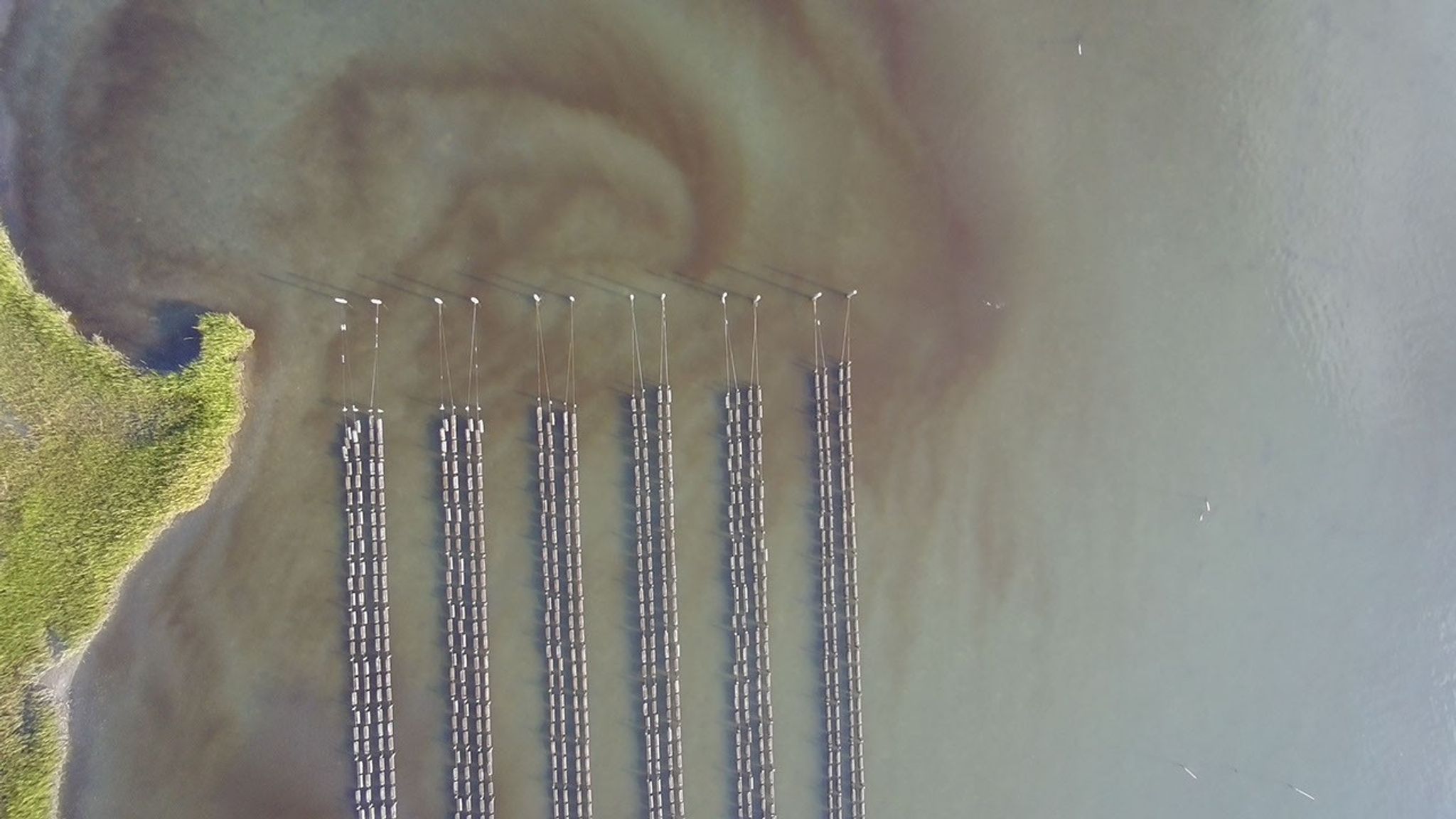
Drone imagery of oyster-growing equipment on Virginia’s Eastern Shore shows water discoloration consistent with a dense algae bloom. Alex Lambert, used with permission
After a harmful algae bloom struck parts of the Chesapeake Bay’s Eastern Shore in September, NASA-funded researchers are helping Virginia officials assess potential impacts to the region’s oyster farms.
The Virginia Marine Resources Commission is using the researchers’ maps and guidance to identify affected oyster-growing and restoration areas and assess impacts on farms. The ongoing analysis builds on a project funded by NASA’s Earth Action Water Resources program to improve water-quality forecasting using satellite observations and input from shellfish growers. The project aims to help growers and coastal managers better prepare for future events.
Researchers at William & Mary’s Virginia Institute of Marine Science & Batten School documented a nearly continuous bloom stretching along roughly 15 miles of Virginia’s Eastern Shore, from Cape Charles to south of Nassawadox Creek. Coinciding with reports of fish deaths and oyster losses, the bloom included Alexandrium monilatum, a species of algae known to harm aquatic life.
At the request of the Virginia commission, the researchers analyzed satellite imagery from ESA’s (European Space Agency) Copernicus Sentinel-2 mission to map areas with elevated concentrations of microscopic algae. Researchers also used the Chesapeake Bay Environmental Forecast System , a tool that relies on computer models to predict water conditions in the bay and to reconstruct water temperatures, salinity, and winds before and during the bloom.
The analysis indicated that water temperatures for much of early September exceeded the range seen during the same period from 2018 to 2025, potentially stressing oysters. Temperatures were about 80 degrees Fahrenheit when the bloom began. The tool also showed that while calm winds may have initially allowed algae to linger, more intense winds later may have pushed bloom waters toward shore, overlapping with oyster growing areas.
The post NASA Funding Helps Virginia Assess Oyster Loss From Recent Algae Bloom appeared first on NASA Science .