I couldn't stop sneezing in my bedroom — until I found these 5 hidden dust traps
Latest from Tom's Guide ·
null
No matter how often you vacuum the floor or wipe down your nightstand, bedrooms gather a frustrating layer of dust, seemingly overnight. While surface cleaning catches the obvious spots, dust doesn't actually start on your bedside table — it starts in your mattress, curtains, and carpets, drifting through the air until it finds a flat surface to settle on.
These fabric fibers, dead skin cells, and tracked-in allergens get kicked up every time you walk across the room or make the bed. If you want to cut down on dust and keep your space feeling fresh, here are five hidden dust magnets in your bedroom, and the simple ways to tackle them.
Because baseboards and door moldings sit below eye level or high above your head, they are easily overlooked during routine cleaning sessions. However, the horizontal lip of baseboard trim and the top ledge of door frames collect a continuous layer of falling airborne dust.
To clear them without kicking dust everywhere, skip dry feather dusters , which simply push debris into the air. Instead, wipe the top edges with a damp microfiber cloth or a vacuum brush attachment .
Once clean, run a standard dryer sheet along the wooden trim . The anti-static coating on the dryer sheet leaves an invisible barrier that repels dust, keeping your baseboards clean for weeks longer.
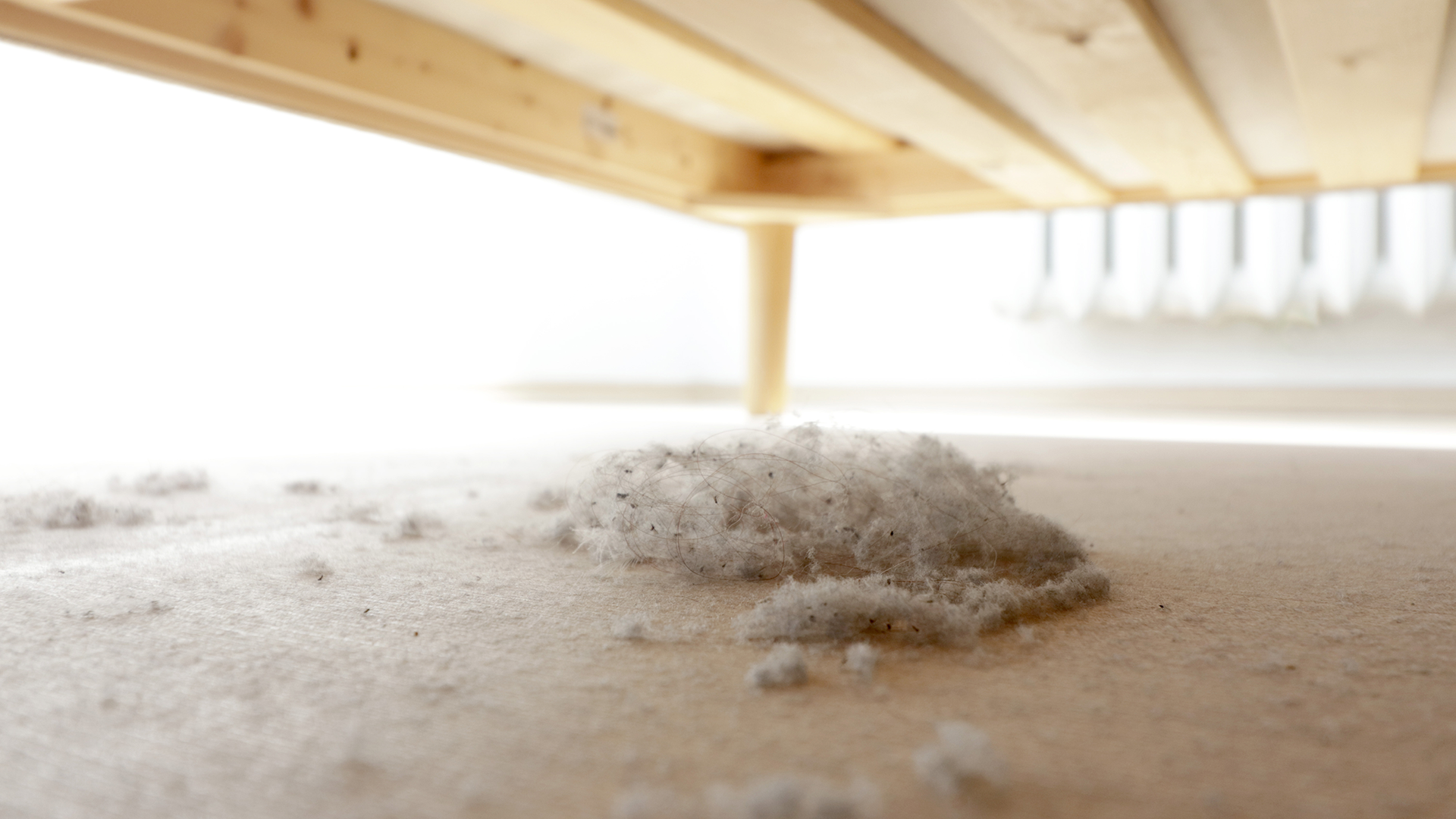
Your mattress is one of the heaviest textile surfaces in your home, shedding fabric fibers while trapping dead skin cells and mattress pad lint. Over time, friction and gravity push dense clusters of dust underneath the bed frame and into the dark space between the mattress and the headboard.
Every time you toss and turn at night, the weight of your body compresses the mattress like a bellows, pumping trapped dust out into the room. To solve this, strip your bed completely once a month and use your vacuum's upholstery tool to thoroughly vacuum the top, sides, and crevices of the mattress itself.
Next, slide the mattress back slightly and vacuum the bed frame slats and the hidden dust bunnies under the bed using a flat, long-reach vacuum wand.
Curtains and blinds trap airborne dust and allergens, only to release them back into your sleeping area whenever they are moved.
Instead of taking down heavy drapes every week, use your vacuum's brush attachment to clean them from top to bottom while they hang . For wooden or plastic blinds, close the slats flat and wipe them horizontally using a damp microfiber cloth or a specialized damp duster .
Washing or dry-cleaning your curtains twice a year removes the deep-set fibers and keeps them from shedding.
To clean ceiling fan blades without showering your bed in debris, use the pillowcase trick. Slide an old pillowcase over an individual fan blade, press your hands against both sides of the wood, and pull the pillowcase back toward you . All the caked-on dust gets trapped neatly inside the fabric envelope rather than falling onto your mattress or floor.
Follow up by wiping the blades down with a damp cloth lightly spritzed with a diluted fabric softener spray to reduce future static buildup.
Fabric-covered lampshades, upholstered headboards, and decorative throw pillows are textured dust traps. Because woven fabrics hold static, airborne dust clings tightly to the fibers, making standard wiping ineffective and leaving shades looking dull and discolored.
Since running a wet cloth across fabric can cause water stains or rub dirt deeper into the weave, use a sticky lint roller instead . For velvet or tufted headboards, follow up with a soft-bristled clothes brush to loosen any particles trapped in deep seams.