Episode 184: State Hubs: Opening Doors for Technical Students
NASA Science ·
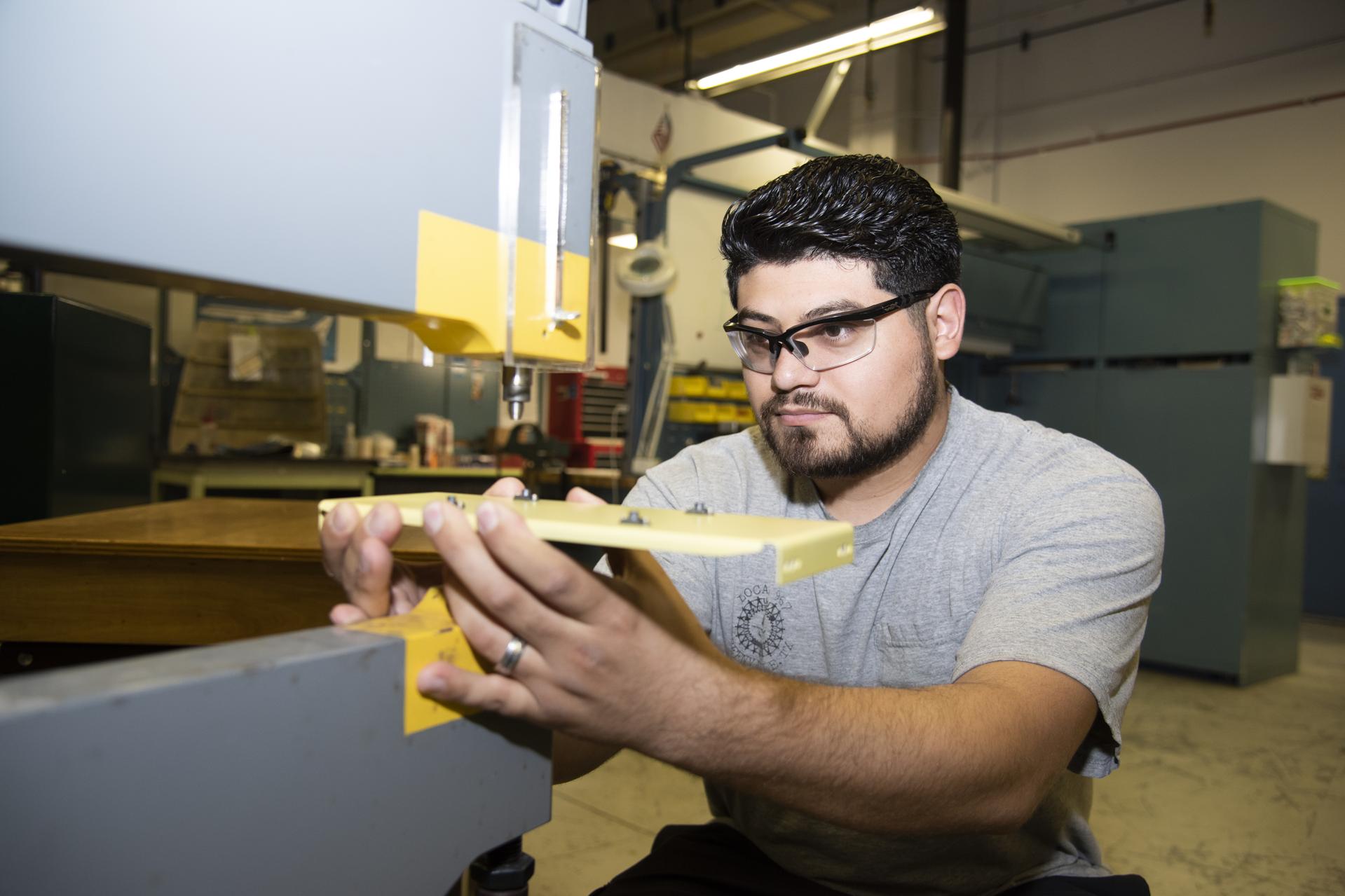
NASA, through the Office of STEM Engagement, has launched the State Hubs Initiative, awarding $10.5 million to seven institutions with the goal of getting more students into highly skilled manufacturing jobs in the aerospace industry. The post Episode 184: State Hubs: Opening Doors for Technical Students appeared first on NASA Science .
Elaine Ho: S o, my big message to any student out there is that whatever you might be interested in, if you like working with your hands, NASA needs you, and that’s what these State Hubs are all about.
You know, we really need everyone from mechanics to seamstresses. We need people who like to weld, and we like people who 3D-print. So, all of these jobs, you do not need a college degree to do it.
Host Andres Almeida: That’s Elaine Ho, NASA’s as sociate administrator for the Office of STEM Engagement. She’s here to talk about a new NASA-led initiative called State Hubs . State Hubs aims to streamline pathways to the aerospace industry for people who work with their hands . It could open doors for people who may have never pictured themselves working in aerospace . How? Let’s talk about it on this episode of Small Steps, Giant Leaps .
[Intro music]
Welcome to Small Steps, Giant Leaps, the podcast from NASA’s Academy of Program/Project & Engineering Leadership, or APPEL. I’m your host Andres Almeida.
I’m privileged to be joined by Elaine Ho, who leads the Office of STEM Engagement at NASA.
Elaine, thank you for being on the podcast.
Elaine Ho: It’s great to be here. Thank you for the invitation.
Host: So, please tell us a little bit more about what State Hubs is? What is the State Hubs Initiative?
Elaine Ho: Sure. So, this past August, NASA, through the Office of STEM Engagement, we launched the State Hubs Initiative, and the goal of the State Hubs is to get more students into highly skilled manufacturing jobs that are going to contribute to our country’s space missions and aerospace missions.
So, we’ve invested $10.5 million across seven states. So, it’s Florida, Texas, California, Minnesota, Utah, Georgia, and Colorado, so each state has an organization that we’ve tapped to be the State Hub lead.
And these leads are going to serve as conveners, bringing together space and aerospace companies, community colleges, high schools, state workforce systems, all so that states can open more doors for more students, and they can accelerate their transition into these high-demand, skilled technical jobs that NASA and our industry partners need.
Host: Yeah, when people think about careers at NASA, they think about scientists, engineers, astronauts. What other technical roles are also important?
Elaine Ho: Yeah, that’s absolutely right. You know, at NASA, obviously we rely on our scientists, our engineers, and our astronauts, but we literally don’t leave the ground without our technicians.
So, we need welders and machinists and electricians and other technicians who will handle propulsion testing, spacecraft assembly, wind tunnel testing, and things like fabrication. You know, one example that I like to give is the job of a spacecraft hardware technician who handles all the wires throughout the spacecraft.
You know, I learned, and you might know this already, but I learned that the Roman Space Telescope that we just launched a few weeks ago has over 45 continuous miles of wires throughout its entire structure.
Host: Wow.
Elaine Ho: And the Orion space capsule is the same way. You know, these wires are like the nervous system of these incredible structures, and because spaceflight demands, you know, we have zero room for error. It’s, we need flawless execution. That laying and routing of the wire is a highly manual process, and so we need more people to crimp, to solder, to route these wires with incredible precision as we launch our rockets and telescopes. You know, but these aren’t the only jobs out there.
There’s lots of other kind of hands-on opportunities, and it’s exciting, I think, for people to realize that these mission-critical careers don’t require a four-year bachelor’s degree. You can come right out of high school. You can get trained at a community college or trade school, and you can step right into these kind of roles.
Host: It really does take a village, huh?
Elaine Ho: It absolutely does, and these, and these technicians are really critical to our missions.
Host: So, what challenge is NASA trying to meet with the State Hubs Initiative?
Elaine Ho: Yeah, you know, if this problem of, of growing this manufacturing talent was easy, we wouldn’t be here talking about it today. You know, through these State Hubs, we actually are trying to solve three major problems.
So, the first one is that our country has a major talent gap when it comes to the skilled technical workforce. You’ve already pointed out that when people think of NASA, they think of astronauts and scientists and engineers, and we absolutely need people to imagine and design and to research the future of space exploration.
But sometimes we forget that we also need people to build it. You know, our missions depend on the people who manufacture parts and assemble systems and test hardware and and maintain our infrastructure. And right now, if we look across the landscape, our country’s space economy is really growing rapidly, and our NASA missions are expanding, and so demand for these skills are really growing across the space and aerospace sectors.
So, data tells us (and workforce assessments tell us) that NASA and our industry partners consistently identify the skilled technical workforce as one of their highest needs and one of the hardest to, to fill. So, our State Hubs are going to be designed to start to close that talent gap. So that’s the, that’s the first challenge that we’re trying to tackle.
I think the second problem that we’re trying to tackle is, is a simple one, but it’s incredibly important. It’s that a lot of students just don’t realize that these still skilled technical workforce roles even exist, and if they do know they exist, there’s a misperception about it.
And honestly, it’s not entirely their fault because you know when students hear about NASA, they see about NASA, they see the astronaut front and center. They hear about the scientists, engineers, and no one ever talks about the huge range of hands-on, highly technical careers that keep our NASA missions really moving.
So, on top of that, there’s a persistent myth that these technical jobs are on a dirty factory floor, but that’s just not the case.
So, you know those, those wire harnessers I talked about, those technicians, you know, that handle all of this elaborate wiring on our spacecraft? You know, as you know, they’re done in a clean room. They’re done with precision instruments. They’re done in our what we call bunny suits, you know, so that, that we’re covered from head to toe, blasted to make sure that no debris or anything gets on the equipment.
I mean, these are the environments where you’re assembling a spacecraft, where you’re working with advanced materials, you’re running these specialized tests in these spaces that, that I think resemble more a sci-fi lab than anything else.
So, when a student, though, doesn’t know about these jobs or they can’t see that pathway; they can’t imagine themselves in them. So, part of that work with the state hubs is simply making these careers more visible, showing these students that these jobs are real, they’re meaningful, and absolutely within reach. And I think once they understand what’s out there and how they can actually enter into these fields, we can spark interest, build their skills and ultimately strengthen the pipeline of the of the future talent. So, so that’s the second problem we’re trying to solve.
And, and finally, the third big challenge we’re looking to solve with our state hubs is that stakeholders who are building these pathways into these types of jobs they they often are operating in their own lanes. So, what do I mean by that?
Employers, high schools, community colleges, state workforce programs-they all are doing fantastic work. But sometimes they’re not doing it together, because right now what we’re seeing is sometimes industry standing over here and saying, “Hey, the schools aren’t producing enough graduates with the skills that we need, or maybe not enough graduates.”
On this side, then you have the educators saying, “Well, we can’t develop a curriculum. We can’t recruit students until industry tells us exactly what they need and how they’re going to hire them in.”
And then the larger question in the backdrop is: Do these efforts even line up with the state’s economic development plans? So, all to say, everyone is working incredibly hard. They might not just be working part of one integrated and coordinated system, and that’s where an ecosystem approach like the State Hubs could make all the difference.
Host: And you’ve had conversations around these topics, right, with with leaders, with community leaders, industry?
Elaine Ho: Absolutely. When, when we talk about this and we highlight what the problem is. And again, if, if this was an easy problem to solve, we wouldn’t be talking about it.
But when we really try to drill down what the problem is, that’s what those three things is what we consistently hear about. And we think that this State Hubs and the way that they are going to bring these entities together to solve the problems together will really help to make a dent, and specifically for our space missions and for our airspace missions.
Host: You’ve described NASA as being a catalyst and convener in all this, in this effort. What does that look like in practice?
Elaine Ho: Yeah. So, I talked about how we’re investing in this ecosystem approach, and, and you talked about us being a convener and catalyst – I think we’re going to be a convener because we are going to help State Hubs bring together all the necessary stakeholders, and we’re going to be a catalyst because we’re going to help them do it faster.
So, the goal for these State Hubs is to bring together the different players in their state to kind of overcome that, that disconnectedness I talked about, so that you have industry employers, community colleges, high school CTE programs (and CTE stands for career technical education programs).
You’re going to bring state workforce organizations all to the same table, all working collectively to solve the same problem. And I want to clarify that it’s not just engaging one company, but how can we engage an entire sector in that state of all the space companies there?
It’s not just about having a program with one community college, but what would it look like if we brought an entire education system of that state and all of this being aligned with the state economics development strategy? So, if that’s kind of the concept of, of this hub, then you’ll have NASA’s Office of STEM Engagement coming alongside our State Hubs to give them a boost.
So, we’re going to provide technical assistance. We’re going to offer our hands-on student opportunities like our internships. We’re going to connect the State Hubs with our current grantees like our Space Grant Consortia that’s in every single state, and then we’re also going to connect the State Hubs with our NASA centers and our mission directorates to ensure that they’re doing the work of building this workforce that’s contributing directly to our mission needs.
And then, we’re also going to bring in other federal agencies like the National Science Foundation and the Department of Labor, who are also focused on building the skilled technical workforce for the space and aerospace sector.
So, all of that put together is why I think we play a really important role as a convener and a catalyst for these hubs.
Host: So, it sounds like flexibility is really important here. Just how much flexibility do the State Hubs, or will the State Hubs, have?
Elaine Ho: A great deal because we recognize that each state has different companies, different education systems, different existing programs, and we want them to have the flexibility to leverage the resources and systems that work best for their state.
You know, as you heard the list of states, you know that some of those state hubs have a NASA center in their states, others don’t. But just because some of those states don’t have a NASA center in it doesn’t mean that they have a disadvantage. Actually, if you look at a map of our supply chain for just our Artemis Program alone, you’ll see that there are suppliers in just about every single state.
So, take Georgia for example, where we have a State Hub. In Georgia, the aerospace products is their number one export, and there’s over 500 aerospace companies in Georgia. So, that’s a lot of demand for talent with that many employers. So, Georgia’s going to leverage something different than maybe a California will, but every hub is going to be working towards the same goal, even though they have this flexibility.
So, that’s why they’re not only going to leverage the unique resources in their individual state, but NASA is going to bring them together as a cohort. And when we bring them together, that’s when they can share best practice, learn from each other, and really accelerate the outcomes.
Host: It sounds like an exciting time to be a student.
Elaine Ho: Every time I get a chance to meet these students or go back onto any kind of campus, I get that same feeling. I encourage everyone to do it to give us some optimism and and some excitement and energy back into our lives. I
Host: Love it. What do you hope success looks like for the State Hubs Initiative?
Elaine Ho: Yeah. So, ultimate success means that we are fundamentally transforming how this manufacturing talent for our space missions is developed in our country
So, you know, on a national level, there’s actually a one million worker deficit across the aerospace and defense industry, and certainly a subsection of that is this technician workforce. So, success to me means directly closing that talent gap by, by widening or opening accessible pathways into these high demand careers.
I think if you look at success from the viewpoint of NASA and our commercial space partners, success looks like rebuilding our core competencies . That’s what our administrator’s talked about: is how can we regain our core competencies?
So, success would be, you know, strengthening our core competencies, strengthening our space industrial base, and we’ll do that when our State Hubs act as these strategic conveners that I talked about, really uniting companies, educators, state agencies into this seamless ecosystem.
And then I think success has to, we have to look at success from the standpoint of our students. You know, on an individual level, I think success is a student earning those credentials, or completing an apprenticeship, or stepping into a great-paying manufacturing job for NASA or one of our industry partners, knowing that they have helped build a piece of hardware that it’s headed for the low Earth orbit or headed for the Moon.
Host: Excellent. So, for any student listening or anybody who wants to return to school, what can they look forward to? What should they do to prepare as State Hubs builds up?
Elaine Ho: Yeah. So, my big message to any student out there is that whatever you might be interested in, if you like working with your hands, NASA needs you, and that’s what these State Hubs are all about.
You know, we really need everyone from mechanics to seamstresses. We need people who like to weld, and we like people who 3D-print. So, all of these jobs, you do not need a college degree to do it.
And as our State Hubs roll across our seven states, I would encourage individuals to keep our eyes out for programs forming at your local community colleges, in your high school CTE. Again, that stands for Career Technical Education programs. Keep a look at, at your state workforce boards. You know, look for ways to learn while you work. So, things like pre-apprenticeships, registered apprenticeships, co-ops, internships that are done in direct partnership with your local NASA center, or if you don’t have a center in in that state, one of your local regional aerospace employers.
And I will say as a quick aside, if you are not in one of the states where we have a State Hub, I encourage you to look up our Space Grant Consortium. Again, we have a Space Grant in every single state, and you’ll find some resources there too.
Host: Excellent. We will link that in the podcast transcript. So, it sounds like State Hubs will really speak to those who may have thought that maybe they weren’t good enough for the aerospace industry, when in fact, they are. And they were the whole time.
Elaine Ho: One of the things that I personally am excited about is as I go across the country and I meet the students who are doing this work, I get to hear their stories. and so
Stories that I’m hearing somewhat consistently is they tell me that, “You know, when I was in high school or grade school I was told that I wasn’t good at school. I wasn’t good at math, I wasn’t good at science,” but then for whatever circumstances they got into this community college program. They got into this apprenticeship program. When they started learning by doing, when they started learning with their hands, it all made sense, and they really love their job. We’re trying to feature more and more students who have become these technicians.
You know, you’ll take a look at some of our videos that we’re going to put out, some of our other content that we’re going to post. But you’ll see that they truly have a passion for this kind of work, and I think with this State Hub initiative, we’re going to reach students who never thought they could be a part of the space workforce.
Host: Wonderful. Lots of giant leaps ahead, hopefully. And that’s what I want to close out with you. Elaine, what was your giant leap?
Elaine Ho: You know, I knew that you were going to ask this question. You asked this question of all your guests, and so when I thought about it…
[Laughter]
Elaine Ho: …I recognized that I’ve been so fortunate to have multiple giant leaps in my career, and for me, what connects them together is not necessarily the title that I held at the time, but really the opportunity to have a, and make a greater impact.
You know, so one giant leap for me was when I was serving in the White House in the Office of the First Lady, had the opportunity to work on a global girls’ education initiative.
You know, another time I got to serve in the Office of the Vice President and the National Space Council, and I could help shape education and workforce issues for the space sector for our country.
And then another giant leap was, ultimately, you know, coming back to NASA and being in this role. You know, serving as the associate administrator for STEM Engagement, with this incredible opportunity to influence how we build the space workforce that we need for the future.
So, for me, each one of those, those giant leaps gave me a different platform and a different way to contribute. You know, I don’t necessarily think of a giant leap as in climbing up a ladder. It’s more moving towards different roles where I can make a bigger difference.
Host: Excellent. Well, thank you, Elaine. We’re glad you could join us to talk about State Hubs.
Elaine Ho: Yeah, this has been a fun conversation.
Host: That’s it for this episode of Small Steps, Giant Leaps . For more on State Hubs and other resources from NASA’s Office of STEM Engagement, visit nasa.gov/learning-resources . There, you’ll find opportunities for internships, tools for educators, and activities for students of all ages.
For a transcript of this episode and to listen to previous episodes, visit nasa.gov/podcasts. While you’re there, check out our other podcasts like Houston, We Have a Podcast , Curious Universe , and Universo curioso de la NASA . As always, thanks for listening.
Outro: This is an official NASA podcast.
The post Episode 184: State Hubs: Opening Doors for Technical Students appeared first on NASA Science .