We tested the MacBook Pro PROLED'S battery life — it's a Windows laptop massacre and Apple Silicon remains untouchable
Latest from Tom's Guide ·
Jason brings a decade of tech and gaming journalism experience to his role as a Managing Editor of Computing at Tom's Guide. He has previously written for Laptop Mag, Tom's Hardware, Kotaku, Stuff and BBC Science Focus. In his spare time, you'll find Jason looking for good dogs to pet or thinking about eating pizza if he isn't already.
When Apple announced the new MacBook Pro with the PROLED XDR display , I started feeling nervous about the battery life.
In this new era of notebooks, the Cupertino crew has crammed a massive power-hungry OLED touchscreen into an even thinner chassis, and built a backlight for that Apple logo on the lid for good measure. Historically, you can’t do these and keep the battery life worry-free.
Well, after walking out of the testing lab, I have to admit I was wrong. The PROLED MacBook Pro doesn’t just match the endurance of its bulkier mini-LED predecessors — it rolls and smokes the entire Windows AI PC ecosystem in the process.
Laptop & Configuration
Display Tech
Silicon
Battery Test Result (hh:mm)
Runtime vs. 16-inch PROLED
Apple MacBook Pro 16 (PROLED)
16.2" Tandem OLED
Apple M5 Max
21:24
Baseline
Apple MacBook Pro 16 (2026)
16.2" Liquid Retina XDR
Apple M5 Pro
21:31
-7 mins
Apple MacBook Pro 14 (PROLED)
14.2" Tandem OLED
Apple M5 Pro
16:52
-4 hours 32 mins
Apple MacBook Pro 14 (2026)
14.2" Liquid Retina XDR
Apple M5 Max
17:58
-3 hours 26 mins
Asus Zenbook Duo
14" Lumina OLED
Intel Core Ultra X9 388H
14:23
-7 hours 1 min (-33%)
Asus ProArt GoPro Edition (PX13)
13.3" Lumina OLED
AMD Ryzen AI Max 395+
11:12
-10 hours 12 mins (-48%)
Microsoft Surface Laptop Ultra
15" PixelSense Flow
Nvidia RTX Spark
10:35
-10 hours 49 mins (-51%)
Lenovo Yoga 9n Spark
14.5" PureSight Pro
Nvidia RTX Spark
10:32
-10 hours 52 mins (-51%)
Asus Zenbook A16
16.0" Lumina OLED
Snapdragon X2 Elite Extreme
10:26
-10 hours 58 mins (-51%)
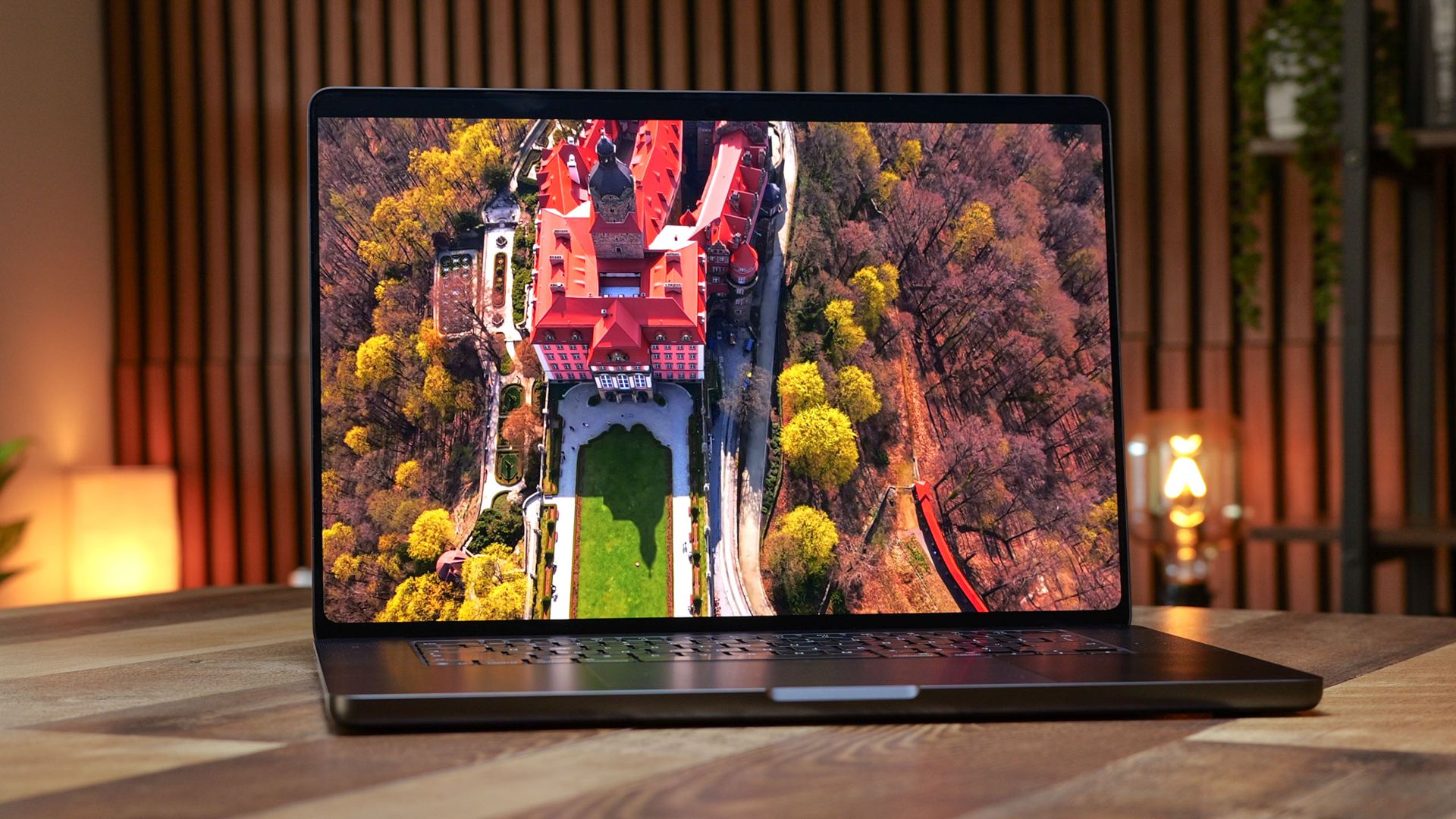
Let’s look at the raw data. The 16-inch MacBook Pro with PROLED XDR display (M5 Max) clocked in at an absurd 21 hours and 24 minutes on our continuous web-surfing battery test.
That isn’t just good; it effectively ties to the thicker, non-touch 16-inch mini-LED M5 Pro model. Meanwhile, the 14-inch PROLED with M5 Pro pushed out an incredibly respectable time at just shy of 17 hours. It’s within striking distance of the 14-inch mini-LED with M5 Max, but there’s definitely a gap (17:58).
Apple managed to integrate a drastically superior, brighter, touch-sensitive OLED panel, a glowing logo and thin out the chassis without triggering a battery life collapse.
But the real story here is the absolute bloodbath happening on the Windows side of the aisle.
Over the past few months, I’ve been following Nvidia’s RTX Spark laptops closely — testing one myself over the past month. Alongside that, I’ve been close to the Snapdragon X2 Elite Extreme too, with both of these heavily touted as definitive “MacBook killers.”
And while I can point to some stats that do show these as worthy competitors, if endurance is the battleground that matters to you, they never even showed up to the fight.
The Microsoft Surface Laptop Ultra running RTX Spark dies at 10 hours and 35 minutes. The Lenovo Yoga 9n (also Spark) tapped out three minutes earlier. Even the Asus Zenbook A16 with Snapdragon X2 Elite Extreme collapsed at 10 hours and 26 minutes.
You could literally charge your 16-inch PROLED to 100%, browse the web for an entire day, let these laptops start fully charged right next to it, and the MacBook will still outlast it.
I criticize Apple for its exorbitant pricing — especially when it comes to the PROLED. But when it comes to performance and power efficiency gains, the conversation is over.
The Windows ecosystem is feeling the weight of local AI power demands, while Apple just casually dropped an impossibly thin, touchscreen OLED flagship that runs for nearly a full 24 hours.
This AI PC revolution might be taking off, but when it comes to keeping the lights on, the rest of the industry isn’t just losing to Apple — they aren’t even playing the same sport.