I tested the Google Pixel Tag and it’s the most findable tracker for Android phones — plus it does something Apple AirTag can't
Latest from Tom's Guide ·
null
Over the past few years, I’ve tested my fair share of Bluetooth trackers — ranging from wallet-thin cards like the Statik SmartCard Incognito to the Pebblebee Halo , which can potentially help elderly individuals in emergency situations. Google has expanded its Find Hub network, finally giving Android users plenty of options, but many of these trackers share one glaring limitation: pinpoint proximity tracking.
While iPhone users have long enjoyed the superb performance of Precision Finding — leaning on Ultra Wideband (UWB) for pinpoint accuracy — most Android trackers don’t have that luxury. Instead, they rely on basic Bluetooth proximity that only shows broad geographic circles on a map.
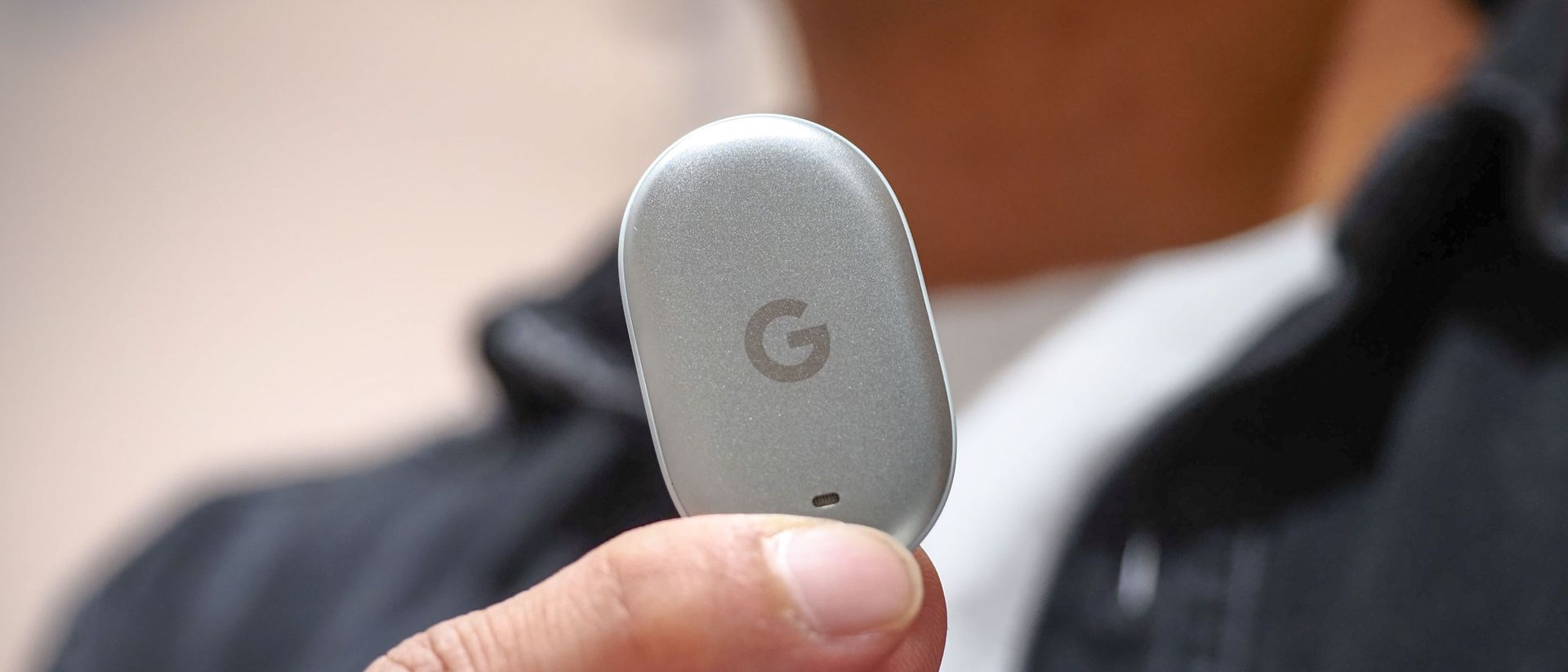
Google’s Pixel Tag is one of the few Android trackers that packages Ultra Wideband (UWB) and Bluetooth Channel Sounding directly into Google’s native ecosystem. As a result, the Pixel Tag delivers true visual Precision Finding to Android devices. After putting it to the test, I found it holds one distinct advantage over the AirTag and one of the best Bluetooth trackers you can get.
Google Pixel Tag
Price
$29 (1-pack) / $99 (4-pack)
Dimensions
28 x 46.1 x 5.4 mm
Weight
0.4 ounces (11.8 grams)
Materials
Stainless steel & polycarbonate
Water/Dust Resistance
IP67
Reverse Phone Finding
Yes (Built-in button)
Location Tech
Ultra-Wideband (UWB) + Bluetooth Channel Sounding
Battery Type
User-replaceable CR2032 coin cell
Battery Life
Up to 1 year
Tracking Network
Google Find Hub
Item Sharing
Up to 10 users
Easily the best feature of the Pixel Tag is its ability to lock down an exact position with outstanding Precision Finding range, which actually managed to outperform even Apple's AirTag 2 in my testing. Using the Find My Device app on an Android phone, you get intuitive on-screen visual guidance, complete with compass-like directional arrows and real-time distance readouts that point you right where you need to go.
While the AirTag 2 tapped out around 74 feet in my testing before dropping its Ultra Wideband connection, the Pixel Tag held on slightly farther, reaching roughly 82 feet. That extra reach eliminates the guesswork of tracking down misplaced gear, like my keys when I've completely forgotten where I left them. Plus, you can still trigger a loud audio chime if the tag slips deep between couch cushions and you can't spot it right away.
The AirTag has an unmistakable look, but Google has delivered an equally compelling design — especially when it comes to size. At just 5.4mm thick, the Pixel Tag is significantly sleeker than the AirTag, making it far less conspicuous when slipped into a standard wallet. With its minimalist, matte-finished polycarbonate body, I really dig the pebble-like aesthetic, which does a far better job of masking smudges and fingerprints than the AirTag's scratch-prone stainless steel back.
Even with that slimmed-down profile, Google didn’t cut corners on durability, outfitting it with a rugged IP67 dust- and water-resistance rating. Plus, swapping out the CR2032 coin-cell battery is painless — all it takes is a quick twist of the back cover.
Beyond tracking down my keys, wallet, backpack, or other gear, the Pixel Tag offers another standout feature you won’t find on the AirTag: the ability to ring your phone. With a simple double-press of the physical button on the front, you can instantly trigger your phone to ring at full volume — even if it's set to silent or vibrate. This reverse-finding capability is a lifesaver in a crunch when you're rushing out the door and can't find your phone anywhere.
One of the biggest annoyances I have with the AirTag is discovering weeks or even months later that it's dead. Sure, my iPhone might have sent a low-battery notification, but those alerts are easy to forget. That’s why I’m stoked about the Pixel Tag’s persistent automated reminders, which offer huge peace of mind if I overlook that initial heads-up.
Google rates the user-replaceable CR2032 coin-cell battery for up to a full year of typical use. While I haven’t had the Pixel Tag long enough to drain it down and trigger an alert firsthand, knowing Find Hub will send a notification “every 2 weeks until it’s replaced” ensures it won't quietly drop off my radar. Usually, I’m not a fan of that level of notification nagging, but in this case, it's a welcome safety net.
Despite having some key advantages over the AirTag, there’s one area where the Pixel Tag falls behind its rival: accessory availability. You can find an AirTag mount, leather loop, rugged clip, or pet collar attachment with a quick search online. The Pixel Tag, however, launches with very few options.
In fact, Google doesn't even offer any official accessories right out of the gate. The only ones I’ve been able to track down so far are basic silicone cases from Walmart . Because the Pixel Tag’s design doesn't include a built-in lanyard hole or keyring cutout, you'll need a dedicated case or adhesive mount just to attach it to your keys or backpack. For early adopters, finding the exact style or mount you want right now will require some patience while third-party makers ramp up production.
Considering how long the Pixel line has been around, you’d think Google would’ve come out with its own AirTag rival sooner. Even so, the Pixel Tag is a long-overdue addition — and it’s easily one of the most capable and well-rounded Bluetooth trackers on the market.
Between its class-leading Precision Finding range, compact design, and reverse-phone-ringing feature, it addresses the pinpoint tracking compromises that have long plagued the Android ecosystem. The only other real alternatives with Ultra Wideband support are Motorola’s Moto Tag and Samsung’s SmartTag3 . You still get all the essential safeguards expected from a flagship tracker, too, including left-behind alerts and a dedicated Lost Mode that allows anyone who finds your gear to scan it and get in touch.
At $29 for a single one (or $99 for a four-pack), Google matches Apple dollar for dollar — but delivers greater range and features the AirTag simply can’t match.