Netflix’s ‘Love is Blind’ contestant said he drinks raw milk. Research shows that’s risky
PolitiFact ·
It’s not often that romance reality show drama turns to public health matters.
But when Netflix’s hit matchmaking series “Love is Blind” introduced John Shannon, an account manager, to Sarah Williams, a public health professional, it was only a matter of time before Shannon’s habit of drinking raw cow’s milk would send shockwaves through the conversation.
“Is that safe?” one of Williams’ friends asked after Shannon disclosed he consumes unpasteurized milk from a farm.
“No,” Williams said.
Public health officials have long warned against drinking raw milk and championed milk pasteurization as a modern public health triumph .
But Williams told her friends, “I’m looking past the raw milk.”
High profile figures have promoted raw milk in recent years, including Health and Human Services Secretary Robert F. Kennedy Jr. , soccer star Erling Haaland and actor and wellness mogul Gwyneth Paltrow , who says she has raw cream in her daily coffee.
Since the episode was released, Shannon said on social media that he no longer drinks raw milk after moving away from the farm that supplied it. But science shows there are other important reasons to steer clear of unpasteurized dairy.
It’s a term used to refer to cow’s milk in its most basic form, when it is taken straight from the animal and rapidly chilled .
Raw milk can be creamier and taste different or slightly sweeter than traditional milk. As raw milk ages, it gets more sour . Raw milk fat also separates from the rest of the liquid, forming cream at the top.
Unlike the cow’s milk most people buy at the grocery store, raw milk is unpasteurized and non-homogenized.
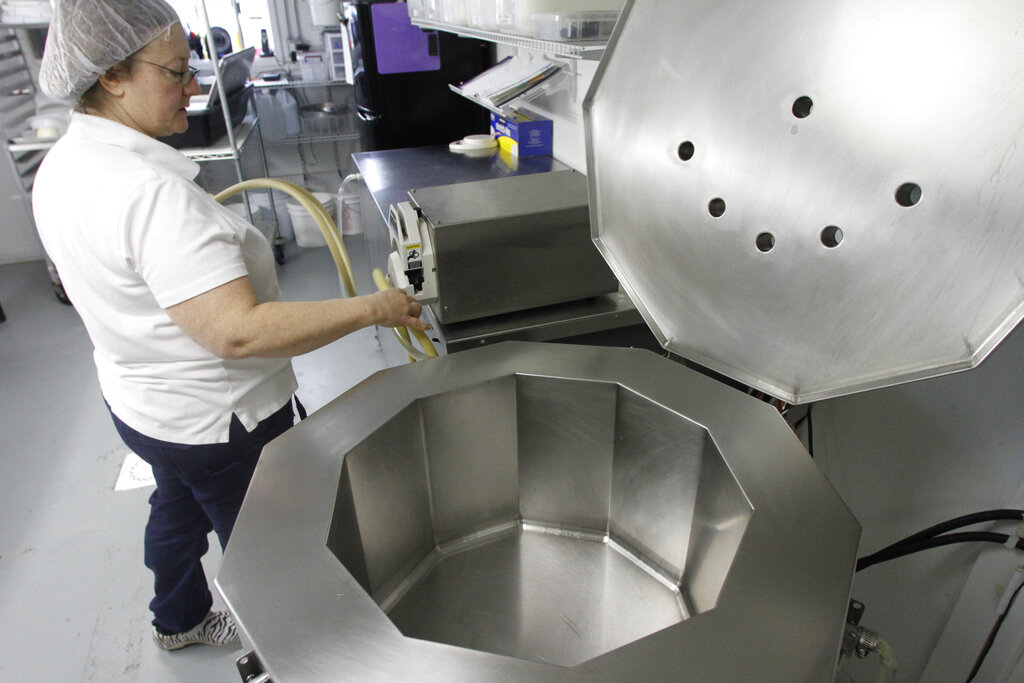
Milk pasteurization is the process of heating something up to kill harmful pathogens. In most cases, cow’s milk is heated to at least 161 degrees Fahrenheit for at least 15 seconds before it is quickly cooled again. Pasteurization also extends milk’s shelf life by killing bacteria that can cause it to spoil.
Homogenization keeps milk from separating and forming a layer of cream at the top. For milk, the process involves forcing milk through small openings under high pressure , which breaks fat globules into extremely small particles and evenly distributes them throughout the fluid.
Homogenization gives typical store-bought milk its smooth, consistent texture and appearance.
The dangerous, illness-causing organisms and bacteria it kills include listeria , salmonella and E. coli. It also kills the bacteria that causes tuberculosis and the virus that causes bird flu . Cows that appear healthy can shed these pathogens in their feces , making it easy for milk to become cross-contaminated during the milking process.
Research shows raw milk is far more likely than pasteurized milk to be linked to illness and hospitalizations from foodborne pathogens.
Yes. In the U.S. from 1993 to 2006, researchers examined 121 dairy-related disease outbreaks that caused about 4,400 illnesses, 239 hospitalizations and three deaths. Seventy three of those outbreaks, or 60%, were caused by raw milk, a 2012 Centers for Disease Control and Prevention study found. The raw milk outbreaks accounted for 1,571 illnesses (36%), 202 hospitalizations (85%) and two deaths.
“Raw milk product outbreaks led to much more severe illnesses, and disproportionately affected people under age 20,” according to the CDC . For raw milk-related outbreaks where ages were known, about 60% of patients were younger than age 20, while 23% of patients in outbreaks from pasteurized products were under age 20.
“This study shows that raw milk has great risks, especially for children, who experience more severe illnesses if they get sick,” study co-author Dr. Barbara Mahon said in a press release. “Parents who have lived through the experience of watching their child fight for their life after drinking raw milk now say that it’s just not worth the risk.”
A 2017 study found people who consume raw milk products are 839 times more likely to experience illness and 45 times more likely to be hospitalized. It said dairy consumption-related outbreaks cause about 760 illnesses and 22 hospitalizations each year on average, and unpasteurized dairy products cause 95% of those illnesses.
Raw milk isn’t available for purchase everywhere. It is illegal to sell raw milk across state lines, so large commercial dairy operations don’t often sell it, but laws vary .
In some states such as California, Washington, Arizona, Nevada and Pennsylvania, in-state retail sale of raw milk is allowed. In others — including Massachusetts, where “Love is Blind” filmed this season — dairy farms can sell unpasteurized milk directly to consumers.
Public health authorities from the CDC , the Food and Drug Administration , the American Academy of Pediatrics , other health groups and various state and local officials have for decades said consuming raw or unpasteurized dairy can be dangerous — especially for young children, elderly and immunocompromised people. Unpasteurized dairy is also especially risky during pregnancy: Listeria can cause miscarriage, stillbirth and illness or death of a newborn.
Still, survey data shows that about 4% of U.S. adults reported drinking raw milk in the past year and about 1.6% reported frequent raw milk consumption. Studies have also found that unpasteurized dairy-related illness outbreaks are more frequent in states where it’s legal to sell unpasteurized dairy.
No.
“There are some minor changes, but nutritionally, pasteurized milk is really, really close to raw milk,” Gabriel Keith Harris, a food science professor at NC State university, said in 2025 .
A 2011 analysis found that pasteurizing milk reduced the concentration of vitamins B12, C, B9 and E, but milk isn’t considered a strong source of those vitamins in North American diets to begin with. Dairy products are, however, an important source of vitamin A and pasteurization appeared to increase milk’s vitamin A concentration. Studies have shown mixed results about pasteurization’s impact on vitamin B2, but pasteurized milk is still a good dietary source of the vitamin. Pasteurized milk is also often fortified with vitamin D .
No. Despite raw milk proponents’ claims that it’s a good source of enzymes or beneficial bacteria called probiotics that support digestion, it does not contain probiotics at all. In a 2015 study, University of Wisconsin-Madison food science researcher John Lucey called claims to the contrary “myths.” Enzymes found in raw milk have no proven role in digestion.
Bifidobacteria, a bacteria raw milk advocates sometimes cite as a “good,” is present in human and cow GI tracts, and its presence in raw milk “indicates fecal contamination and poor farm hygiene,” the FDA said .
Ultimately, said David Mills, a food science and technology professor at the University of California at Davis, the risk-benefit analysis of drinking raw milk is a “no-brainer.”
“We have lack of proof of a benefit, and we have overt proof of a higher rate of infection of the humans consuming it,” he said. With that in mind, he said, people should seriously consider: Is it worth the risk?
For public health and food science experts , the answer is clear: No.
RELATED: Ketamine: What to know about the sedative drug some college students are using recreationally