From Cyberattack to Scam: How Cybersecurity Protects Businesses and People
Blog ·
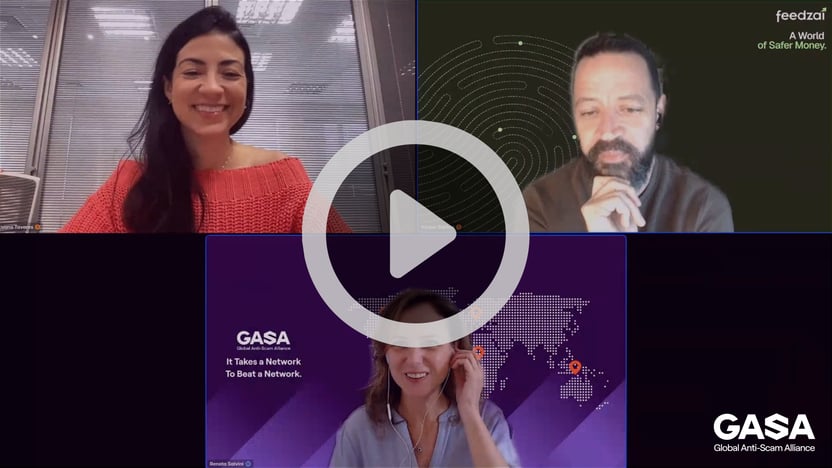
Date of Event: 27 October 2026 Event: GASA Brazil Webinar
A phishing message, a stolen identity or a compromised account can become the starting point for a scam. Protecting businesses and people requires understanding how these threats connect – and where organisations can intervene before an attack leads to financial loss.
Opening the discussion, moderator Renata Salvini, GASA Brazil Chapter Director , presented findings from GASA’s State of Scams in Brazil 2026 study: 81% of adults surveyed had faced at least one scam attempt in the previous 12 months, while 10% had suffered financial losses or had their data compromised. Estimated losses reached R$21 billion. The consequences extended beyond money, with 76% of victims reporting an impact on their mental well-being.
Speakers:
Luana Tavares urged businesses to move beyond viewing cybersecurity as a cost and instead recognize it as an investment in business continuity. She emphasized the importance of considering the potential financial impact of operational disruptions when evaluating cybersecurity investments. For smaller companies, understanding the cost of being unable to operate or serve customers can make the need for protection more tangible. She also highlighted essential safeguards, such as two-factor authentication, regular software updates and effective password management, while stressing the importance of executive accountability and incident preparedness.
Kleber Gonçalves explained that combining transaction history with device, network and behavioural signals can help identify suspicious activity earlier. He stressed that reliable AI depends on good-quality data, while lessons from incidents should feed back into prevention systems.
Márcio Gonçalves warned that increasingly convincing scams make it harder for individuals to recognise deception. He called for layered protection combining identity security, authentication, threat detection and employee training.
Alesandro Gonçalves Barreto explained how criminals rely on personal information to plan and execute scams. Through data leaks and data brokers, scammers can access surprisingly detailed information about individuals, even knowing which vaccines they have received. They combine this data with technology and shared expertise to develop increasingly targeted attacks. He stressed the need for closer collaboration between businesses, law enforcement, the judiciary and academia, emphasizing that stakeholders must overcome bureaucratic barriers, sit at the same table and work together to connect available evidence with the expertise needed to take effective action.
Across the panel, speakers emphasised that sharing intelligence about suspicious accounts, devices and criminal activity can strengthen prevention and investigations. The discussion closed with calls for stronger national coordination and an ambition for Brazil to share its expertise internationally.
Sign up for the GASA newsletter to receive regular updates on scam prevention, research, and best practices.