NASA Launches CubeSats to Test Communications, Build Experience
NASA Science ·
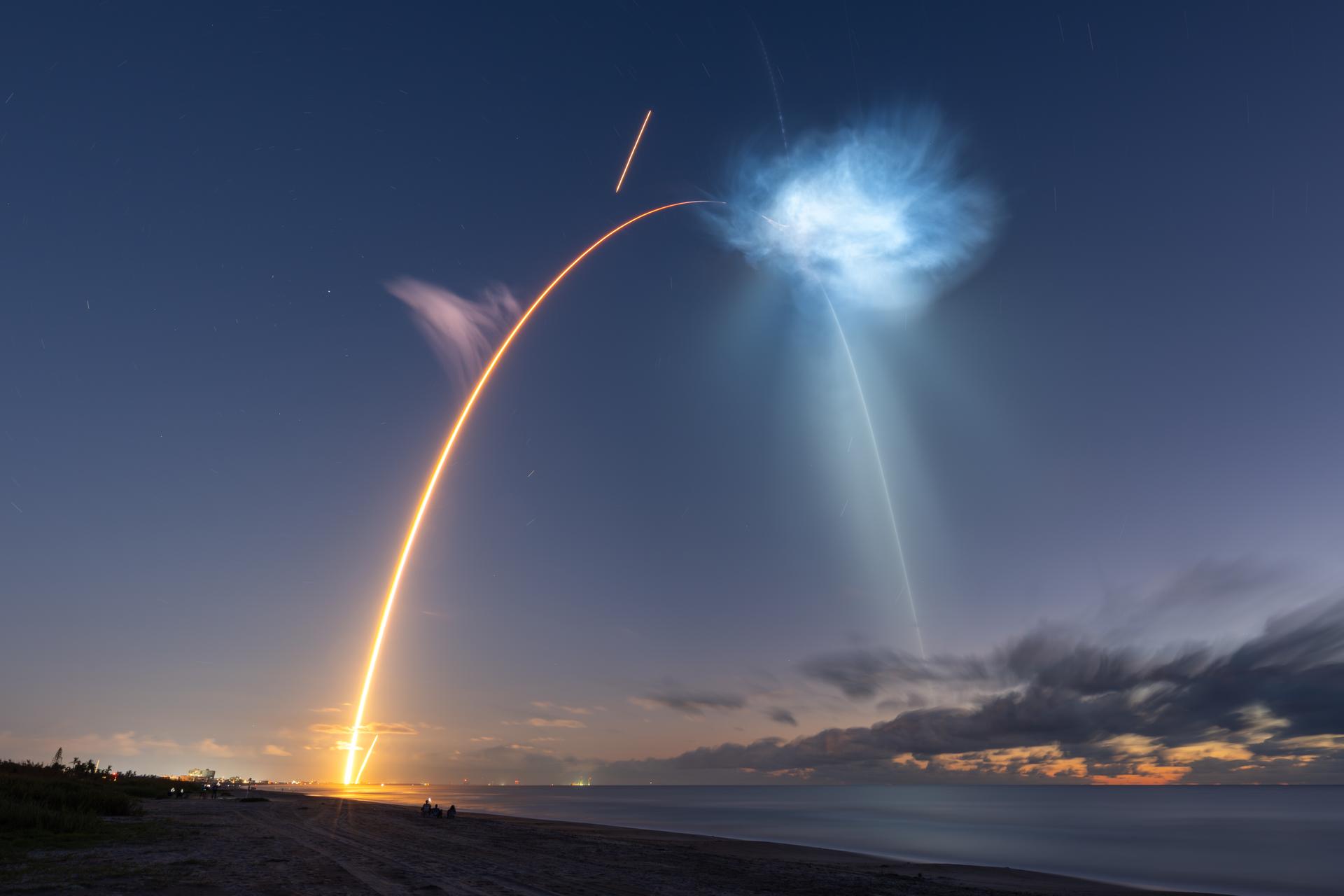
Two student-built satellites launched on Tuesday to the International Space Station to take university engineering projects beyond the classroom and into orbit. The two CubeSats were part of more than 6,300 pounds of cargo that lifted off aboard the 35th SpaceX commercial resupply mission for NASA. A SpaceX Falcon 9 rocket launched at 6:33 a.m. […] The post NASA Launches CubeSats to Test Communications, Build Experience appeared first on NASA Science .
Two student-built satellites launched on Tuesday to the International Space Station to take university engineering projects beyond the classroom and into orbit. The two CubeSats were part of more than 6,300 pounds of cargo that lifted off aboard the 35th SpaceX commercial resupply mission for NASA.
A SpaceX Falcon 9 rocket launched at 6:33 a.m. EDT , from Space Launch Complex 40 at Cape Canaveral Space Force Station in Florida on its way to the orbiting laboratory. Through a flight opportunity provided by NASA’s CubeSat Launch Initiative (CSLI) and a collaboration led by California State Polytechnic University, Pomona (Cal Poly Pomona), the CubeSats aim to demonstrate open-source spacecraft technology, support amateur radio communications, and give students experience building and operating their own missions.
The two small satellites are part of the multi-university Pleiades Five program, centered around five Pleiades Rapid Orbital Verification Experiment System, or PROVES CubeSats. Its educational approach centers on an openly documented spacecraft kit, with design files and software available for other teams to study, use, and improve. Rather than requiring every university to develop a satellite from scratch, the project gives students a shared foundation for learning how spacecraft work.
The PROVES project was selected through NASA’s CSLI in 2024 . The initiative provides launch opportunities for small spacecraft developed by educational institutions and other eligible organizations, helping participants gain practical experience in spaceflight. The initiative’s intent is to inspire and develop the next generation of scientists, engineers, and technologists by directly performing space research. NASA’s Launch Services Program office, based at the agency’s Kennedy Space Center in Florida, manages the initiative.
Texas State University’s contribution is PROVES-Maia, which uses a common satellite platform developed by Cal Poly Pomona, allowing the Texas State team to gain experience assembling flight hardware and integrating its systems.
In March, the Texas State University Space Lab completed PROVES-Maia’s assembly in its clean room. Students installed the spacecraft’s avionics, power, and payload systems ahead of vibration testing at NASA’s Johnson Space Center in Houston, which was part of preparing the small satellite for the shaking it will experience during launch.
Once operating in orbit after deploying from the space station, the PROVES-Maia team plans to relay digital messages for amateur radio operators using UHF and S-band communications. Its mission also includes opportunities to test routing messages between PROVES spacecraft when conditions permit. These activities would give participants on the ground a direct role in experimenting with satellite communications.
The PROVES-Taygeta CubeSat brings together Cal Poly Pomona’s Bronco Space Lab with Mt. San Antonio College in Walnut, California. Alongside its amateur radio mission, the CubeSat carries a camera and a radiation-sensing experiment.
The camera is intended to provide images from orbit that amateur radio operators can download. A separate onboard processor will oversee an experiment designed to make approximate measurements of the energies of radiation detected in low Earth orbit. The team plans to make those radiation measurements available for amateur radio operators to request directly from the spacecraft.
Both missions contribute to a broader PROVES goal, exploring how small spacecraft can exchange messages. The project’s planned intersatellite experiments use an open-source communications protocol for routing data between satellites called Dynamic Relay for Intersatellite Fault Tolerance or DRIFT. The team plans to publish a ground-station design to help radio operators participate.
This launch builds on work already underway across the PROVES collaboration. Three partner spacecraft PROVES-Alcyone, PROVES-Atlas, and PROVES-Electra lifted off to the space station in April , aboard NASA’s Northrop Grumman Commercial Resupply Services 24 mission.
The post NASA Launches CubeSats to Test Communications, Build Experience appeared first on NASA Science .