Republican infighting escalates after election drubbing
Semafor ·
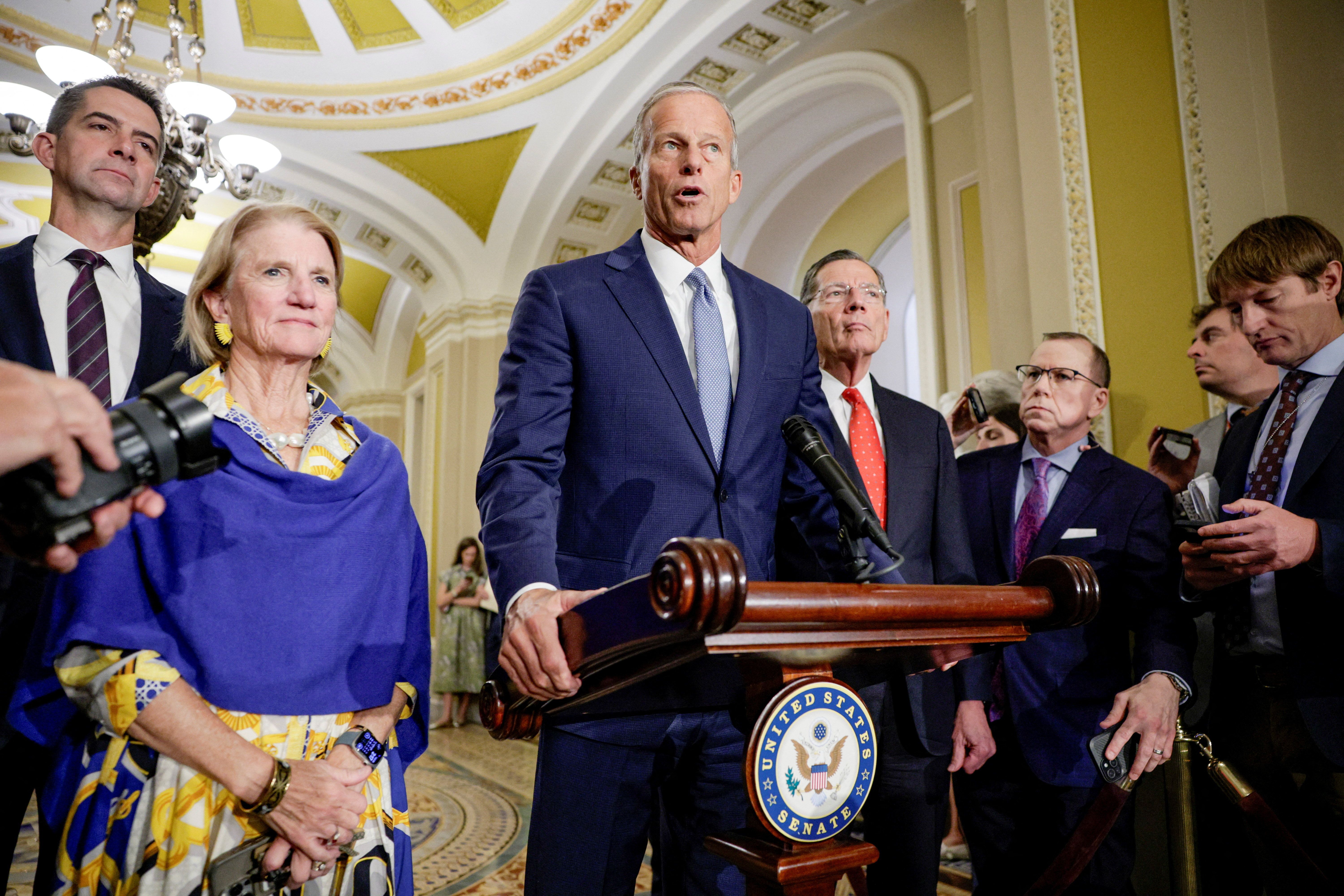
Party senators skeptical of John Thune’s leadership don’t appear to have the votes to delay his reelection — but fractures are emerging.
Fresh off what one senator called a “good old-fashioned shellacking,” Republicans are now turning to a more painful phase of their post-election soul-searching: the airing of grievances.
Several senators are unhappy about a rush to reelect the GOP’s Senate leadership team after voters repudiated the party’s reign in Washington. A small but vocal minority is pushing to delay leadership elections beyond Tuesday, giving more time for a potential challenger to emerge against Majority Leader John Thune and his team.
Thune’s allies say the move is unnecessary, won’t change the result, and will only lead to more intraparty fighting after an election that could cost the Senate GOP as many as nine seats. Either way, the party’s second-guessing of Thune and President Donald Trump — not to mention its uncertainty about its own agenda — will come to a head on Tuesday morning in the Old Senate Chamber.
“I saw five signatures on a letter,” Sen. Kevin Cramer, R-N.D., told Semafor of his colleagues advocating for a delay. “I think we have to talk, but I don’t see why we’d need to change the leadership to do that.”
Beneath the procedural battle are huge debates within the Republican Party about where to turn next. A party that did little to defy Trump’s unpopular war with Iran and his tariffs now must figure out what strategic adjustments to make — or, perhaps, whether to make none at all.
Cramer blamed the stunning losses on “bad negotiations with Canada, tariffs, not supporting Ukraine enough to end the war” and allowing more foreign beef into the US. He said “people who are overly surprised” by the election result “probably aren’t being honest with themselves.”
Retiring Sen. Joni Ernst, R-Iowa, who dubbed it a “shellacking,” said the “war in Iran is extremely unpopular. I don’t know what the secretary is briefing the president [on], but it’s not working.”
“We need to have a tough, family conversation. We just lost seven Senate seats. And there may be more,” said Sen. Josh Hawley, R-Mo. “I see a lot of blame shifting going on in all of these postmortems. I think it’s probably time for people in Congress to take responsibility for what Congress did.”
Hawley cited Medicaid cuts, the GOP’s closeness to data centers, its turn away from anti-abortion priorities, and its move to “abandon” poor people and the working class. He said he couldn’t pledge his vote to Thune or the rest of the leadership team right now.
Sen. Ron Johnson, R-Wis., who is leading the effort to delay the leadership election, was even more harsh: “After that stunning defeat, we just can’t continue on business as usual. I mean … that kind of defeat demands change.”
“You can’t come off a defeat like that and just ram through elections and just elect that leadership team by acclamation,” Johnson said. “It’s obnoxious, particularly at this moment.”
Trump said on Monday that it’s up to the GOP senators to make a call on Thune, calling him a “very fine man” but lamenting that he wishes “they could get more produced.” Thune said he didn’t see how delaying the election “solves anything” but agreed the GOP needs to discuss its future.
Johnson’s bid to delay the leadership elections means that before taking any votes on them, the GOP will have a special conference meeting beginning at 9 a.m. on Tuesday.
They will then vote on whether to delay the elections of Thune and the rest of the leadership team, which includes Whip John Barrasso of Wyoming; Conference Chair Tom Cotton of Arkansas; Sen. Shelley Moore Capito, R-W.Va ., the policy chair; and Conference Vice Chair James Lankford of Oklahoma. The GOP is also expected to select Sen. Bernie Moreno, R-Ohio, a top ally of Trump, as its new campaign chair.
A similar delay bid failed in 2022 after the GOP lost one Senate seat. Though the losses this month are several magnitudes greater, several Republican senators said they don’t expect the vote to prevail. Some think the effort to delay is merely a smokescreen to undercut Thune.
“This is a question that will come up tomorrow: If there’s a desire for a leadership change, then let’s make the leadership change. I don’t sense that, and so I think we ought to just move forward as planned. We’ll have a vote, the majority will rule,” Capito told Semafor.
She said the election was a wakeup call for Republicans to take Americans’ concerns about rising prices more seriously: “Message received.”
That doesn’t mean it will necessarily translate into a binding bipartisan effort to end Trump’s tariffs or wind down the Iran war. And for either idea to clear the Senate, the GOP’s votes will be required — even with what could be a brawny 56-seat Democratic majority in the Senate and a House majority in the 250s, Trump can still wield the veto pen.
“Ultimately, I think the lesson is: We needed senators to act in a more independent fashion. But even Susan Collins — who was very independent — didn’t survive it because the whole election became about Donald Trump and whether he was concerned about gas prices,” said Sen. Rand Paul, R-Ky.
Voters, Paul concluded, “were just mad.”
Paul said he was probably OK with a leadership vote on Tuesday after a “frank discussion.” He added that his hope coming out of the election would be more Republicans joining him in voting against the Iran war and tariffs.
Change may not come for the Senate GOP. But across the Capitol, House Republicans will see a big shakeup as they choose a new minority leader in a race between Reps. Jim Jordan, R-Ohio, and Steve Scalise, R-La.
Thune doesn’t even have a challenger, it’s hard to see a scenario where he isn’t reelected as leader on Tuesday. But the anger within the Republican Party is real, and perhaps a bit misdirected.
Few senators beyond Paul want to blame Trump for the party’s crushing losses, but midterms are as much a referendum on the president as they are on the Congress.
This is just the beginning of what’s going to be a long and painful debate within the GOP about whether Republicans are still Trump’s party — or whether they should change course, if they’re capable of it.