State of Scams in South Africa 2026: A Comparative Review Across Africa
Blog ·
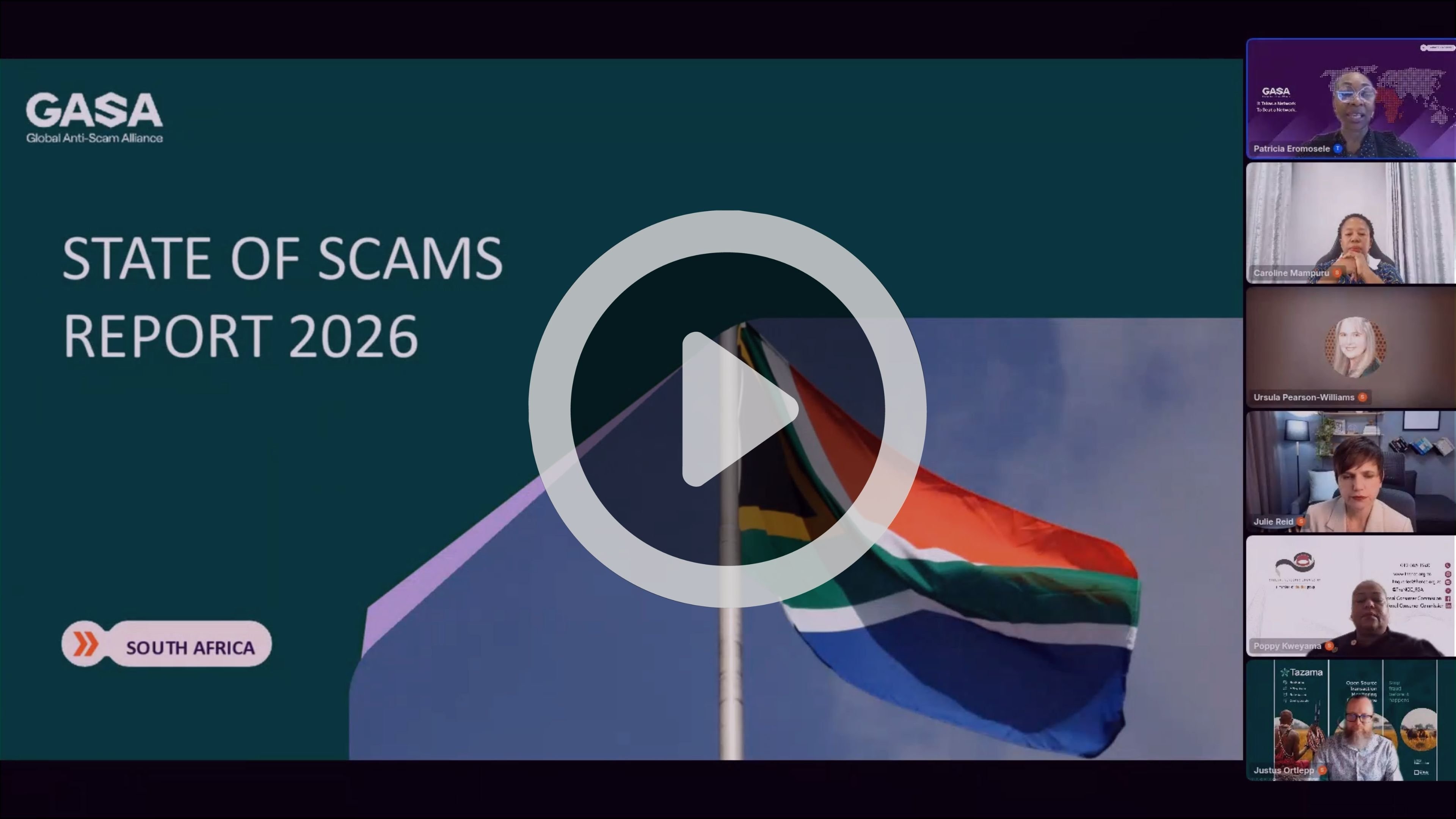
Date of Event: 1 October 2026 Event: GASA Africa Webinar
Scams have become an increasingly persistent part of everyday life in South Africa, affecting consumers across digital platforms, communication channels and financial services. New research from the Global Anti-Scam Alliance (GASA) shows that high confidence in recognising scams does not necessarily prevent people from engaging with them or suffering financial losses.
The findings highlight the scale and persistence of scams in South Africa. 85% of adults encountered a scam in the past year , averaging 51 scam attempts per person annually , while 71% of those exposed interacted with one . More than one-third ( 35% ) of those who interacted ultimately lost money or shared personal information that led to money being stolen. Shopping, employment and investment scams generated the highest levels of interaction.
Scams are estimated to have cost South Africans R59.7 billion over the past year , with victims losing an average of R7,442 . Among people who lost money, 53% experienced financial loss more than once , while 77% said being scammed affected their mental wellbeing. Recovery remains limited, with only 25% of victims who reported a financial loss recovering or receiving reimbursement for any of their money.
The panel discussed how increasingly sophisticated scams, including the use of AI, are making traditional warning signs less reliable. At the same time, technology can strengthen prevention through behavioural monitoring, suspicious transaction detection and controls that can delay or stop potentially fraudulent payments. Speakers also highlighted barriers to reporting, including uncertainty about where to report scams, complex processes and the stigma experienced by victims.
Speakers emphasised that scam prevention cannot rest on consumers alone. Stronger information sharing and closer collaboration between financial institutions, technology companies, telecom operators, regulators, consumer organisations and law enforcement can help connect prevention, reporting, investigation and enforcement more effectively.
Watch the full discussion below to hear the findings and perspectives from the panel.
Sign up for the GASA newsletter to receive regular updates on scam prevention, research, and best practices.