‘Hell chicken’ dinosaur likely dined on fruit, not meat
Popular Science ·
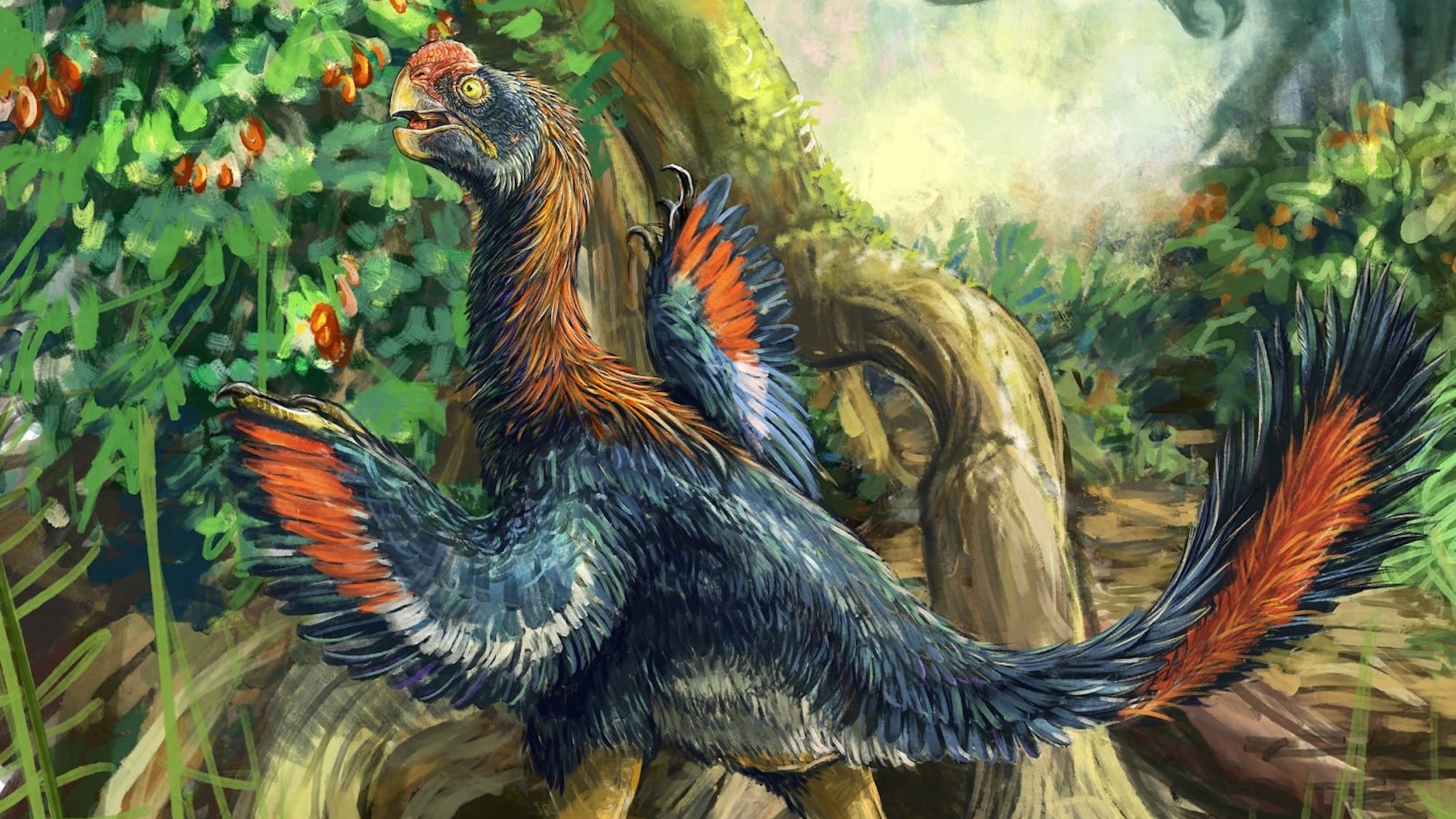
The Cretaceous era species gobbled up fruit around present day Montana. The post ‘Hell chicken’ dinosaur likely dined on fruit, not meat appeared first on Popular Science .
Don’t let the name fool you: Infernogallus jamesi , aka the “hell chicken,” wasn’t some kind of ancient apex poultry. After extensively reviewing some of the most complete fossilized remains ever found of this Cretaceous era dinosaur , paleontologists now theorize the beaked species didn’t even enjoy meat at all. Instead, soft fruits were on the menu. The findings do more than simply repair the reputation of a turkey-sized dinosaur . In a study recently published in Nature Communications , researchers explained how I. jamesi and its evolutionary relatives paved the way for today’s fruit-loving birds.
First discovered in 2011 at Montana’s famous (and aptly named) Hell Creek Formation , I. jamesi arguably resembled more of an oversized parrot than a hell chicken. The creature belonged to a family of nonavian dinosaurs known as the caenagnathids characterized by sleek physiologies and toothless beaks. It was a latecomer to the Age of Dinosaurs, living about 72–66 million years ago alongside other North American species like triceratops and Tyrannosaurus rex .
Unlike larger dinosaurs, caenagnathidae ’s slender anatomies made them terrible candidates for fossilization, and the few bones that did endure are often heavily damaged or incomplete. Thankfully, that wasn’t the case for a hell chicken discovered in Montana in 2011.
“Its skull fits in the palm of your hand,” Royal Ontario Museum paleontologist and study co-author Thomas Dudgeon said in the publication’s accompanying Science profile . “You can clearly see the beak; you can see where the eye used to be. It’s astonishing.”
Although part of the head and some of its lower jaw were already crushed, Dudgeon’s team still managed to eventually reconstruct its bones using CT scans. From there, they estimated its jaw muscle assembly, then compared it to present-day bird anatomies. With a more complete model of its head and jaw structure, researchers are starting to understand how a hell chicken dined amid a time when much of the western United States was covered by humid forests.
Dudgeon and his colleagues determined I. jamesi ’s muscles were designed to slide its lower jaw back and forth, as opposed to facilitating a strong up-and-down bite. This means its jaw acted more like a mortar and pestle than a pair of scissors, allowing the dinosaur to smash softer foods. The lack of stomach stones—small rocks swallowed by animals including today’s cows to internally grind food—further confirmed paleontologists’ suspicions about its diet.
“We think Infernogallus was likely adapted to process fruits called drupes—these are fruits with a hard central seed or pit, surrounded by softer flesh,” explained study co-author and Stony Brook University paleontologist Gregory Funston .
These predecessors to present-day peaches or cherries likely formed the bulk of a hell chicken’s diet, but there are much wider implications than learning I. jamesi ’s meal preferences. Caenagnathid evolution likely coincided with a shifting Cretaceous climate that saw the spread of flowering plants. These slowly started producing bigger, fleshier fruits loaded with nutrients for dinosaurs—provided they had the jaws to mash them.
The study’s authors stopped short of claiming the coinciding diversification of Cretaceous plants and oviraptorosaurs (the larger dinosaur group encompassing caenagnathidae ) are directly related. It’s possible that hell chickens helped scatter fruit seeds as they ate, which then further spread the plants. At the same time, there isn’t enough direct evidence to confirm the theory.
“Their role in the Late Cretaceous proliferation of fruit—which shaped early Cenozoic flora—remains unclear,” the team conceded .
For now, it’s enough to know that the hell chicken perhaps deserves a historical rewrite. Maybe “hell parrot” will finally get some traction.
The post ‘Hell chicken’ dinosaur likely dined on fruit, not meat appeared first on Popular Science .