How AIPAC and AI Spent Their Money This Midterm Election
The Intercept ·
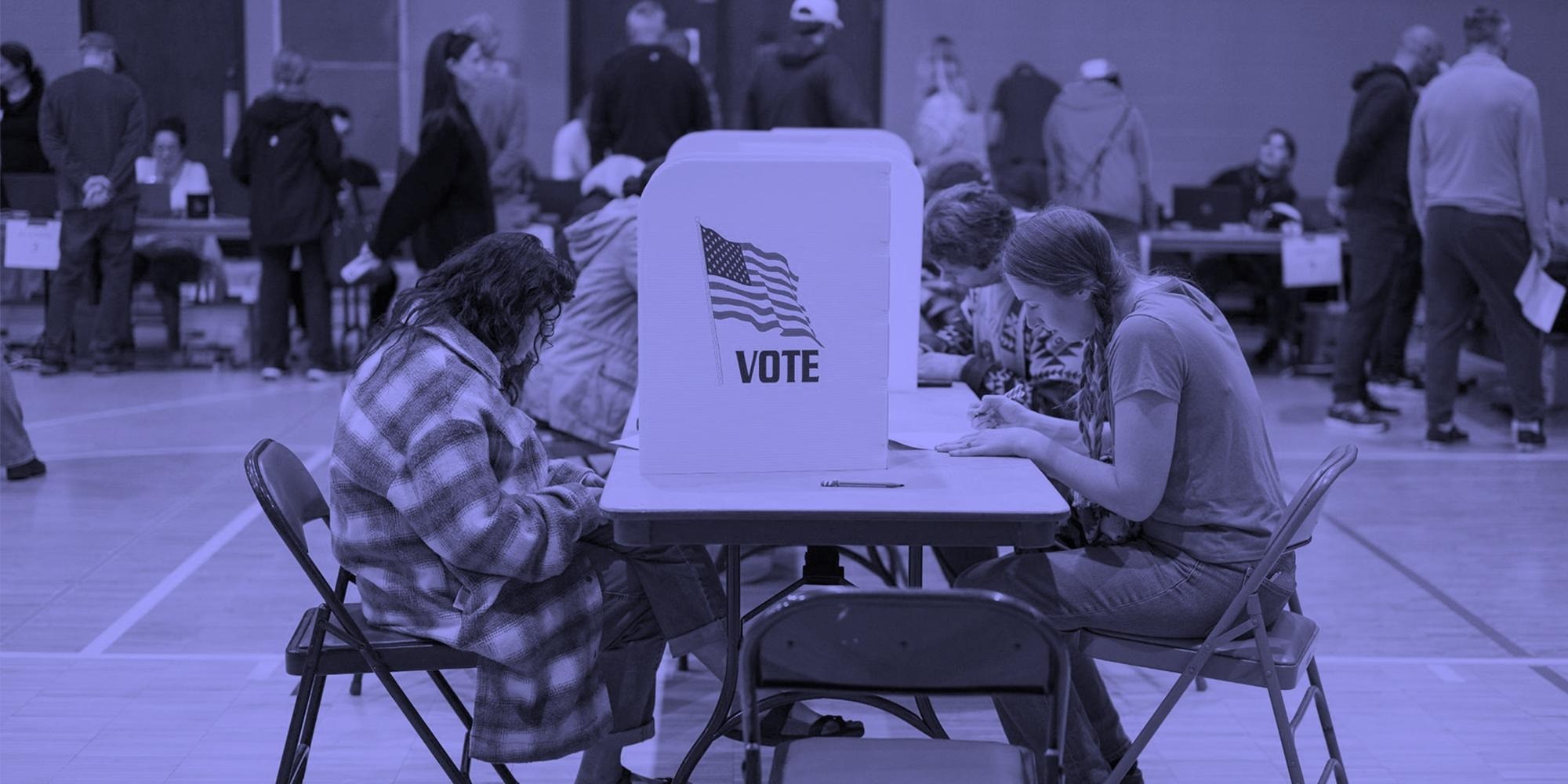
Intercept staff take stock of the big spenders this election cycle. The post How AIPAC and AI Spent Their Money This Midterm Election appeared first on The Intercept .
It’s a superlative achieved again and again: The current election cycle is the most expensive on record, according to AdImpact, likely to be surpassed only by the next one. North of $16 billion have been raised ahead of Tuesday’s looming elections, with ad spending in House and Senate races topping $4 billion . Mega-donors this election season have overwhelmingly backed Republicans with contributions largely flowing from AI, crypto, and online gambling interests.
The Intercept tracked how super PAC spending is flowing into the midterms and how growing public skepticism of special-interest money in politics is affecting campaign strategies. Hundreds of candidates are still taking donations from the American Israel Public Affairs Committee and its super PAC, the United Democracy Project, despite public sentiment turning against the pro-Israel lobby.
“The data overall reveals that [AIPAC is] still spending a ton of money on a lot of races, and more often than not, their candidates are still winning,” Intercept managing editor Maia Hibbett told The Intercept Briefing. “It is still quite meaningful money.”
Artificial intelligence super PACs have also poured tens of millions of dollars into this election cycle, most of it on just a few races in the primaries. The two leading AI super PAC networks, affiliated with OpenAI or Anthropic, dropped a whopping $50.7 million on the primaries, but are noticeably spending much less in the lead-up to the general election, $8.5 million — likely responding to public backlash in the same way that AIPAC has.
“The polls are just so startling on the public’s transformation on AI and data centers over the last year. … The entire life cycle of these AI super PACs, which started about a year ago, has followed that evolution of the public’s opinion,” said Intercept politics reporter Matt Sledge. “One of the things that’s been really interesting in the general election races is … candidates [trying] to paint themselves as the more pro-AI safety, pro-AI regulation candidate.”
This week on the podcast, host Jessica Washington speaks to Hibbett and Sledge about the spending trends in the most expensive election cycle to date and unpack the intended impact.
“No matter which party gets control of either or both houses of Congress, there will be a lot of people elected next week who got there on the backs of Big Tech and special interests,” said Hibbett.
“They’re backing a lot of people in safe seats who don’t really have a tight election,” Sledge added. “The goal may just be to buy themselves a few friends in Congress, because sometimes in Congress, it’s just as good to have a few people who can stop regulation as it is to have people who can shape and actually pass laws.”
For more, listen to the full conversation of The Intercept Briefing on Apple Podcasts , Spotify , YouTube, or wherever you listen to podcasts.
Jessica Washington: Welcome to The Intercept Briefing, I’m Jessica Washington, politics reporter at The Intercept.
On Tuesday, voters will head to the polls to cast their ballots in the most expensive election cycle ever in terms of campaign ad spending, even outpacing past presidential elections. That’s according to AdImpact.
North of $16 billion has been raised this cycle, with ad spending in House and Senate races topping $4 billion . Billionaire Elon Musk has dumped hundreds of millions into races across the country, using his enormous personal wealth to sway the election in favor of Republicans. Musk, who has a home and multiple businesses in Texas, has taken a particular interest in the state’s Senate race between Republican candidate Ken Paxton and Democratic candidate James Talarico.
Most of the money from Musk and other donors has flowed not to candidates, but to powerful super PACs representing a variety of different special interests.
That super PAC spending is the subject of my colleagues, Intercept politics reporter Matt Sledge and senior politics reporter Akela Lacy’s new project, tracking how money is flowing into the midterms.
Maia Hibbett, managing editor for The Intercept, and Matt Sledge join me now to talk about the project and how big money is shaping the midterms.
Matt, Maia, welcome back to The Intercept Briefing
Maia Hibbett: Thanks for having us.
Matt Sledge: Thank you for having us, Jessie.
JW: Maia, I want to start with you. As a part of the super PAC project, The Intercept tracked how millions of dollars flow through the pro-Israel lobby in the United States.
What did the reporting reveal about how the American Israel Public Affairs Committee and affiliated groups like the United Democracy Project mask their influence in U.S. elections in a political landscape where AIPAC’s contributions and endorsements have become largely politically toxic?
MH: The reporting showed that AIPAC and its affiliated super PAC UDP are a little bit weakened, but they’re still pretty dominant.
The narrative out of this midterm cycle, especially during the primaries, was largely focused on a few high-profile races that an AIPAC-backed candidate lost — and that was a huge shock. These big upsets were AIPAC or UDP or a related group that, we can talk about a little bit later, had poured money into, and then the candidate didn’t succeed.
But if you look at it in the aggregate, what the data overall reveals is that they’re still spending a ton of money on a lot of races, and more often than not, their candidates are still winning. It is still quite meaningful money. And even though AIPAC has been discussed as going underground, they are still directly invested in a lot of races.
JW: I want to get into AIPAC’s shifting strategy and their latest announcement on that. But first, Matt, I wanted to talk about your reporting. AI super PACs have poured tens of millions of dollars into this election cycle.
What do we know about the people and companies behind these super PACs? This may seem obvious, but what are they hoping to gain with this level of spending? Are there specific examples of friendly legislation these varied interest groups are hoping their candidates will see through if they win?
MS: To answer your second question, I think it’s really more about setting the tone for future regulation at the federal level. You have two big super PAC networks. One is affiliated with OpenAI, and they broadly favor a laxer regulatory scheme for AI. Then there’s another network that’s affiliated with Anthropic that paints itself as supporting a stricter regulatory scheme.
“It’s really more about setting the tone for future [AI] regulation at the federal level.”
Skeptics will point out that these networks are both backed by big AI companies. So at the end of the day, they’re probably going to favor regulation that is favorable to the AI companies. I get into this a little bit in my story, but, just in the last few months, there’s also been this constellation of other smaller groups that are sometimes backed by individual employees at these firms or just by people concerned about AI that are pushing for stricter regulatory regimes and aren’t as directly connected to one of the big companies.
JW: Matt, I’m curious about the impact on voters here. CNBC analysis from early October found that mega-donors this election season were overwhelmingly backing Republicans with contributions largely flowing from AI, crypto, and online gambling interests: “Fourteen of the 20 largest donors and donor groups this election cycle have exclusively or nearly exclusively backed GOP candidates or aligned groups.”
Matt, are we seeing voters become more receptive to Republicans as a result of all this ad spending? Is it working on the voter base?
MS: It’s always hard to tease out the impact of an individual super PAC or industry, because you have to keep in mind that a lot of the time, if you’re a crypto super PAC, or an AI super PAC — or more recently, a prediction market super PAC — they are not running pro-crypto or pro-AI ads.
They are running ads that look very similar to everybody else’s . Often, they’re doing negative campaigning that campaigns don’t want to do themselves, and they have such vague names that they’re not associated with crypto or AI. So I do think ads have an impact on the races, but overall what we’re seeing in polls is that it’s not a great environment for Republicans.
So it may have served, just writ large, to potentially soften the blow to Republicans this time around. It does help them to have this many corporate allies, but it may still be overwhelmed by a blue tide.
JW: That makes a lot of sense in terms of just, this is a bad environment for Republicans. They have a president who is unpopular. We have an economy that is not amazing right now. It makes a lot of sense that despite all this ad spending, the baseline of the election is not in favor of Republicans.
Maia, I wanted to get back to something that you had said a little bit earlier about AIPAC and their shifting strategy. AIPAC recently announced that they would no longer officially endorse candidates or give money directly to campaigns.
Were we seeing an early signal of shifting strategies from AIPAC during the 2026 midterm elections? And what does this change actually mean for AIPAC’s influence on our elections?
MH: I’m so glad you asked, because we actually noted early in the 2026 cycle that AIPAC was starting to retreat and change its strategy. Our colleague Akela Lacy wrote a story in December 2025, and the headline was, “AIPAC is Retreating From Endorsements and Election Spending. It Won’t Give Up Its Influence.” I encourage anyone to go back and read that story because it was really prescient about what we would see in the cycle to come, which is that AIPAC used to do all of its spending behind closed doors .
In 2022, it made a big splash when it started doing direct spending in that year’s midterms . The group had helped fund some anti-Bernie Sanders ads during the 2020 presidential campaign, but it was 2022 when it went all in, rather than routing its donations through other groups or through dark-money pathways, it just started giving contributions to candidates .
After it spent so much money in that midterm cycle and in last cycle ‘s 2024 races , and as public sentiment started to turn against the pro-Israel lobby’s interests and people became very critical of the U.S. support for genocide in Gaza, AIPAC started to essentially return to its roots.
I think this is really interesting because in the press it has been talked about as a very new strategy. But really, it’s more that AIPAC is returning to the way it used to do business.
JW: Is that as effective as a strategy — the old model that they had? Should we expect that it’ll have just as much influence on elections as they did previously?
MH: It’s a good question. I don’t know how effective it will be as a strategy. There’s a lot more scrutiny on AIPAC now than there was a few years ago, and so it’s much more difficult for them to hide what they’re doing because there are journalists like us who are going to try to follow the money and say, maybe you gave to something that’s called Elect Chicago Women , but it’s actually from UDP, which is the super PAC for AIPAC.
I think in some cases, they can’t get away from the public perception that now exists. But on the other hand, there are many voters who might not really pay attention to the name of the PAC that sponsored the ad that they saw, and then go look it up and see where the money came from. So it remains to be seen how effective it will be.
“It’s much more difficult for them to hide what they’re doing because there are journalists like us who are going to try to follow the money.”
JW: Not everyone is reading The Intercept before voting, as they should, but it’s fine.
Matt, I wanted to get back to you because there’s a lot happening with these big AI super PACs. You noticed in your reporting that, after spending a lot in the primaries in New York in particular, but in other places as well, the big AI super PACs have gone pretty much quiet in the general election.
Are AI super PACs responding to public backlash in the same way that AIPAC is? What have you observed in terms of why they’ve gone a little bit quieter?
MS: In response to your question about backlash, I think the answer is yes.
“It’s just a dramatic decline in spending from the primaries to the generals — even though they still have money they can tap.”
They’re on this kind of accelerated timeline going through what AIPAC went through over the course of five years but essentially in five or six months. The polls are just so startling on the public’s transformation on AI and data centers over the last year. It’s just such a rapid change in public opinion, and the entire life cycle of these AI super PACs, which started about a year ago, has followed that evolution of the public’s opinion.
It’s just a dramatic decline in spending from the primaries to the generals — even though they still have money they can tap. Leading the Future, which is the OpenAI-aligned network, they started first, and then the Anthropic-aligned network, Public First, they started a few months later as a response to the Leading the Future network.
So it seems like, from what we’ve been able to tell, Leading the Future scaled back on spending as the general election came about, and Public First responded in turn and also scaled back its operations. That doesn’t mean they’re not spending anything, and we have seen a slight uptick in the final few days of this election when ads are probably just less effective than they would have been a couple weeks ago.
“If Darline Graham narrowly gets away with winning her race in South Carolina of all places … then you can still say that Leading the Future and the AI industry played a pretty important role in the general race.”
One really notable race is now South Carolina, where Leading the Future is helping prop up Sen. Darline Graham , who hasn’t been a great fundraiser on her own. So there’s actually still a world where AI plays a decisive role in this election in terms of control of the Senate.
If Darline Graham narrowly gets away with winning her race in South Carolina of all places, and that narrowly hands control of the Senate back to the Republicans, then you can still say that Leading the Future and the AI industry played a pretty important role in the general race.
JW: Just to be clear, you’re referring to Darline Graham, Lindsey Graham’s sister, correct?
MS: That’s correct.
JW: Maia, speaking of Big Tech, you also edited a story from Intercept reporter Jonah Valdez looking at how tech leaders, including John Hering, are dumping millions into the LA city attorney race to block Marissa Roy, a DSA-backed candidate, from winning. What is going on here — why such an interest in a race most people are likely not paying any attention to?
MH: City attorneys are one of those jobs that, as you said, a lot of voters don’t pay attention to them. I think a lot of people in cities all over the country maybe couldn’t tell you who the top lawyer of whatever city they live in even is. But this is a job that is largely tasked with enforcing regulations and laws and making companies that might be based in that city or might operate in that city comply with them.
Marissa Roy, this DSA-backed candidate, is currently a deputy attorney general for the state of California, and she’s one of the people who helped the state prosecute this historic Meta settlement where Meta ended up having to pay $17 billion for harms to children using its technology.
We don’t know exactly why John Hering and other tech leaders, like the founders of Ring and Tinder and investors in Anthropic and SpaceX, are spending so heavily in this race, but you might be able to conclude that they’re interested in preventing a person who just helped carry out this huge settlement against Meta from becoming the city attorney of LA.
Some of them are funding a group that’s called Neighbors for John McKinney, which is backing the opponent in the race. John McKinney is the other candidate, and he is much less likely to win, but is propped up now by a lot of spending. They frame him as a tough-on-crime candidate; they say he’s going to restore order to LA, help clean it up is the idea.
Like Matt was saying, often these tech investments in races don’t actually foreground the interests of Big Tech, and they don’t say explicitly, “We want to stop this person from coming into office because we’re worried they’re going to regulate our industry.” Instead, they find a different issue and spend money on that.
It’s also worth noting that John Hering, his group, frames John McKinney as a lifelong Democrat and very anti-MAGA, is the language they use. But John Hering himself is a big ally of Elon Musk . He has been an eager investor in his companies. He said Musk was an “American hero” this year, and he has spent pretty heavily also to support Musk’s America PAC and the Trump campaign after previously spending on the Hillary Clinton presidential campaign.
Like many Silicon Valley types, he’s had an evolution. And although he lives in San Francisco, he also spent in favor of Spencer Pratt for LA mayor .
JW: Wow. Yeah, Big Tech has really come a long way from the ’08 years in terms of their relationship with Democrats and Republicans, and propping up Spencer Pratt.
Matt, I want to bring you in and get your perspective and kind of big picture. What has made this election cycle so popular for Big Tech?
MS: When it comes to AI and crypto and the prediction markets, it’s knowing that the next few years are really going to be critical for them in terms of regulation. These are all fairly young industries, and the rules haven’t been set yet . The Trump administration is doing its best to set them, but Congress has not had a final word on any of those industries.
They see a chance to shape the rules in a way that favors them, and they’re just using the old Washington playbook of spending a bunch of money on campaigns and a bunch of money on lobbyists to try to shape the rules in their favor.
JW: Is this just also a matter of them having more money to play with than they’ve had before? Is this something tech probably would have done years ago if they’d had this access to capital? Or is this really, like you said, just they’re aware that there is existential risks to their industry if they don’t?
MS: Tech for the last few decades has had a lot of money. It’s just been a huge part of the U.S. economy. But I think this move into more regulated spaces is maybe what’s newer.
When Microsoft is creating an internet browser or a word processor, that creates potential antitrust issues, and they have to spend political money in that sense. But they’re not playing in the same kind of highly regulated financial spaces, and nobody ever thought that Clippy posed an existential risk to humanity . So we are moving into new territory when it comes to techs.
JW: I miss Clippy. That is my one comment on that.
I want to get both of you back in here. We’ve been talking about some of the biggest donors in American politics today, and a few special interest groups in particular who’ve obviously been experiencing public backlash — AIPAC, AI, and data centers.
What do you make of this new record-level spending in a midterm election in particular? We’ll obviously have more answers on this next week, but from what you’ve observed so far, is it having the intended impact on voters? Maia, let’s start with you.
MH: I think to use the cop-out that we keep coming back to, we won’t really know if it worked with voters until after the results next week. But it’s clear in this midterm cycle and maybe this is a reminder of kind of a perpetual truth in, when it comes to money in politics, that these big spenders are always going to fund candidates on both sides of the aisle. Often election narratives and questions about special interests will really look to one party or the other and try to map this kind of spending onto partisan issues.
While some of that certainly happens, I think no matter which party gets control of either or both houses of Congress, there will be a lot of people elected next week who got there on the backs of Big Tech and special interests.
That is something that voters are more and more aware of and more and more frustrated by, and we did see a lot of rejection of that kind of big-money spending in the primaries . But ultimately, I don’t know how much that narrative has changed.
JW: Matt, I know you’ve seen some specific examples of this impacting elections. Can you talk about that a little bit?
MS: One of the things that’s been really interesting in the general election races is this race from candidates to paint themselves as the more pro-AI safety, pro-AI regulation candidate.
I’ve done some reporting in Michigan’s 7th [Congressional] District , where a co-founder of the Sunrise Movement is trying to unseat an incumbent Republican, and he has from the start really run on being an anti-data center candidate, campaigning with local activists in small towns of a few thousand people.
His Republican opponent is now also trying to paint himself as a data center skeptic — using different language, more language about local control than about big, bad companies.
But there’s been such a backlash that we’ve seen some changing tactics from the big AI super PACs in the runoff. One has donated money to a nonprofit that’s more focused on building support for data centers . Good luck with that, I guess.
And then another, the Anthropic-aligned network, has essentially handed off money to a pro-Scott Wiener super PAC in California that already existed and already has funding from other tech leaders in the San Francisco area. But that donation has generated this whole fight between Scott Wiener and his opponent, Connie Chan , over who is the more pro-AI regulation candidate now. So it’s a lot of candidates fighting to be the more pro-regulation candidate.
Just thinking back to your question about the effect on voters, I think for the super PACs and for their funders, the impact on candidates may ultimately be more important, on elected officials. They’re backing a lot of people in safe seats who don’t really have a tight election. The goal may just be to buy themselves a few friends in Congress, because sometimes in Congress, it’s just as good to have a few people who can stop regulation as it is to have people who can shape and actually pass laws.
JW: That’s a good point. Speaking of the election, which we know is just days away, what are you two going to be following closely next week? Maia, I want to start with you.
MH: There’s obviously a lot to follow next week, and more races than we can keep track of. One I think that will be very interesting that I was thinking about in terms of AIPAC spending — when Matt just mentioned this thing about AI groups backing candidates who are not in close races — is, of course, the Senate race in Maine.
One of the interesting takeaways we found in this AIPAC project is that in the primaries when AIPAC was spending, as it does in, in various races, one of the top recipients of its money was Susan Collins — who at the time did not have a primary challenger, but it spent heavily to support her primary campaign.
So we’ll obviously watch the Collins–Jackson race in Maine. We have a reporter going there. Matt’s going to go to Michigan. We also have a reporter going to Texas to track some of the big Senate races. Depending on how the results look, I think we’ll pretty quickly be pivoting to accountability for, coverage for the people who are elected, who, maybe entered office vowing not to take corporate PAC money or not to take special-interest money, and to keep an eye on those now Congress members and see if they vote like it or if they continue to have that policy once they’ve been elected.
JW: And Matt, what are you following?
MS: As Maia mentioned, I will be in Michigan. Super interested in that 7th District race that I mentioned between Will Lawrence and Tom Barrett. But then the race everybody’s going to be spinning and talking about for weeks probably: the Mike Rogers /Abdul El-Sayed race. It just is going to carry so much narrative heft going forward about what the voters were trying to say.
Where are you going to be, Jessie? What are you going to be up to?
JW: I will be in D.C., and I’ll be looking at what it means to have yet another election with the National Guard in town and essentially in an occupied city.
I’ll also be looking into what it would mean for the district to have a socialist mayor, Janeese Lewis George , who is almost certain to win on Tuesday, particularly when it comes to ICE and the Metropolitan Police Department’s collaboration with ICE. That’s going to be something I’m really keeping an eye on, not just on Election Day, but going forward to see if she can implement some of these really bold ideas that she’s proposing in a city that’s very constricted in what it can actually do because of federal law.
But that’s enough previewing from me. We’re going to leave it there. Maia, Matt, thank you so much for joining me on The Intercept Briefing.
MH: Thanks again.
MS: Thanks for having us.
JW: And thank you for listening. Next week we’ll be back in your feed early with a special midterm election episode, so stay tuned.
That does it for this episode. We want to hear from you. Tell us what you’re following or want to see more coverage of. Email us at podcasts@theintercept.com or leave us a voice mail at 530-POD-CAST, that’s 530-763-2278.
This episode was produced by Laura Flynn. Jordan Uhl is our social media producer. Ben Muessig is our editor-in-chief. Maia Hibbett is our managing editor. Nara Shin is our copy editor. William Stanton mixed our show. Legal review by David Bralow. Slip Stream provided our theme music.
This show and our reporting at The Intercept do not exist without you. Your donation, no matter the amount, makes a real difference. Keep our investigations free and fearless at theintercept.com/join .
And if you haven’t already, please subscribe to The Intercept Briefing wherever you listen to podcasts. Do leave us a rating or a review, it helps other listeners find our reporting.
Until next time, I’m Jessica Washington.
The post How AIPAC and AI Spent Their Money This Midterm Election appeared first on The Intercept .