A new technique could accelerate the development of RNA therapies
MIT News ·
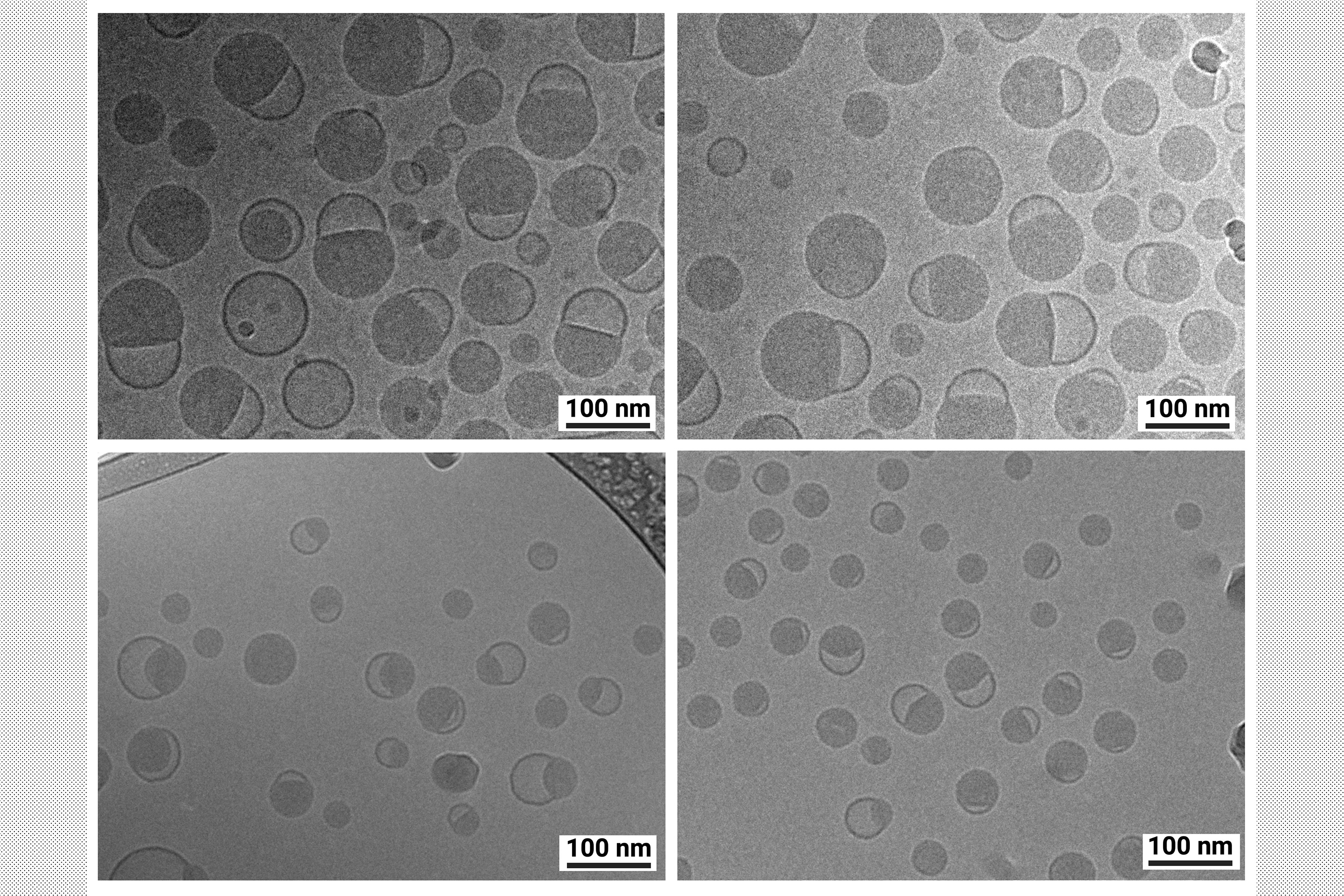
MIT chemical engineers found a way to rapidly produce lipid nanoparticles of varying sizes, which could make it easier to develop new vaccines and therapeutics.
RNA vaccines and other nucleic acid therapeutics are typically packaged within fatty molecules known as lipid nanoparticles (LNPs). MIT researchers have now come up with a way to produce these particles much more quickly, and with more precise control over their size and shape.
This new process, which can be run automatically without any human intervention, could greatly speed up the development of new RNA and DNA therapeutics, the researchers say.
“This method can help you determine what are the parameters that will generate specific size and shape attributes, before you take those particles and see which one will perform best,” says Cedric Devos, an MIT postdoc and one of the lead authors of the study. “It could be a quite powerful development tool.”
Current methods for designing new lipid nanoparticles often require time-consuming trial-and-error experiments, with limited investigation of desired particle size and shape. Tuning the size and shape of LNPs can open the possibility of targeting different organs and tissues.
“The size and shape of LNPs could not be reliably controlled by any previous production method. The problem may appear simple at first glance, but in reality it requires a deep understanding of lipid nanoparticle assembly,” says Allan Myerson, a professor of the practice in MIT’s Department of Chemical Engineering and the senior author of the new study.
MIT postdocs Aniket Udepurkar and Peter Sagmeister are also lead authors of the paper, which appears today in ACS Nano .
More precise control
Vaccines based on mRNA work by delivering instructions to cells to produce a harmless version of a viral protein, which prompts the immune system to generate a response. However, if mRNA is injected on its own, it will be quickly broken down in the body.
“These are really a revolutionary type of therapeutics, but they need some kind of delivery vehicle to bring them to the right cells in the body,” Devos says.
For the mRNA Covid-19 vaccines and other mRNA therapeutics, scientists have used lipid nanoparticles for that packaging. LNPs usually consist of four components — an ionizable lipid, a phospholipid, cholesterol, and a lipid attached to a molecule of polyethylene glycol (PEG), which helps to stabilize the LNP.
To make the particles, two streams of fluid are mixed together at high speed. One consists of lipid molecules suspended in ethanol, and the other contains mRNA dissolved in an acidic buffer.
Those solutions aren’t mixed at equal flow rates, however. Instead, there is about three times more of the mRNA solution than the lipid solution. This unequal ratio helps promote the formation of lipid nanoparticles containing mRNA, but it doesn’t offer precise control over the size or shapes of the particles.
In a study published last year in ACS Nano , the MIT team showed that they could enable much better control of particle size by breaking the mixing process down into two steps.
In the first step, mRNA and lipids are mixed together at equal flow rates. Then, after a short delay, more of the buffer is added, which halts the growth of the particles. Longer delays produce larger particles.
“This gives you the ability to play around with the residence time, which is the time it takes between the first mixer and the second mixer. If you keep that residence time really long, it means your particles will grow a lot. If you keep it really short, you can keep them really small,” Devos says. “It gives you a lever over lipid nanoparticle manufacturing that wasn't available before.”
In that study, the researchers also showed that they could alter the shape of the particles. By changing the concentration of the buffer that they add in the second step, they were able to transform the particles from spheres to elongated particles that resemble avocados.
Both of these interventions — changing the delay residence time and changing the buffer composition — allow the researchers to control particle size and shape without otherwise altering the composition of the LNPs.
An automatic process
In the new ACS Nano paper, the researchers developed a way to automate the two-step mixing process. They also incorporated a commercially available dynamic light scattering device that can measure the sizes of the particles as they are formed.
The project also highlights the impact of MIT’s Undergraduate Research Opportunities Program (UROP). “Through this program, applied mathematics and computer science undergraduates Joy Ren, Sofiya Chubich, and Dylan Nguyen gained hands-on experience, learning how advanced software engineering can be integrated with chemical engineering to develop an automated platform for LNP process development,” Sagmeister says.
With this automated system, the researchers can specify a particle size, and the system will generate that size. It will also measure the resulting particles to make sure they’re the right size, and if not, adjust the delay time and other factors to steer them to the right size.
“The first paper really unlocked the new methodology to make lipid nanoparticles, to truly engineer them by size and shape,” Sagmeister says. “With the second study, we automate the whole process.”
The system can also produce particles of different shapes, but measuring those shapes has to be done outside of the automated system.
Using this approach, the researchers were able to investigate how changing the inputs to the system affects the size and shapes of the particles, on a much faster timescale than currently possible. The researchers then used the data they gathered from these experiments to train a machine-learning model that can predict the combination of factors that will generate a particular size or shape.
With this method, it could be much easier for developers of RNA therapeutics to generate different sizes of particles to test them for a particular application. Controlling the size of a lipid nanoparticle is critical because the particle’s size determines where in the body it is most likely to end up.
“If you make an LNP-based therapeutic with a target size of 150 nanometers, and one that is 70 nanometers, and everything else is the same, they will behave very differently,” Devos says.
The researchers have filed for a patent on their technology and are now working to commercialize it through a new company called BIZON Labs. Since receiving initial support through the Martin Trust Center for MIT Entrepreneurship’s Researcher 2 Entrepreneur (R2E) program, the team has also been accepted into MIT’s flagship accelerator program, delta v. The research was funded by the U.S. Food and Drug Administration and the Koch Institute Support (core) Grant from the National Cancer Institute. The work was carried out, in part, through the use of MIT.nano’s facilities.