The Spirit of “Party Unity, My Ass” Is Back and Coming for the DSA (and El-Sayed)
The Intercept ·
Centrist Democrats’ calls to fall in line behind the party’s nominee only ever seem to cut one way — and fall apart when their candidate loses. The post The Spirit of “Party Unity, My Ass” Is Back and Coming for the DSA (and El-Sayed) appeared first on The Intercept .
The PUMA spirit is back. The 2008 Democratic Party protest movement, inflamed by what Hillary Clinton supporters viewed as Barack Obama stealing the nomination from their primary candidate, scorned his general election campaign and embraced the mantra “ Party Unity, My Ass .”
This time, that energy is aimed at the candidates preferred by the Democratic Socialists of America .
DSA-aligned progressives have won a number of party primaries and are set to help Democrats take the majority in Congress. But once in power, they’re likely to make demands — the kinds of demands that could upend decades of carefully crafted donor-friendly policymaking.
For moderate Democrats, “party unity” is only a goal worth pursuing to bully the left wing of the party to fall in line with their preferred candidate.
For moderate Democrats, “party unity” is only a goal worth pursuing to bully the left wing of the party to fall in line with their preferred candidate. When it’s on them to step up and vote for someone who might have different goals, that’s another story completely, and some centrists are even hoping for Republicans to win the House this November if the alternative is an empowered DSA Democratic wing.
James Carville, the fossilized Cajun strategist who was part of exactly one successful national political campaign, Bill Clinton’s 1992 White House victory, said on The Bulwark podcast last Sunday that he’d prefer a tight GOP hold on Congress over a narrow Democratic majority.
“I would be disappointed if it comes in at 225 House seats,” Carville told host Bill Kristol. “I would rather the Republicans keep the House by five than the Democrats to win by five, because, if that happens, they’re hostage to the DSA.”
To his credit, Kristol — who, in a sign of how people can change when they know which way the wind is blowing, spent the PUMA moment promoting Sarah Palin but is now a self-proclaimed Democrat — pushed back, saying he’d rather win.
Carville is the first of his cohort to explicitly call for a GOP victory rather than the left flank of the party getting more power, but he’s not the only centrist deprioritizing his party’s prospects in November.
Maine Gov. Janet Mills has yet to endorse the Democratic Party’s Senate nominee, Troy Jackson, after she lost to now-disgraced Graham Platner. (Mills and Jackson have a long and bitter history from state government , which may be playing a role here.)
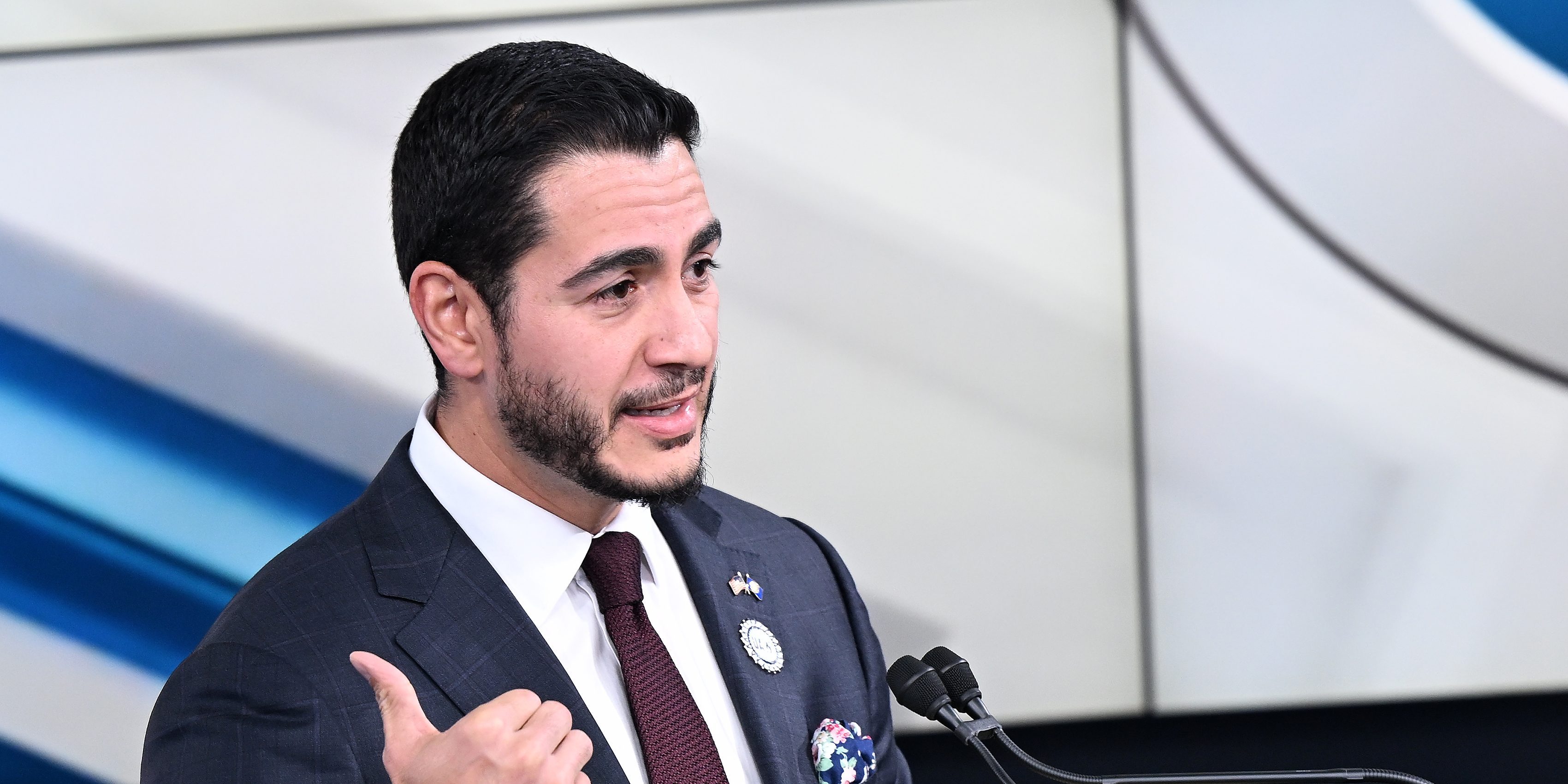
Perhaps most consequentially, in Michigan, Democratic Senate nominee Abdul El-Sayed has faced an uphill battle since winning his party’s grueling primary. He’s now focused on winning in the general election and becoming the first Muslim U.S. senator, but resistance to his candidacy remains a concern.
Much of the difficulty has come from members of his own party and other liberals . Their antipathy toward a candidate whose positions aren’t so out of step with other members of the caucus has raised questions about what exactly is so objectionable about him. El-Sayed may skew to the progressive side of the party, but he’s not a socialist and not a member of the DSA; his positions on domestic policy should place him companionably among the likes of Sen. Elizabeth Warren’s wing.
Until recently, most of the anger after El-Sayed’s primary in early August was confined to X and occasional cable news hits.
That changed on October 16, when two Michigan Democratic Party power players, David Kramer and Lon Johnson, urged voters in a Detroit News op-ed to leave El-Sayed’s place on the ballot blank — effectively handing the Senate seat over to Republican Mike Rogers, an election denier and a lockstep Trump ally.
The piece tied El-Sayed to extreme elements of Islam and suggested his opposition to Israel’s genocide, war crimes, and occupation was based in hatred for the Jewish diaspora.
“Our gravest concerns involve El-Sayed’s associations with figures who have excused or minimized terrorism, his reluctance to unequivocally condemn dangerous rhetoric, and his support of extreme policies,” Kramer and Johnson wrote. “At a time of rising antisemitism, Democrats deserve leadership that unequivocally rejects rhetoric threatening Jewish communities.”
Comedian Mike Drucker accurately described on Tuesday the centrist rejection of El-Sayed as less “blue no matter who” and more “ blue unless brown .”
But Democratic leaders like Carville, Kramer, Johnson, and others are panicked beyond their obvious Islamophobia — they can see the writing on the wall goes well past Michigan. It’s a full-on existential crisis.
Former Intercept writer Jon Schwarz once opined on what he termed the iron law of institutions: “The people who control institutions care first and foremost about their power within the institution rather than the power of the institution itself.”
What we’re seeing now is the iron law’s white blood cells fighting a threat they don’t believe can be easily assimilated into the existing power structure. It’s a danger to their status and power.
Their attacks on the left are going to backfire, leaving the Democrats’ centrist wing even less empowered than before.
That outcome is ideal for the party, the base, and the country. For centrists, it’s a disaster — but if the way to stop their coming irrelevance is to vote for a progressive American Muslim who opposes genocide, they’re incapable of taking that step.
Ultimately, all their griping may not matter. El-Sayed is regularly polling slightly ahead of Rogers, and 95 percent of Michigan Democrats said they intend to vote for him . Much like Jackson in Maine, should he win, El-Sayed will be even less beholden to the elements of the party power structure who are so desperately trying to prove he needs them, rather than the other way around.
The post The Spirit of “Party Unity, My Ass” Is Back and Coming for the DSA (and El-Sayed) appeared first on The Intercept .