I asked ChatGPT, Gemini, Claude and Perplexity if there really is an AI bubble and when it’s going to burst — and one compared it to the dot-com crash
Latest from Tom's Guide ·
null
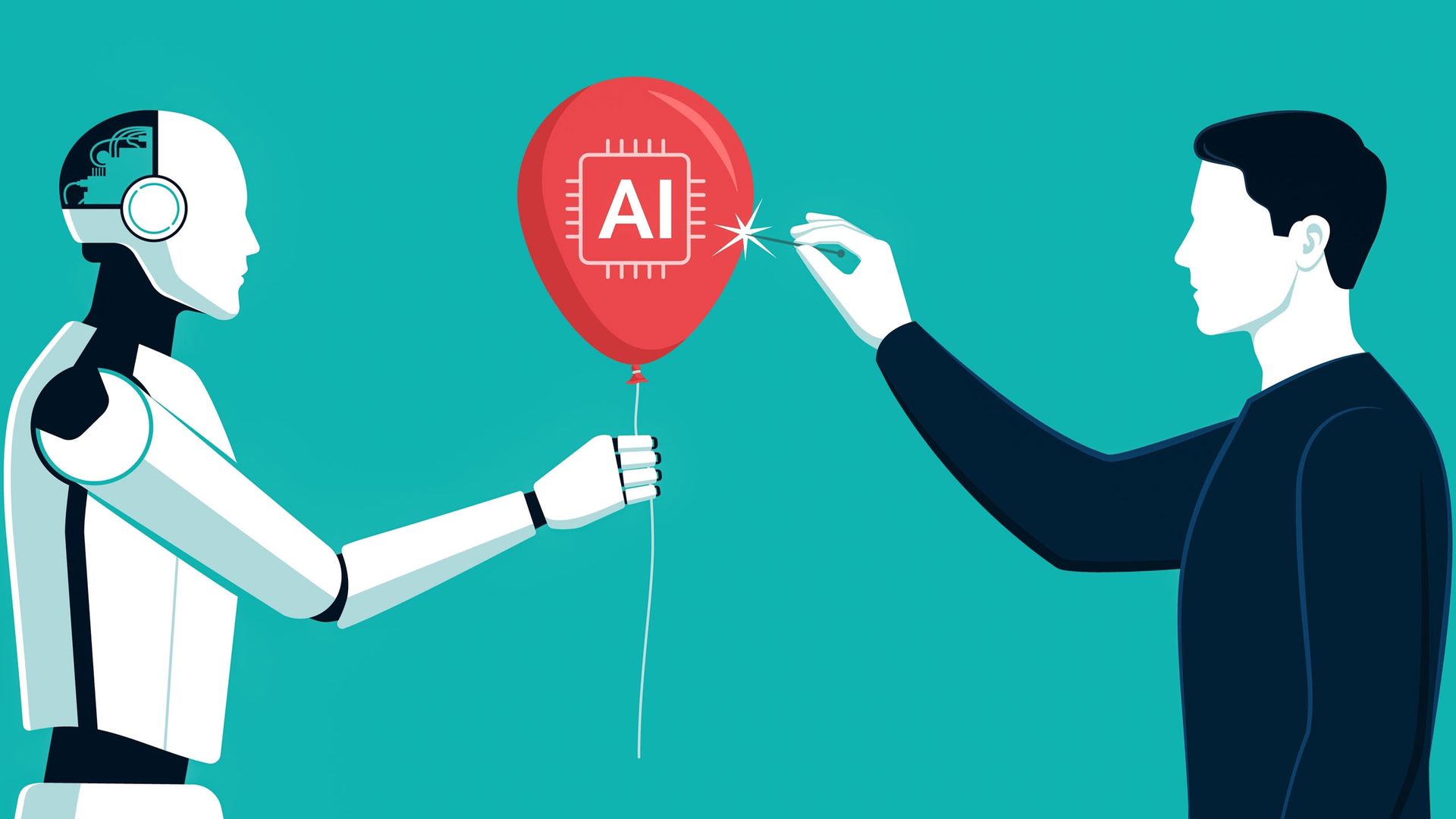
With the ongoing “RAMageddon”, the rapid development of data centers and the pure vitriol brought against “AI slop” these days, I can see why AI skeptics are hoping for an AI industry market crash.
Once the news of China’s AI sector suffering a massive market crash that wiped out $480 billion reached my timeline, I started thinking about the possibility of that event coming to fruition in the US. There’s been so much speculation over the very existence of an AI bubble, when it could finally burst and what could happen to the several US sector & the tech itself if a crash took place.
Since I’m so prone to asking the likes of ChatGPT, Gemini, Claude and Perplexity hot-button questions , I knew it was time for me to see what they thought about those three topics. So I brought this loaded set of questions to their attention: “Is there really an AI bubble? If so, when is it going to burst and what will happen if it does?
Here are some of the most intriguing responses each chatbot gave me, with one of them even drawing comparisons between a possible AI market crash and the infamous dot-com crash from 2000 to 2002.
OpenAI’s chatbot was first up at bat for my latest inquisitive session about AI. It made sure to point out that there are clear signs that there is an AI bubble and that parts of it may be on the verge of popping. But it also noted that an AI crash isn’t such a sure bet:
Yes, there are credible reasons to worry that parts of the AI industry are in a bubble — but that doesn't mean AI itself is a fad, or that a crash is inevitable. The most useful way to think about it is to separate two questions:
- Is AI valuable? AI tools can already help people write, code, analyze information, automate tasks and create content.
- Are investors paying too much for AI? Potentially. Companies can be building genuinely useful technology while investors simultaneously overestimate how quickly it will generate profits.
That distinction is important because the dot-com boom of the late 1990s offers a useful comparison: the internet transformed the economy, but many internet companies still failed when their valuations outran their businesses. The AI industry could experience something similar — a correction in investment and valuations even as the technology continues to improve.
As for when the AI bubble could burst, ChatGPT stated that no one can reliably predict its occurrence. The main scenario it alluded to as the worst one was set from 2027 through 2029, as it explained how a serious reckoning could come to pass if its revenue for the AI industry fails to keep up with the infrastructure spending from private sectors going into it. Or if customers discover that AI delivered less measurable value than they originally expected.
To wrap up its investigation into the matter, ChatGPT stated that the central question at the heart of the AI bubble-bursting topic is whether the money it generates can eventually justify the money that’s being spent on it. If yes, then it noted that this current AI investment boom will be looked back on as an expensive yet productive period of technological development. If no, then AI investors, startups, lenders and workers could be dealt a very bad hand while the technology itself continues to advance in some way.
As I went through Gemini’s detailed breakdowns of its explanations to my questions, its comparisons to the dot-com crash and the AI bubble possibly bursting caught my attention the most. It pointed to three ways in which both events share striking similarities:
Gemini also made sure to point out a key difference between the fallout of the dot-com crash and the possible AI bubble finally bursting. It acknowledged that several dot-com firms ceased to exist after the dot-com crash, while the AI bubble bursting wouldn’t be too catastrophic for some of the tech leaders backing the tech, since they have other worthy investments (Amazon with e-commerce and Microsoft with software as a service, for example).
While those companies would face some financial struggles from the AI bubble bursting, Gemini noted that a complete shutdown of their businesses due to it happening wouldn’t likely occur.
Anthropic’s chatbot dived into the possibilities of an AI bubble existing by detailing why everyone’s so worried about it bursting, why an AI bubble may not fully exist at the moment and a possible timeline for when it could burst:
Perplexity’s response to my questions stated that there are notable signs of an AI bubble bursting, but those same signs don’t fully paint the picture of the AI industry being close to a crash:
There are credible signs of an AI investment bubble, especially in parts of startup funding and infrastructure spending—but that does not establish that the entire industry is overvalued or that a crash is imminent. Nobody can reliably tell you when it will burst, or whether it will end in a sudden crash rather than a long, uneven adjustment. The biggest distinction is between a stock-market bust and a debt crisis: both could hurt, but the latter would spread much further through the economy.
To back up its reasoning, Perplexity brought up a report from The Olympian that offers debates about the existence of an AI bubble. It also mentioned a report from a prominent management consulting firm to provide an assessment of when the possible AI bubble could burst:
With shocking news hitting my timeline about AI investments going bad, it’s easy to envision a world where the AI bubble finally bursting comes to pass.
With Google’s recent massive loss of $500 billion due to its AI search feature disrupting ad sales, the odds of that aforementioned event taking place are getting higher and higher. All four chatbots do agree that there are sectors of the AI industry that are in danger of collapsing, while Gemini highlighted the clear comparisons between the AI bubble bursting and the 2000s dot-com crash.
After comparing ChatGPT, Gemini, Claude and Perplexity, I walked away from my latest chatbot questionnaire session knowing that the AI industry shows signs of plunging badly. But as for when that moment could take place, no one truly knows.