How Amazon Is Helping Consumers Verify Messages and Avoid Impersonation Scams
Blog ·
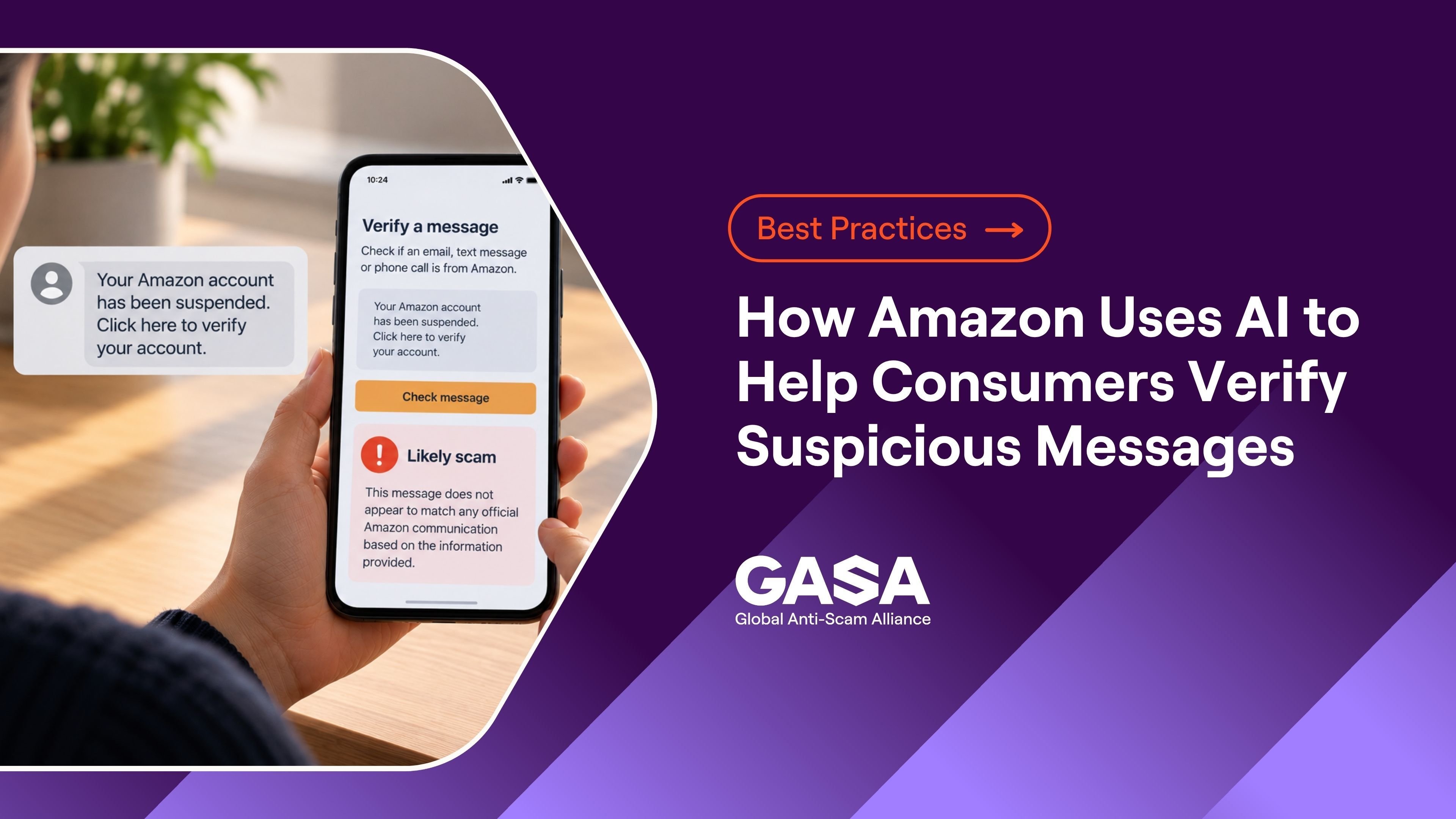
Impersonation scams are among the most widespread forms of fraud. In the United States, they were the most frequently reported fraud category in 2025, accounting for nearly one in three fraud reports and $3.5 billion in reported losses , according to the Federal Trade Commission. These scams exploit trust in familiar organisations, making it difficult for consumers to determine whether communications are genuine.
Amazon sees this challenge at scale. According to the company, 360,000 customers contact its customer service each year to ask whether messages claiming to come from Amazon are authentic.
Rather than relying solely on consumers to recognise suspicious messages, the system allows them to check whether a communication claiming to come from Amazon matches the company's own records of outgoing communications.
The approach centres on the distinction between identifying whether a message looks suspicious and verifying whether an organisation actually sent it.
Amazon's system compares information submitted by consumers against its records of outgoing communications. According to the company, these records cover billions of messages and provide a reference point for determining whether a communication originated from Amazon.
This differs from conventional scam detection approaches that primarily examine suspicious language, links or other indicators of fraud. By comparing messages against an organisation's own records, this approach focuses on establishing whether the claimed sender actually originated the communication, rather than relying solely on indicators of fraud.
Amazon offers three ways to verify communications, allowing consumers to use different channels depending on their circumstances.
The system provides three possible outcomes: the communication is confirmed as originating from Amazon, it does not match Amazon's records or its authenticity cannot be established.
When verification is inconclusive, users receive guidance on providing additional information or using an alternative verification channel. Responses also include relevant security advice.
The system also connects individual verification requests with Amazon's broader scam prevention and enforcement activities.
According to Amazon, every communication submitted through Alexa for Shopping for verification is automatically reported to its customer protection and enforcement team. These submissions provide information about suspected impersonation attempts, including potentially fraudulent messages that consumers encounter.
This creates an additional function beyond responding to individual requests. Amazon uses these submissions to inform its understanding of suspected impersonation attempts and support its customer protection and enforcement activities.
Looking to contribute to collaborative anti-scam initiatives? GASA Working Groups bring members together to develop practical, real-world solutions.
Although Amazon's implementation uses its own communication infrastructure, the underlying approach has potential relevance for other sectors frequently targeted by impersonation scams.
Banks, telecommunications providers, online marketplaces and public authorities regularly communicate with consumers through email, text messages and other channels. Scammers can imitate these communications to obtain payments, account credentials or personal information.
Amazon's implementation illustrates several considerations for organisations evaluating communication verification systems.
Implementing such an approach would require organisations to consider the completeness of their communication records, verification accuracy, data protection requirements and the operational processes needed to respond to suspicious submissions.
Amazon's approach shifts some of the responsibility for verifying suspicious communications from consumers to the organisations being impersonated. By checking messages against its own records, the system offers consumers a way to determine whether a communication genuinely originated from Amazon.
For other organisations, the initiative illustrates how communication verification can be combined with consumer-submitted scam intelligence as part of a broader approach to addressing impersonation scams.
Sign up for the GASA newsletter to receive regular updates on scam prevention, research, and best practices.