Mercedes-Benz Wants to Turn Windshields Into Screens. The Tech Already Exists, Too
The Drive ·
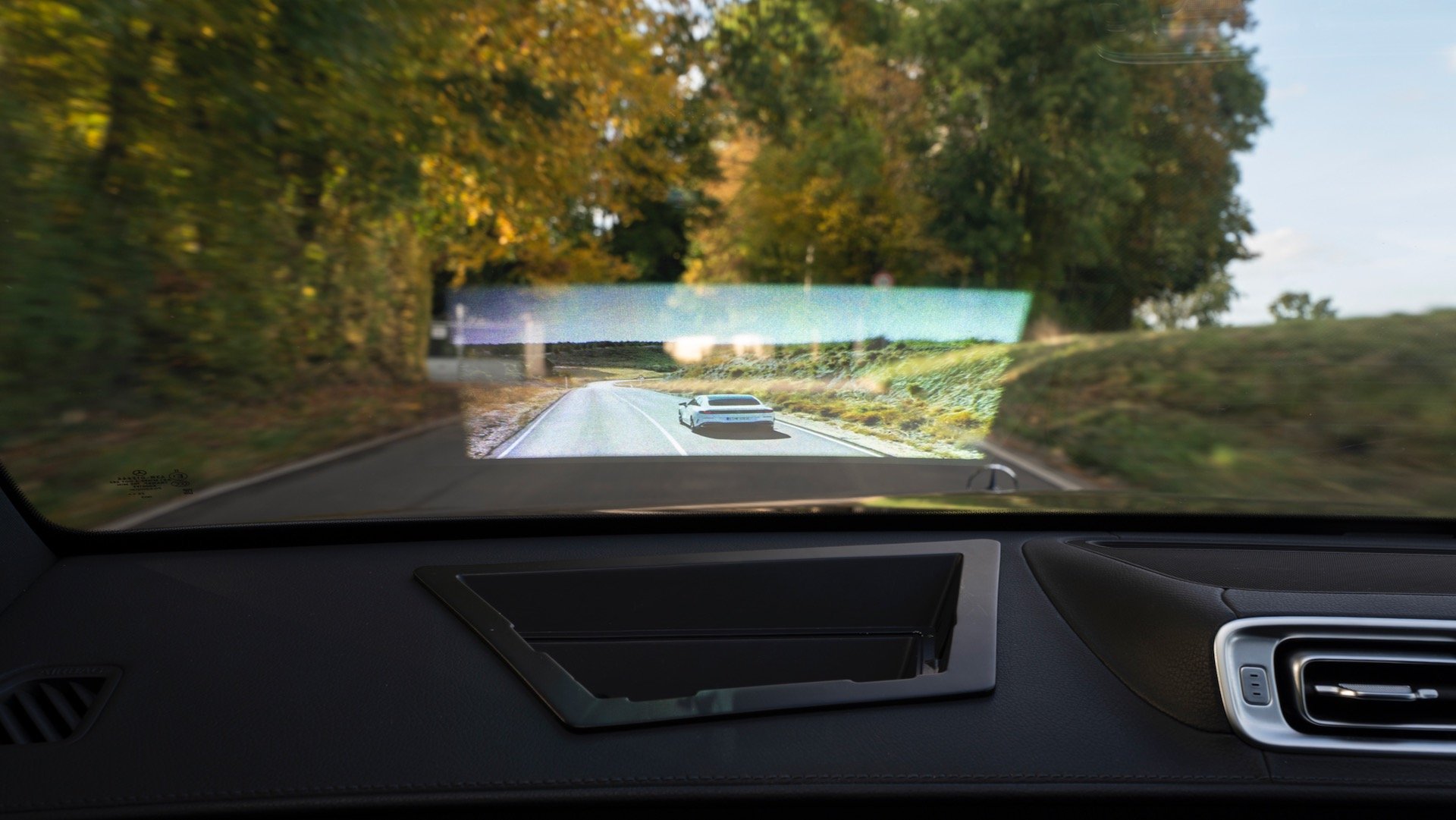
The automaker has developed holographic tech that can project images across specially laminated glass. The post Mercedes-Benz Wants to Turn Windshields Into Screens. The Tech Already Exists, Too appeared first on The Drive .
Having run out of space on the dashboard to fit more screens, Mercedes-Benz is looking elsewhere. This week the automaker announced a handful of new tech features it’s considering for future production models, including a holographic display that can turn windshields into screens—because the automaker’s door-to-door Hyperscreen and Superscreen displays apparently don’t offer enough space.
According to a Mercedes press release, this is made possible by a projector built into the dashboard and specially laminated windshield glass incorporating “holographic optical elements.” These selectively reflect certain wavelengths of light emitted by the projector to create images on the windshield. The light emitted by the projector is also concentrated, so these images remain visible even in direct sunlight, Mercedes claims. And it can control what’s visible from certain angles, so the driver can’t see what’s shown on the passenger’s side, and vice versa.
Mercedes envisions using this tech for things like points of interest, navigation, and videos. Presumably, as with the filters Mercedes and other automakers already use for front-passenger infotainment screens, this is why drivers won’t be able to see what their passengers are viewing. Because the tech works purely via projection, nothing is permanently stuck on the windshield, so views aren’t obstructed unless drivers and passenger want them to be.
I couldn’t read this press release without thinking of Ricky Bobby’s Fig Newtons sticker, but Mercedes isn’t the only automaker taking this idea seriously. Before he joined The Drive , my colleague Joel Feder got a similar spiel from Nissan design boss Alfonso Albaisa. In a 2024 interview, Albaisa predicted that the “windshield will be your screen,” arguing that even if consumers don’t like screens and digital interfaces, they do like having access to digital content behind the wheel.
Apple also filed a patent application for similar tech in 2023 before cancelling its much-discussed EV project. And one could also argue that full-windshield projections are just an extension of today’s head-up displays. I’m not going to make that argument, though, because putting more potential distractions in front of drivers seems like a bad idea to me. And after years of automakers assuming that consumers wanted all screens, all the time, recent negative feedback from those consumers indicates that there is a limit.
Besides the holographic windshield, Mercedes also showed LED-projection tech that the automaker wants to use to show warning messages in the rear window. It sounds like an enlarged version of the programmable OLED taillights that can do the same thing in some Audi models . The automaker also announced a “power converter” that can manage current flow in EV battery packs at the cell level, potentially streamlining future EV hardware.
The post Mercedes-Benz Wants to Turn Windshields Into Screens. The Tech Already Exists, Too appeared first on The Drive .