This Creepy, Breathing Steering Wheel Is One Way Your Car Could Drive With You Instead of For You
The Drive ·
It's designed to build trust in automated systems, but so far it's doing the opposite for me. The post This Creepy, Breathing Steering Wheel Is One Way Your Car Could Drive With You Instead of For You appeared first on The Drive .
The road to fully autonomous driving is a long one, and until we get to that destination, driver-assistance systems that provide some level of automation but still require an attentive driver will continue to be the norm. Humans and machines sharing control creates ambiguity that can have tragic consequences , so the University of Michigan is looking at ways to minimize that. But what researchers have come up with so far is downright creepy.
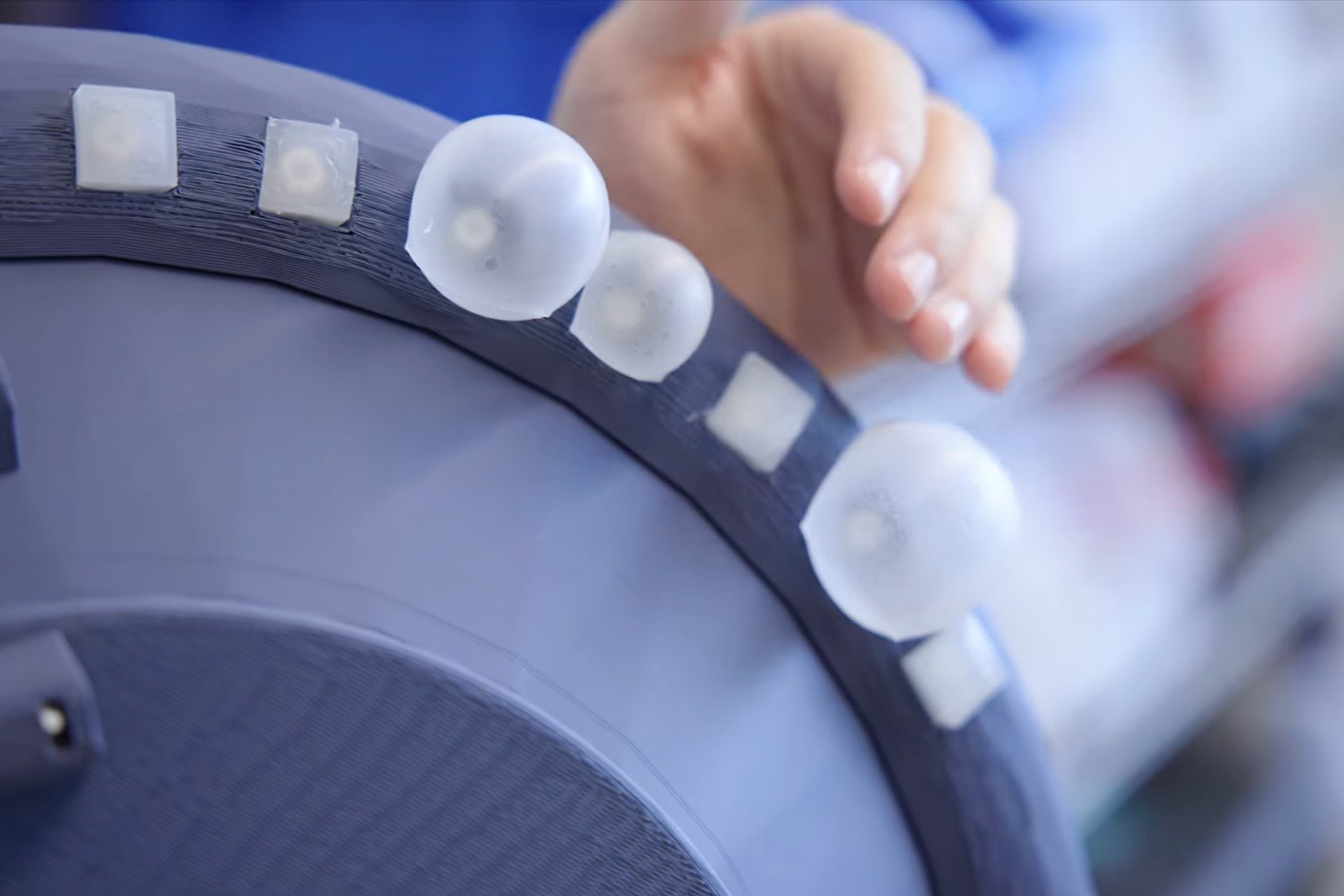
Working with researchers from the Toyota Research Institute (which also provided funding), University of Michigan Engineering researchers built and tested a steering wheel lined with air sacs. These inflate or deflate to help communicate information about a semi-autonomous driving system’s intentions to the driver, and to allow the driver to provide feedback. The goal is to avoid human drivers having to fight for control of the wheel, but it looks like the wheel is breathing, which is decidedly off-putting.
The creepiness has a purpose, though. What researchers call “haptic zones” are located at the 10 o’clock and 2 o’clock positions where drivers should be holding the wheel. If, for example, the semi-autonomous system wants to steer left, the sacs on the left side will inflate. If the driver doesn’t want to do that, they can press down to deflate them. If the system still thinks turning left is a good idea, it will send pulses of air that the drive can feel.
Researchers believe this arrangement works better than the warning lights and chimes used with current systems because it allows two-way communication. The driver now has an additional choice beyond leaving the system to its own devices or intervening in a way that could cause the system to deactivate itself (as pressing the brake pedal does in many current driver-assistance systems).
To test that hypothesis, researchers put test drivers in a simulator where they had to navigate a turn, with potentially unexpected obstacles in the way. As described in a study published by the research team, drivers spent less time fighting with the driver-assist tech, braked less, and showed more confidence in their maneuvers. Drivers also reported “lower effort, frustration, and physical demand,” according to a University of Michigan press release. Researchers found that drivers were more likely to regain trust in the system after it made a mistake, although sometimes they became too trusting.
If drivers and semi-automated systems are going to coexist, two-way communication makes sense. Whether dedicated hardware like this is necessary is another matter. Mercedes’ new MB.Drive Assist Pro system, for example, simply accepts control inputs like a tug of the steering wheel or a tap of the brake pedal without disengaging completely. That seems like a much more straightforward approach, and one less likely to leave me with nightmares.
The post This Creepy, Breathing Steering Wheel Is One Way Your Car Could Drive With You Instead of For You appeared first on The Drive .