Meet The IMD MBA Class of 2026, Adolfo Zorrilla
Poets&Quants ·
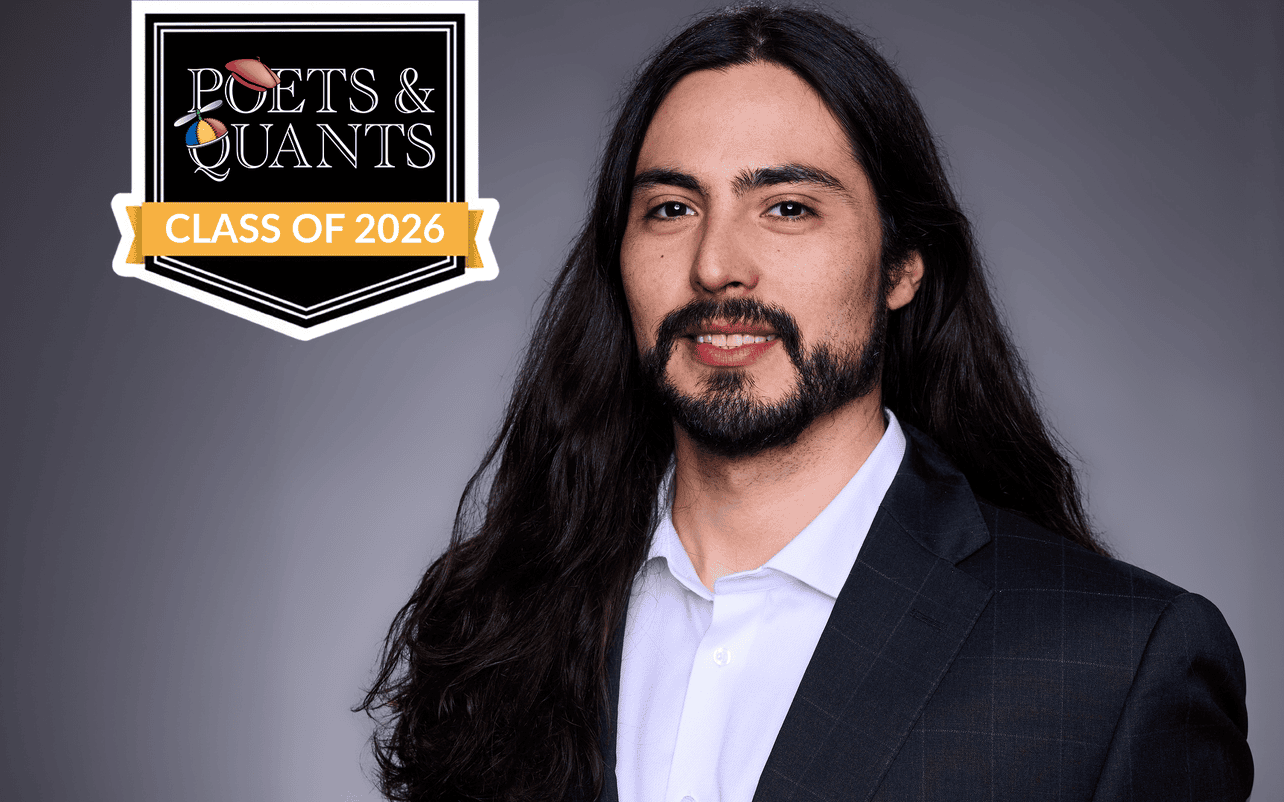
Adolfo Zorrilla “Scientist by training. Now drawn to food systems, land, and the communities that hold them” Hometown: Mexico City, México Undergraduate School and Major: Tec de Monterrey, B.S. Biotechnology Engineering Most Recent Employer and Job Title: ArsenalBio, Senior ... The post Meet The IMD MBA Class of 2026, Adolfo Zorrilla appeared first on Poets&Quants .
“Scientist by training. Now drawn to food systems, land, and the communities that hold them”
Hometown: Mexico City, México
Undergraduate School and Major: Tec de Monterrey, B.S. Biotechnology Engineering
Most Recent Employer and Job Title: ArsenalBio, Senior Research Associate II
What has been the best part of being in a small class with this group of classmates?
Such a small cohort means you get to know everyone early on, which creates a tight-knit network of people you can bounce ideas off of and who will help you through the toughest moments of the year. The same goes for professors, who make every lesson feel like a conversation rather than a lecture.
Getting to know 89 people from more than 40 nationalities over the course of a year has given me a more personal understanding of different cultures, industries, and ways of seeing the world. It created an opportunity to discover new things about myself and contribute to my professional and personal development.
Mostly, though, this group has taught me endurance. The class is full of Ironman finishers, ultramarathon runners, PhD holders and other high performers. These friendships built under pressure hold.
Aside from classmates, what part of IMD’s MBA programming led you to choose this business school and why was it so important to you?
After a few years working in a lab, I realized that the research scientist track was not for me and I needed both structural and functional change in my career path. I had spent most of my academic and professional years trying to understand interactions on the microscopic level, but over time I realized that what I wanted was to influence decision-making and work towards improving lives on a regional and global scale.
After thorough research into various MBA programs, I was drawn to IMD because of its emphasis on leadership and personal development. Access to career and leadership coaches, mentors, and a Personal Development Elective that addresses all parts of your psyche combine with standard MBA courses that include holistic integration of the leader mindset into the content itself.
From the Leadership Lab at the beginning of the year, where we tested different styles of leadership to see what did and did not work for us, to the sheer variety of teams we work in to develop versatility, IMD focuses on making leaders that look at the bigger picture while also paying attention to details. In knowing my goal involves a career shift, IMD offered access to develop the skills I need to be an effective leader, as well as electives that let me go deeper into change leadership, geopolitics, and social entrepreneurship.
IMD is known for academic rigor. What is one strategy you used that would help a future IMD MBA better adapt to the workload early on?
Personally, the lab work I did in the past and my engineering degree prepared me for heavy and rigorous workloads. The one thing that was particularly difficult about IMD is that the courses are short, so you often don’t get much time to sit down and process what is going on.
My advice would be to do it anyway. Carve out time for yourself to go through what you have learned, and keep a learning diary where you record what is most interesting and useful to you. I would also say it works to frame everything in terms of what makes sense for your career, past and future.
Finally, I would advise against relying too much on AI. It will be tempting — given the workload and how available it is, that’s only natural. But there is real value in learning to figure things out on your own and using AI only as support.
Describe your biggest accomplishment in your career so far:
At ArsenalBio, a cancer research lab using T-cells to tackle solid tumors, I worked on the T-cell isolation process. It’s a multi-step process that takes an entire lab and constant improvement to reduce costs and raise yields. My job was to both run the process as it was and find ways to make it better.
After a year, it was clear the lab was nowhere near as efficient as it could be. The problem was that any meaningful change needed approval from five different teams. Most improvements died before ever reaching the implementation stage because of poor communication, distrust, and other preventable issues.
I proposed implementing 5S, a lean methodology that would improve workflow, reduce human error, and lift overall lab performance. That meant designing a series of yield and efficiency studies plus a full layout redesign. Unfortunately, implementing the new system needed more approvals than anything I had attempted before.
Despite the challenges, I believed the system could work in our team and was determined to follow through. This meant individual meetings with representatives from every team, with my boss, with the operators who would see the benefits or consequences of the changes. I brought each team into the project regardless of how directly it affected them. By the time I gave my final (and also first formal) pitch, every team already felt some ownership over it, and it was approved smoothly. The changes cut operational increased cell yields by 25%, allowing for study variables to increase from around 10 to around 25, and improved workflow efficiency by 30%, thus cutting processing time and reducing contamination risk. Not long after, I was asked to implement the same approach in a lab four times the size.
Describe your biggest accomplishment at IMD so far:
I came to the MBA with the goal of figuring out my way forward, both in life and in my career. After classes in finance, sustainability transformation, non-market strategy, and geopolitics — plus Personal Development workshops, a leadership lab, several trips to the mountains, MBAT, and many long nights — I can say I am closer to that goal. My biggest accomplishment has not only been building a picture of what a successful career looks like for me twenty years out, but also finding the language and the confidence to explain my career transition and what it might look like.
Where is your favorite hang-out in Lausanne? Why do you (and your classmates) gravitate there?
My favorite hangout is Ça Passe Crème. I love coffee and that is the single best place to find it in the city. I think my classmates and I gravitate there because it also has a very chill vibe; good for a conversation, for reading a book, or just sipping coffee while you reflect on the, reportedly, tough job market we’re graduating into.
Another great spot is Jetée de la Compagnie — La Jetée, the containers, the bar on the lake — which reopens once the cold starts to relent. Great place to get a beer, look at the mountains, and bask in the privilege of getting to live in Switzerland and share it with the people around you.
What has been your best memory at IMD thus far?
I personally believe eating and dancing are some of the best things in life, so most of my best memories revolve around those two. Starting with a party in a bar on top of a mountain to kick off the program, where we danced to music from all our nationalities and then got served fondue to warm the soul after a long day building an igloo. I could also talk about Lacustre, where most of the class got to know each other over drinks and Latin music. Or cooking with friends to give them real Mexican food, remarkably hard to find in Lausanne, and then eating with good music in the background. And in Singapore, hitting as many hawker centers as possible and roaming the city looking for a place to dance. We found techno. No Bad Bunny, unfortunately.
The post Meet The IMD MBA Class of 2026, Adolfo Zorrilla appeared first on Poets&Quants .