NASA’s X-59 Completes Record Six Flights in One Week
NASA Science ·
NASA’s X-59 quiet supersonic aircraft had its busiest week yet, setting its record for flights completed in a single week while continuing to demonstrate its ability to maneuver at a range of speeds and altitudes. The X-59 kicked off last week by flying twice on Sept. 22, followed by two-flight days Sept. 24 and 25 for a total of six flights. The run of flights beat the X-59’s previous single-week record by two. The packed week brought the X-59 […] The post NASA’s X-59 Completes Record Six Flights in One Week appeared first on NASA Science .
NASA’s X-59 quiet supersonic aircraft had its busiest week yet, setting its record for flights completed in a single week while continuing to demonstrate its ability to maneuver at a range of speeds and altitudes.
The X-59 kicked off last week by flying twice on Sept. 22, followed by two-flight days Sept. 24 and 25 for a total of six flights. The run of flights beat the X-59’s previous single-week record by two. The packed week brought the X-59 up to 38 total test flights.
The rapid flight schedule is part of the X-59’s flight envelope expansion, a period of testing where NASA is exploring how the aircraft performs across a range of speeds, altitudes, and maneuvers under the conditions the aircraft will be expected to fly in.
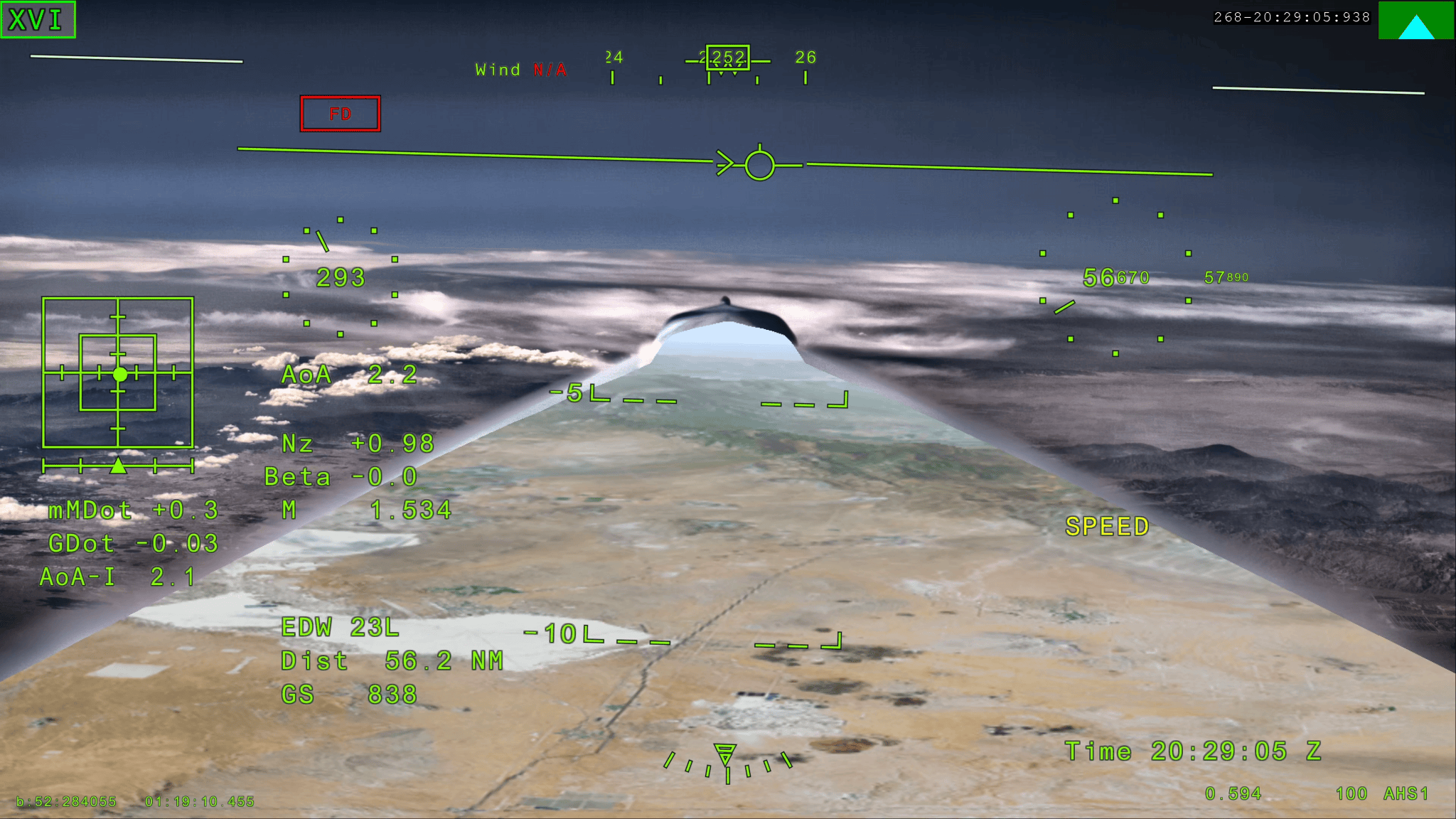
Not only did the X-59 increase its pace of flight testing, but it also hit a new top speed. During one of the week’s flights, the aircraft reached Mach 1.53 (approximately 1,010 mph), its fastest speed to date. The record is well above the cruise speed of Mach 1.4 at which the X-59 will typically fly.
After its big week, the aircraft earned some well-deserved rest, entering a scheduled maintenance period expected to last roughly three weeks. Once maintenance is complete, the aircraft will undergo a regular systems review. After that, the team plans to return it to the skies to resume its fast test cadence.
The post NASA’s X-59 Completes Record Six Flights in One Week appeared first on NASA Science .