2026 Toyota RAV4 Woodland PHEV Review: When a $48K RAV4 Is Still Worth It
The Drive ·
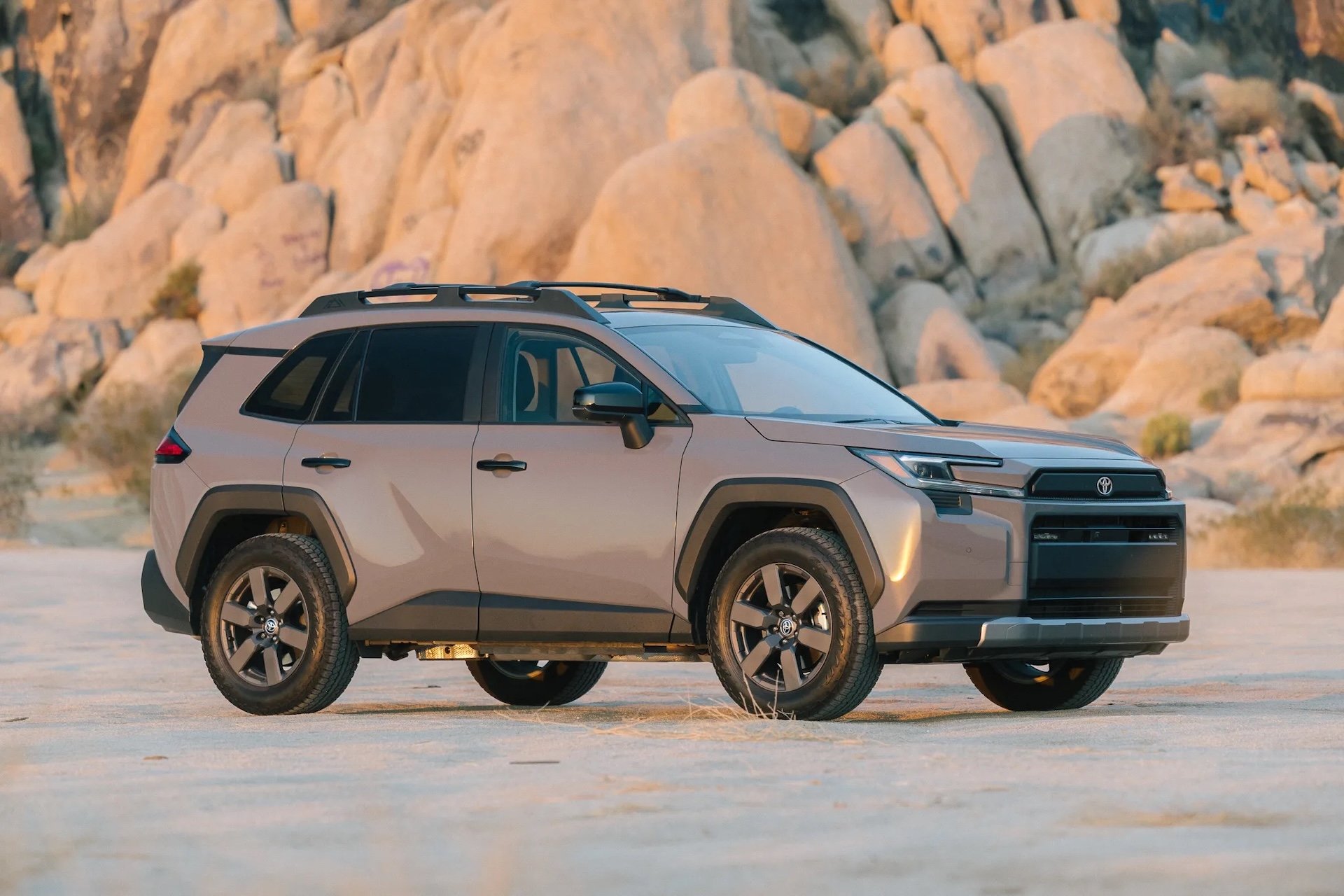
The Toyota RAV4 Woodland's ruggedness is fake, but its powerful, smooth drivetrain and 49 miles of electric range are real. The post 2026 Toyota RAV4 Woodland PHEV Review: When a $48K RAV4 Is Still Worth It appeared first on The Drive .
Most off-road-flavored crossovers I’ve driven are an appearance package with a gas engine underneath. The 2026 Toyota RAV4 Woodland is one too, but it adds a battery and a charge port to the mix. I took it through the Apple Valley desert in California to test its trail-ready looks—though that was really the easy part—and it’s about as much “off-roading” as most buyers will ever do. Its plug-in hybrid capability is what really sets it apart.
The Woodland is one of four ways to buy into Toyota’s plug-in hybrid RAV4 lineup, and it’s the one dressed up to look like it spends its weekends on a trail. Some of that is real. Most of it is garnish. Either way, the PHEV powertrain underneath makes a stronger case for this car than any roof rack ever could.
Toyota splits the RAV4 PHEV into four grades: SE, XSE, Woodland, and GR Sport, and the differences between them are smaller than the trim names suggest. The Woodland gets 49 miles of EV-only range and 94 MPGe combined, compared to 52 miles and 96 MPGe on the PHEV SE and XSE. Going Woodland gets you 8.5 inches of ground clearance and 20-degree approach and 24-degree departure angles, versus 8.1 inches and 19/23 degrees on the SE and XSE. Read that again: half an inch of clearance and one extra degree of angle for three miles of range. Personally, I’d take the SE or XSE’s extra efficiency over the Woodland’s marginally better geometry. Besides, the half inch of additional ground clearance comes from the A/T tires, not the suspension.
The Woodland sets itself apart in its styling. Roof rails, fender cladding, and knobby all-terrain tires are the off-road SUV starter pack at this point, but add the Woodland-specific front fascia and it sure looks good. Inside, the theme continues with uniquely patterned soft-touch door and dash panels finished in red-orange accents, plus SofTex-trimmed heated seats and Woodland-branded all-weather floor mats and cargo liner that turned out to be useful; more on that later. The rest of the cabin is standard RAV4 PHEV: a 10.5-inch touchscreen, a 12.3-inch digital gauge cluster, and a layout that doesn’t ask you to relearn anything. My tester came in the trim-exclusive Urban Rock paint, which I think is the best choice if you want that A/T look.
Toyota rates the RAV4 PHEV’s combined system output at 324 horsepower, split between a 2.5-liter four-cylinder, a front motor, and a rear motor that handles the electronic on-demand all-wheel drive. That’s a lot of hardware bolted to a compact crossover, resulting in a massive 4,500-pound curb weight. It’s roughly 1,000 pounds more than this car weighed 20 years ago, but that’s to be expected with PHEV tech and modern safety standards. The good news is that it doesn’t move like a 4,500-pound boat, though. The extra mass never shows up in the steering, which stays light and easy. The ride is just as smooth, and the all-terrain tires add far less road noise than I expected. Acceleration is the same story: the electric torque fills in immediately, so it feels effortless no matter how much weight is along for the ride.
The transition between electric and gas power is remarkably seamless: no shudder, no delay, no moment where you feel the gas engine wake up. Paired with a solid eCVT, it makes for one of the most refined powertrains you can ask for.
As for the Woodland’s actual off-road chops: my Apple Valley desert run confirmed that the all-terrain tires and extra ground clearance handle loose dirt, uneven terrain, and light brush without complaint, but I never came close to needing real articulation or low-range gearing. I came to the same conclusion with the Nissan Rogue Rock Creek last year—capable of a lot more than pavement, but not built for anything that would leave a mark on an actual trail map. Senior Editor Caleb Jacobs put it best in his 2026 RAV4 First Drive Review : “All the Woodland has going for it in terms of off-roading is Dunlop all-terrains, a trail drive mode that helps manage traction and split torque, and downhill assist control that grinds and jerks like Toyota’s Crawl Control of yore. It’s really more about getting you to the trail with a couple of dirt bikes in tow rather than taking you on the trail.”
Real-world EV range came within two miles of Toyota’s claimed 49 to 50 miles. For many owners, that’s enough range to run entirely on electricity most days—commute, errands, school runs—while still having a full tank in reserve for the road trip that inevitably comes up. Combined, the RAV4 Woodland gets roughly 585 miles on a full charge and a full tank, making it a legitimately long-distance machine when you need it.
Charging speed depends entirely on what you plug into. Level 1 household charging, which I had access to while visiting family in the desert, is slow enough to plan around rather than rely on—I projected about 15 hours for a full charge and only got about 60 percent overnight. At home on a Level 2 charger, that drops to a much more livable 2.5 to 3 hours, and the Woodland also supports DC fast charging for a 10-80 percent top-off in around 35 minutes when you can find one. The takeaway: this car wants a home Level 2 setup to actually deliver on the plug-in promise. Using a fast charger during errands is a good way to fill the gaps.
Most RAV4 PHEV buyers don’t need what the Woodland adds. But if you’re genuinely outdoorsy—or just want to look like it—it’s a reasonable box to check, as long as you’re clear-eyed that this isn’t a rock crawler. My own use case ended up being a good example of what that actually looks like in practice: I threw a longboard on the roof rails without worrying about scratching the roof or trusting some flimsy aftermarket rack, and the heavy-duty floor mats made cleaning up after sandy surf sessions genuinely easy. That’s not off-roading, but it’s useful, everyday capability for anyone hauling gear.
Zoom out from the Woodland-specific stuff, though, and the bigger point is that the RAV4 PHEV is special in any trim. That’s roughly 50 miles of usable EV range, nearly 600 miles total, and a powertrain that’s practical and polished in typical Toyota fashion. The Woodland adds a bit of visual flair for active lifestyles. Whether that flavor is worth the trade-offs depends on what you plan to do with it—but even if you just want to look the part, this RAV4 has enough hardware to back it up.
Toyota provided The Drive with a 7-day loan of this vehicle for the purpose of writing this review.
The Woodland is more of an outfit than an off-roader, but the plug-in powertrain underneath makes it one of the most usable crossovers you can buy.
The post 2026 Toyota RAV4 Woodland PHEV Review: When a $48K RAV4 Is Still Worth It appeared first on The Drive .