I’ve spent months testing the iPhone 18 Pro Max, Galaxy S26 Ultra, and Pixel 11 Pro XL — here's the flagship I recommend
Latest from Tom's Guide ·
null
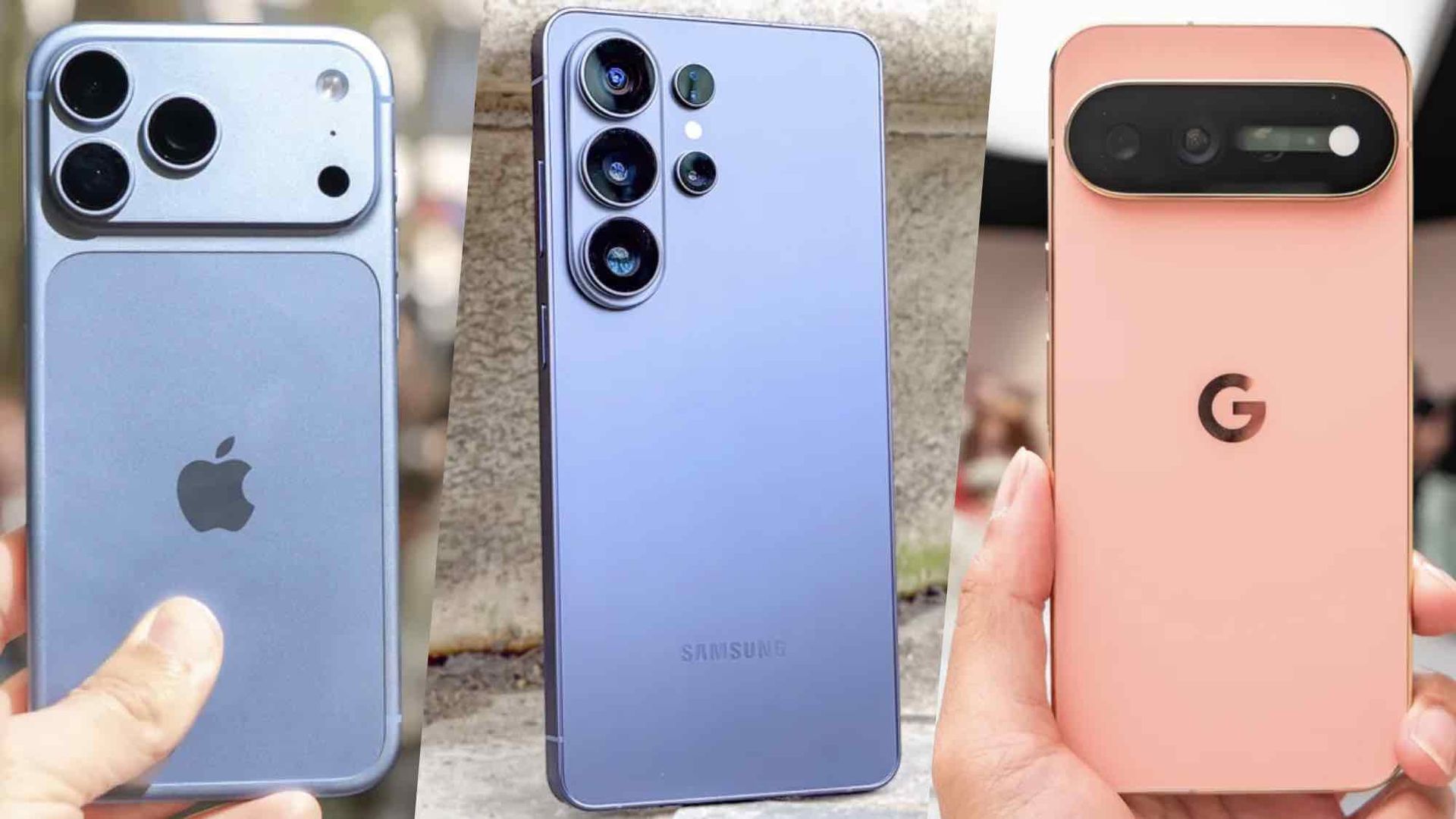
Flagship phones continue to be the most coveted devices on the market, prized for their top-tier specs, robust software suites, and class-leading cameras. Over the past year, I’ve spent months testing many of the best phones on the market — including the iPhone 18 Pro Max , Galaxy S26 Ultra , and Pixel 11 Pro XL .
Choosing between these heavyweights isn’t as simple as glancing at a spec sheet or trying them out for five minutes at a nearby carrier store. When you plan to shell out well over $1,299, you need to know how each holds up under daily use.
That’s why I’m pitting all three against each other to break down their key strengths, inevitable weaknesses, and most importantly, which flagship is truly worth your money.
iPhone 18 Pro Max
Galaxy S26 Ultra
Pixel 11 Pro XL
Price
From $1,299
From $1,299
From $1,299
Main Display
6.9-inch Super Retina XDR display (2,868 x 1,320)
6.9-inch Dynamic AMOLED 2X (3,120 x 1,440)
6.8-inch 1,344 x 2,992 Super Actua (OLED)
Refresh Rate
1-120Hz ProMotion
1-120Hz adaptive
1-120Hz
Processor
A20 Pro
Snapdragon 8 Elite Gen 5 for Galaxy
Tensor G6
Storage
256GB, 512GB, 1TB, 2TB
256GB, 512GB, 1TB
256GB, 512GB, 1TB
RAM
12GB
12GB / 16GB
12GB, 16GB
Front Camera
18MP Center Stage camera (f/1.9)
12MP (f/2.2)
42MP (f/2.2)
Rear Cameras
48MP main with variable aperture (f/1.48, f/1.8, f/2.8, f/4), 48MP ultrawide (f/2.2), 48MP telephoto w/4x optical zoom (f/2.8)
200MP main (f/1.4), 50MP ultrawide (f/1.9), 10MP 3x telephoto (f/2.4), 50MP 5x telephoto (f/2.9)
50MP (f/1.68) main, 48MP (f/1.7) ultrawide, 48MP (f/2.8) 5x telephoto
Battery Capacity
5,391 mAh
5,000 mAh
5,115 mAh
Charging
60W wired, 25W wireless
60W wired, 25W wireless
45W wired, 25W wireless
Size
6.43 x 3.07 x 0.34 inches
6.44 x 3.07 x 0.31 inches
6.4 x 3 x 0.3 inches
Weight
8.78 ounces (249 grams)
7.55 ounces (214 grams)
8 ounces (226 grams)
IP Rating
IP68
IP68
IP68
Colors
Black, Silver, Glacier, Burgundy
Black, White, Sky Blue, Cobalt Violet, Silver Shadow, Pink Gold
Canyon, Olive, Fog, Obsidian (matte)
Even though it’s the one I’ve spent the least amount of time with, the iPhone 18 Pro Max is a marked improvement over the iPhone 17 Pro Max . Apple didn’t hold back here because out of the dozens of devices I’ve tested this year alone, it earns its title as the best camera phone on the market for several reasons.
First and foremost, the main camera features a mechanical variable aperture lens that provides genuine creative control — some examples of which you can see in the gallery above. Wide open, it yields natural optical bokeh, while stopped down, it captures razor-sharp shots edge to edge.
Apple also finally introduced native manual controls courtesy of Pro Controls — a feature notably absent even on the pricier iPhone Duo . This unlocks granular adjustments for shutter speed, aperture, white balance, manual focus, and ISO without forcing you into third-party camera apps. Better yet, these same manual controls extend directly to video recording.
In low light, the iPhone 18 Pro Max is virtually unmatched. While most modern flagships deliver comparable dynamic range under direct midday sun, Apple pulls ahead once the sun dips below the horizon, as you can see in the nighttime sample shots I shot above.
Beyond imaging, the phone is a powerhouse driven by the 2nm A20 Pro chip . Our benchmark testing confirms it sits a level above its rivals in raw computing and graphics processing, yet it remains exceptionally power-efficient — lasting a staggering 18 hours and 27 minutes on our custom battery test to outlast its chief competitors.
Software remains the only mixed bag. While iOS 27 adds welcome Apple Intelligence features — including personal favorites like Reframe — the platform still lags behind the competition in its suite of AI features. Siri AI feels like a breath of fresh air compared to previous generations, but it still falls short of Google’s Gemini. In daily testing, its limited integration with third-party apps keeps it from feeling truly indispensable.
The Galaxy S26 Ultra continues to be the undisputed Swiss Army knife of smartphones, with this year’s model bringing several notable hardware upgrades. It’s also the flagship I’ve spent the most time testing, having pitted it extensively against both its predecessors and its fiercest rivals.
One of the standout hardware innovations this year is the native Privacy Display , an exclusive feature unlike anything else on the market. It delivers immediate peace of mind by shielding the screen from prying eyes and shoulder surfers — a constant nuisance during my daily subway commute.
On other devices, I’m forced to install privacy screen protectors that permanently degrade screen brightness and color accuracy. With the S26 Ultra, I can toggle the effect on or off at will.
While the S26 Ultra came up just short of the iPhone 18 Pro Max in my camera face-off, it remains vastly superior in one crucial area: telephoto reach. Samsung’s upgraded periscope telephoto lens doesn't just make distance shooting effortless; its combination of optical sharpness and sensor stabilization allowed me to read the minuscule parking regulations on a street sign from clear across the avenue in our sample shots above.
Productivity and software versatility are where the S26 Ultra builds an insurmountable lead. While Samsung’s underlying Google Gemini integration shares parity with other premier Android flagships, it proves just how transformative mobile AI can be when properly integrated. Gemini’s Task Automation genuinely impresses with its ability to execute complex, multi-step actions across disparate apps. Case in point: I was able to place a Dunkin Donuts order through DoorDash with a voice prompt, and it arrived at my door 30 minutes later.
Then there’s the integrated S Pen, an enduring staple you simply won’t find on rival flagships. It remains an unmatched precision tool for annotating documents, sketching concepts, and signing contracts on the go. Even if you don’t pull it out daily, having a built-in active stylus ready without paying extra for an accessory or specialized case adds tremendous value.
Finally, there is the ultimate fallback whenever I accidentally leave my laptop behind: Samsung DeX . Nothing matches the desktop workflow DeX enables when I tether the S26 Ultra to an external monitor or a pair of smart glasses. It transforms the phone into an actual workstation, proving once and for all that I have a full computer sitting in my pocket.
For anyone who prioritizes software above all else, the Pixel 11 Pro XL is the clear contender — and it continues to defend its title as the best AI phone on the market. I’m not just talking about staples like its stock Android 17 interface or Google’s industry-leading pledge of seven years of major OS updates and Pixel Feature Drops.
While it shares baseline Gemini AI features with other Android devices, Google bakes in exclusive software that makes the overall experience feel far more robust. Standouts include Proactive Assistance, which intelligently surfaces contextual actions based on my on-screen activity; Gboard’s Rambler , which offers unmatched conversational voice dictation; and the Creator Studio suite, complete with a built-in teleprompter for mobile video creators. These newcomers sit on top of proven Pixel essentials like Call Screen , Voice Translate , and Pro Res Zoom .
Speaking of zoom, the Pixel 11 Pro XL delivers the longest digital reach in the lineup’s history, maxing out at 120x magnification. When paired with Pro Res Zoom, computational upscaling reconstructs distant details and cleans up grain with remarkable precision — hold it up against the Galaxy S26 Ultra in our sample shots above to see the difference. Creator-focused additions like Magic Capture and custom Camera Looks add even more versatility to an already formidable imaging setup.
The hardware also earns major praise for its 6.8-inch Super Actua display. In our lab testing, it reclaimed the brightness crown, hitting an astonishing 2,877 nits of peak brightness. Direct midday sun simply doesn't wash it out.
The trade-offs, however, stem from familiar hardware limitations. Google's Tensor G6 chip continues to trail Apple and Samsung by noticeable margins across synthetic CPU and GPU benchmarks, which trickles down into less efficient power draw and noticeably shorter battery endurance. Meanwhile, the new rear-mounted HiLight LED feels more like Google’s latest hardware gimmick than a practical tool — reminiscent of the temperature sensor of generations past .
Choosing between the iPhone 18 Pro Max, Galaxy S26 Ultra, and Pixel 11 Pro XL is a much easier call now that all three share the exact same $1,299 starting price. Samsung’s Ultra has traditionally been the most expensive of the bunch, but that’s no longer the case — which makes my final verdict much clearer.
If I were spending my own money today, the Galaxy S26 Ultra is the flagship I’d buy. Even though the iPhone 18 Pro Max remains an absolute beast with its record-setting battery endurance and superb camera system, the Galaxy S26 Ultra simply delivers the most versatile package for the price. Between its class-leading periscope zoom, the desktop productivity powerhouse of Samsung DeX, Gemini-powered task automation, the integrated S Pen, and the sheer everyday practicality of the Privacy Display, it does things neither rival can match.
When you’re dropping $1,299 on a smartphone, you shouldn't be forced to compromise on utility. Samsung packs the S26 Ultra with everything I’d want in my pocket to tackle my workday and my daily commute.