AI-generated political ads spiked in 2026, but campaigns still prioritized other means of messaging
PolitiFact ·
For two election cycles, misinformation and election experts have wondered: Will content generated with artificial intelligence dominate races and mislead voters?
Campaigns and their supporters still use conventional ads to try to influence voters. But there were more AI-generated ads in the 2026 midterms compared with the 2024 election.
And while this wasn’t “the ‘AI election’,” AI ads are the new normal, said Christina Walker, a University of Georgia international affairs assistant professor who studies how AI shapes political information.
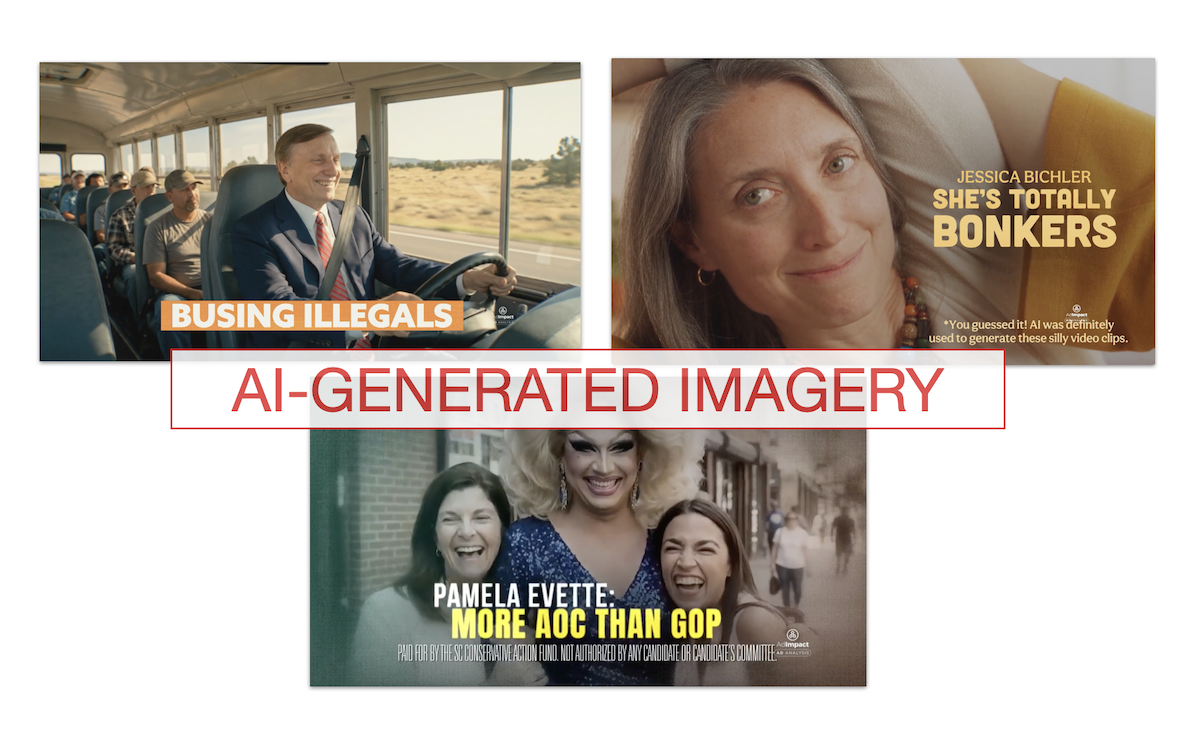
About 300 political ads were generated or enhanced by AI this election cycle, according to analysis by the Wesleyan Media Project, which tracks and analyzes political advertising.
(AdImpact screenshots of AI-generated ads in the 2026 midterm elections.)
And the people and groups behind those ads spent about $187 million promoting them online and on TV, the Wesleyan Media Project said — more than 3,000 times the approximate $50,000 spent during the 2024 election cycle. But that’s still a fraction of the overall political ad spending, which ad tracking service AdImpact projected at about $11.6 billion in 2025 and 2026.
The Wesleyan Media Project said that about 90% of the ads it tracked came from Republican candidates or groups supporting them.
There’s an AI learning curve for campaigns and it’s time-consuming for them to become comfortable enough with new technologies to ensure voters are OK with it too, said Travis Ridout, Wesleyan Media Project’s co-director, so there’s “reputational risk” to consider.
“You don’t want a voter backlash,” Ridout said.
Polls show that voters don’t necessarily want political content produced with AI. A 2025 Pew Research Center study found that 71% of Americans said they would like a candidate less if they knew the candidate used AI to help write a speech they had otherwise enjoyed.
“What people are okay with in terms of what AI is used for and how much it is used are still being worked out,” Walker said.
Many of the ads were essentially a “new medium for creating political cartoons,” said Tim Harper, who works at the Center for Democracy & Technology leading policy and advocacy work related to election disinformation.
Some campaign ads included deepfakes, fabricated videos that appear to show people saying or doing something that they didn’t. Other ads used AI to enhance or supplement real incidents, such as adding more people to a video of a crowd .
Thirty-one states have laws regulating deepfakes in political messaging, according to the National Conference of State Legislatures. Those rules are being actively tested, Harper said.
Texas voters saw many ads with AI-generated visuals, including against state Rep. James Talarico , the Democratic candidate who won the state’s U.S. Senate race.
Campaigns also crafted and distributed their talking points in ways that made it likelier for AI chatbots to surface that information to voters who ask questions about candidates and election issues.
It’s difficult to gauge how much influence AI ads had on voters, who were inundated with many other messages on different platforms.
“AI content isn’t necessarily persuading audiences,” said Cayce Myers, a Virginia Tech public relations professor, but it’s confirming already held opinions.
AI still influenced voters, not because of the ways it helped produce political messaging, but based on concerns that the technology would lead to more data centers in their communities, depleting local resources, spiking energy bills and affecting their quality of life.
RELATED : Did you know most of your daily online activities rely on data centers? Here’s how it works
RELATED : AI data centers, explained: Why do tech companies request NDAs? What’s a moratorium?