Underwater internet cables can help save endangered whales
Popular Science ·
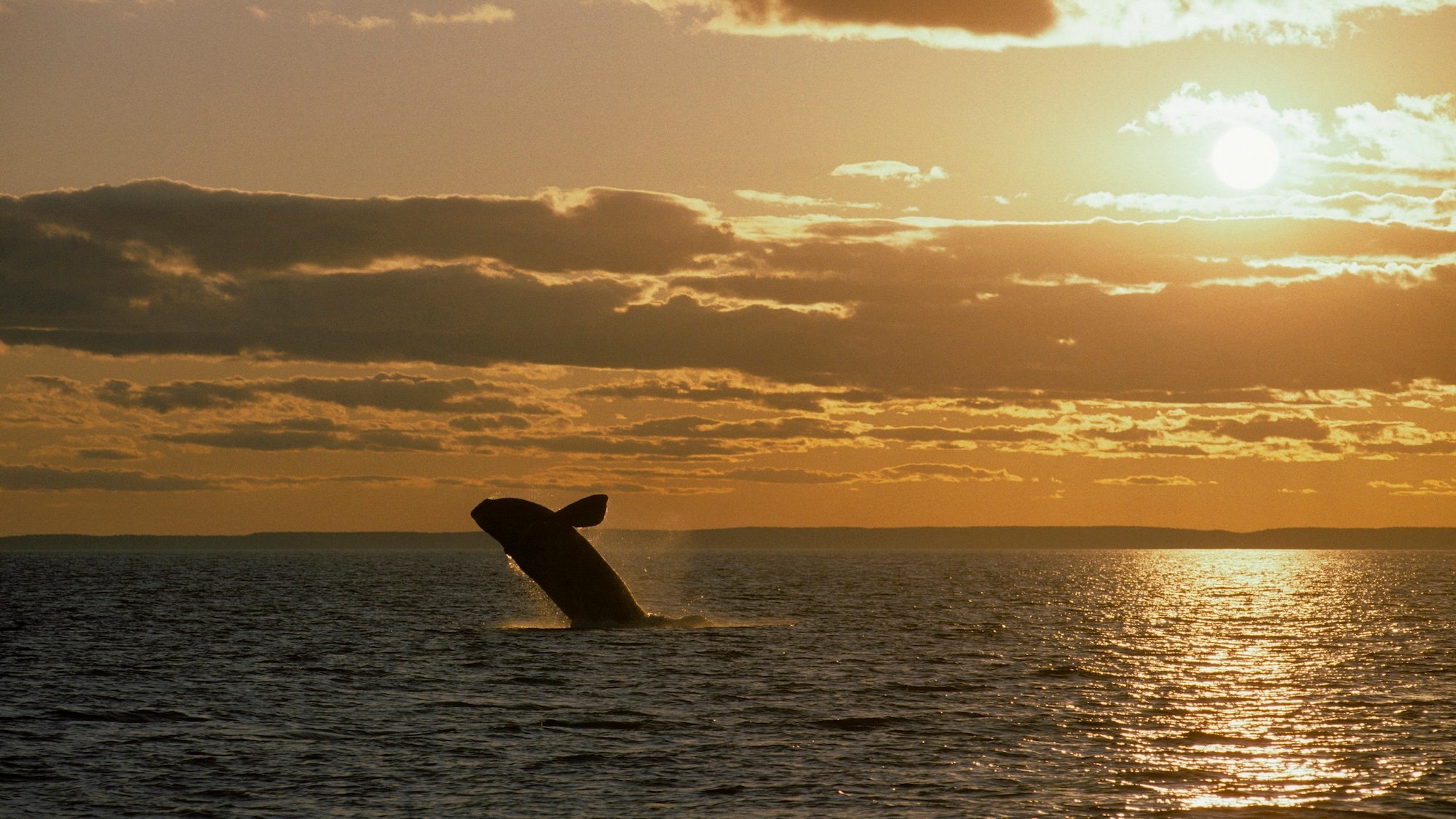
The cables can eavesdrop on multiple baleen whale species—including the world's largest. The post Underwater internet cables can help save endangered whales appeared first on Popular Science .
The world’s oceans are crisscrossed by thousands of miles of deep sea fiber-optic cables . This immense infrastructure is the foundation for much of the planet’s international power transmission and telecommunications , but marine biologists say the lines can provide an unexpected conservation benefit. With a bit of creative retooling, the ocean cables can also function as surprisingly good microphones for monitoring endangered whale populations.
“This is truly exciting, as this technology enables real-time data access over tens of [miles], and from land,” said Cornell University bioacoustics researcher Léa Bouffaut .
The latest advancements were recently detailed in the journal Methods in Ecology and Evolution , and build on Bouffaut’s previous work. In 2022, her team became the first researchers to demonstrate fiber-optic cable monitoring of blue whales ( Balaenoptera musculus) and fin whales ( Balaenoptera physalus ). The two species are respectively the largest and second-largest cetaceans, which also means they generate loud, ultra-low frequency vocalizations under 100 hertz. To record their calls, Bouffaut and colleagues utilized a system called distributed acoustic sensing (DAS). The technique works by sending laser pulses through deep sea cables using specialized equipment, which researchers then analyze for miniscule sonic alterations caused by environmental sound waves. After pinpointing blue and fin whale communications, researchers then used the cables’ positions to map the marine mammals’ movements and population distribution.
Following her initial demonstrations, Bouffaut was curious if DAS could also work for other baleen whale species. The odds necessarily weren’t in her team’s favor—smaller species like the bowhead whale ( Balaena mysticetus ) and critically endangered North Atlantic right whale ( Eubalaena glacialis ) issue calls at much higher frequencies between about 150 and 300 hertz. Their vocalizations are also less intense and travel shorter distances, making them even more difficult to parse in DAS data.
In the spring, Bouffaut traveled to the town of Utqiaġvik on Alaska’s North Slope to collaborate with the local Indigenous Iñupiat community of whalers. She also partnered with Arctic broadband company Quintillion, who provided access to one of their own deep sea telecommunications cables. Amid terabytes of DAS recordings, Bouffaut eventually achieved another first in her field. She became the first person to confirm bowhead whale vocalizations by harnessing fiber-optic cables.
“Being able to detect bowhead whales on a telecommunication cable is the proof of concept we need to show that DAS can be used to monitor all baleen whales,” explained Bouffaut.
Although the new strategy isn’t sensitive enough to replace dedicated ocean monitoring using underwater microphone arrays, Bouffaut and her colleagues believe DAS could become an invaluable additional tool. It also showcases a way to convert existing infrastructures into multi-use systems.
“The review is also a call to action for scientists, industry partners and regulators to collaborate,” said Bouffaut. “We now have the technical blueprint to turn global undersea infrastructure into a global network for ocean conservation.”
The post Underwater internet cables can help save endangered whales appeared first on Popular Science .