Stanford Scientists Find That the Human Brain Is Actually Two Separate Organs
Futurism ·
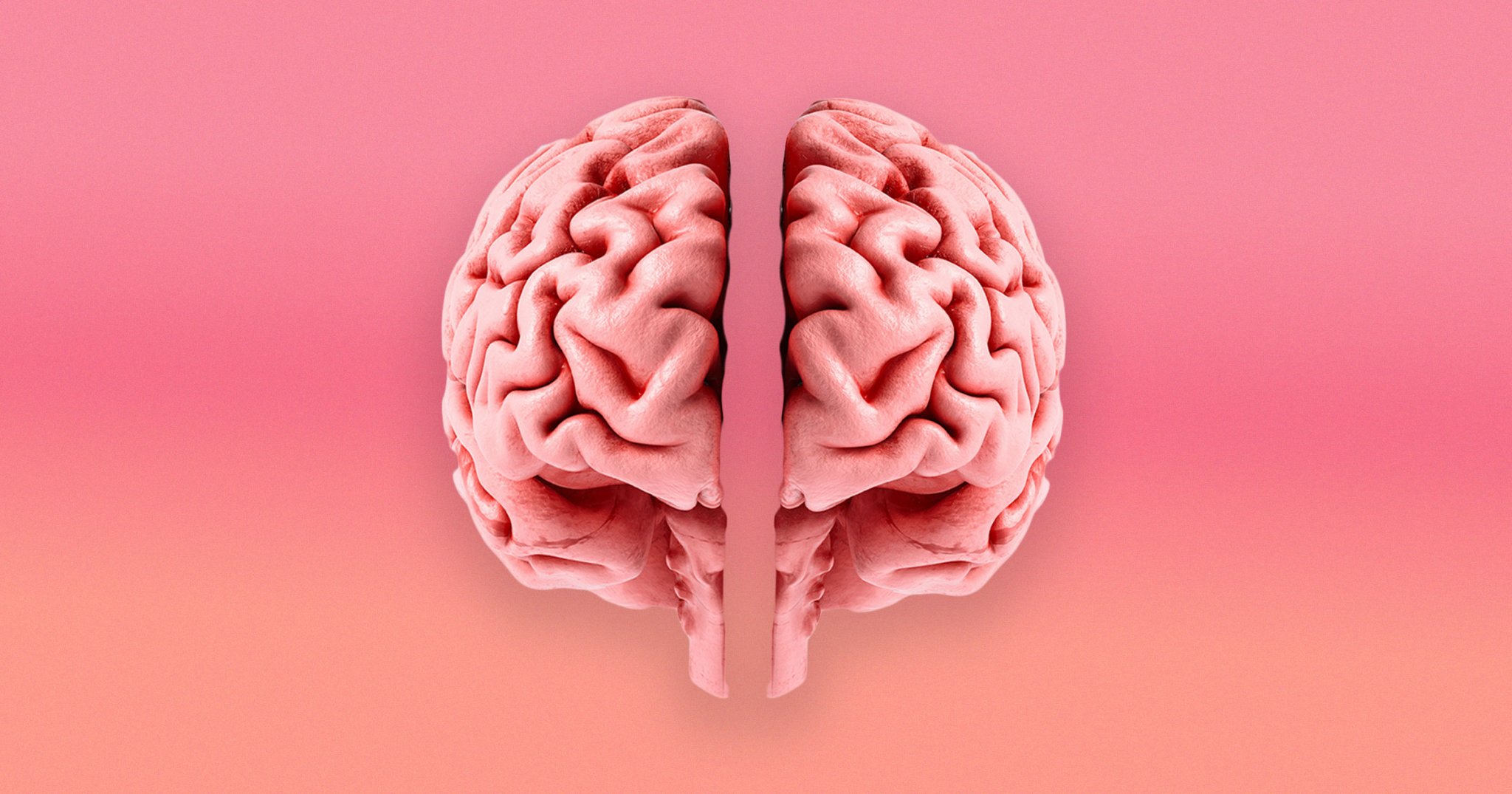
"I was surprised at our findings because the word 'brain' implies a contiguous organ that likely has a singular origin." The post Stanford Scientists Find That the Human Brain Is Actually Two Separate Organs appeared first on Futurism .
Despite centuries of scientific research, the human brain remains an enigma. It’s made up of tens of billions of neurons, each of which can form connections to its neighbors. It’s easily the most complex part of the human body: a three-pound organ that determines it all, from body movement to sense interpretation to — of course — cognition.
Even its basic structure remains the subject of heated debate. According to a new paper published in the journal Nature Neuroscience , a team led by scientists at Stanford University determined that the human brain is technically made up of two distinct organs, which evolved independently of each other over hundreds of millions of years.
The fascinating finding could upend much of what we’ve come to know over how the organ developed, undermining the prevailing assumption that the human brain acts as a single entity and emerged from a single evolutionary path.
The discovery could also open new doors in scientists’ efforts to grow human brain cells in a lab, a key part of studying neurological diseases that affect the brain stem, such as amyotrophic lateral sclerosis (ALS).
It also seemingly adds credence to the long-debated theory that humans have a more primitive brain, colloquially known as the “lizard brain ,” that takes care of core functions like heartbeat regulation and breathing while a more capable counterpart takes care of more complex functions, like creative expression — or depression and anxiety, for that matter.
“We’ve shown for the first time that the front of the brain arises from a totally different progenitor cell than the back of the brain,” said senior author and Stanford associate professor of developmental biology Kyle Loh in a statement .
“Our discovery means that we can now grow neurons from the back of the brain, the hindbrain, in a petri dish and study their functions,” he explained.
Conventional models of the human brain have determined that the front region of the brain is in charge of higher-level thinking and consciousness, while the back of the brain, or hindbrain, controls the most basic functions that allow us to live and breathe.
But growing cells of the latter region has remained a major challenge, greatly slowing down our efforts to study various diseases.
By zooming in on the earliest stages of embryonic development in mice models, the researchers found that the hindbrain follows a separate, but parallel, developmental path than the forebrain.
They determined that the mouse embryos created two separate brain progenitor cells, responsible for eventually forming the fore- and midbrain, and the hindbrain, respectively.
Both of these regions featured different chromatin — a mixture of DNA, RNA, and proteins that packages long DNA molecules — setting them on independent developmental paths.
“Previous attempts to make hindbrain neurons likely tried to coax forebrain and midbrain progenitors into hindbrain cells, which our study shows is not possible,” co-first-author and Stanford graduate student Rayyan Jokhai explained in the statement.
“In stem cell biology, people are always fixated with creating the end cell type, like the neuron,” he added. “But it’s important to begin at the earliest stages of embryonic development. Our careful attention to that early time point allowed us to find this fundamental split in brain development.”
As a result, the team got to work and became the first to turn pluripotent stem cells into hindbrain motor neurons in a lab.
The researchers also identified similar, diverging paths in brain development in other species, ranging from zebrafish to chickens — and even acorn worms, which are evolutionarily extremely distant from humans.
While jellyfish, an even more remote species, have two nervous systems, the findings suggest these two organs may have slowly grown close to each other.
“Our research suggests that evolution took two existing neural systems and pushed them together spatially,” Loh explained in the statement. “Having the brain as one organ would probably be more efficient, but we rely on this primordial way to make the brain as two separate pieces.”
“I was surprised at our findings because the word ‘brain’ implies a contiguous organ that likely has a singular origin,” Jokhai added. “But even 500 million years ago, there were these separate neural systems, which now almost operate as one, which is very cool.”
The two pathways growing together may have also allowed the human brain to become far more complex.
While the hindbrain keeps the lights on, “evolution could play around with the forebrain, and make mistakes and give rise to all the fancy things like memory and creativity,” as Loh told New Scientist .
More on the brain: Scientists Unleash Franken-Mice With Brains That Are Nearly Half Human
The post Stanford Scientists Find That the Human Brain Is Actually Two Separate Organs appeared first on Futurism .